Write using positives to avoid confusion

Read the following sentence.

“But my neighbor refuted the idea that she could not disregard the least amount of dust.”

Did you need to read that more than once to figure out what it means?  The sentence contains several negative words which take more work to decipher than positive words.

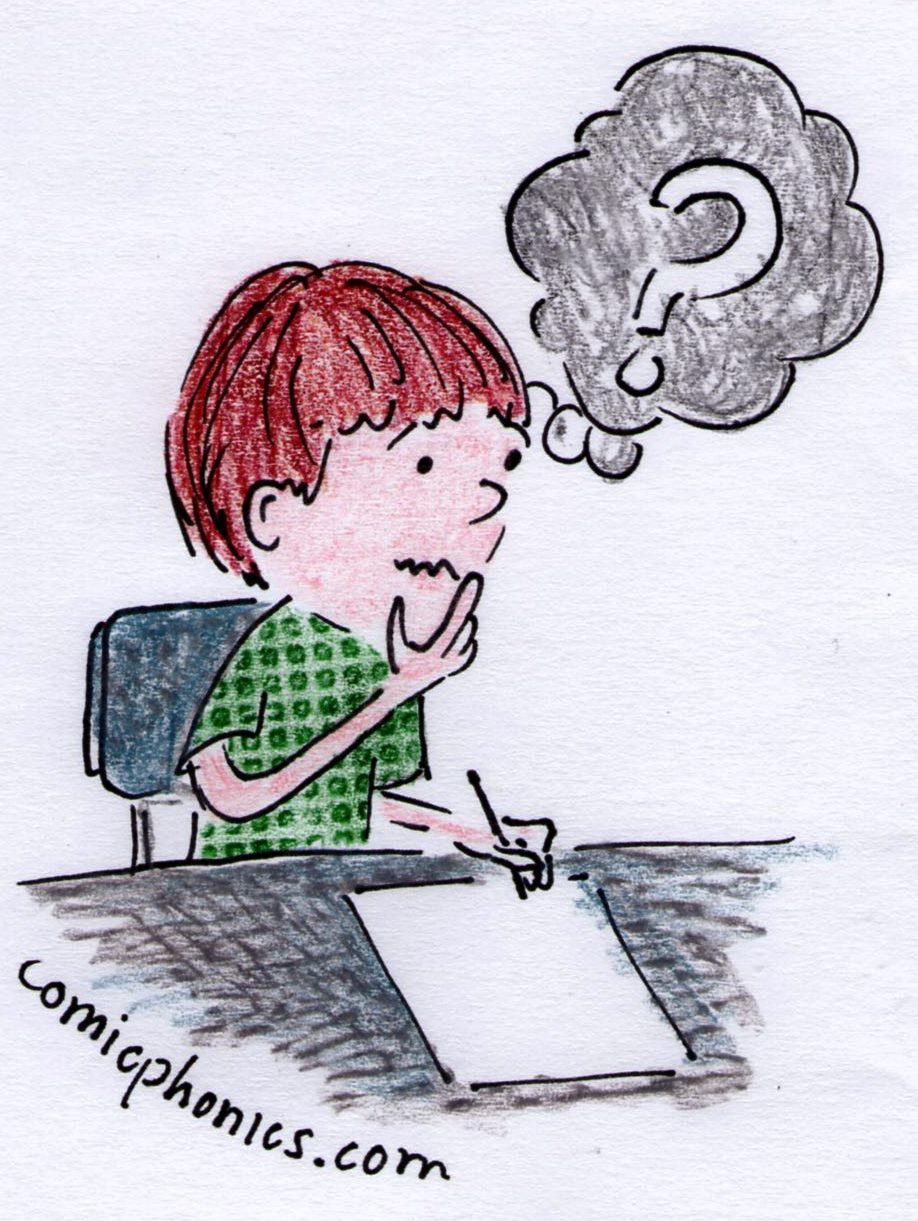
student thinking about what to writeSentences like this one are common.  “A stay of execution has been denied.”  (Two negatives)  “That is not an insignificant barrier to success.”  (Two negatives, or three if you think of “barrier” as a negative)  “If seldom eaten, a candy bar is not injurious to our health.” (Three negatives)

As students, we are taught that a double negative equals a positive.  We are aware of “not,” “never,” and “no” as negatives.  But many other words with negative connotations can confuse listeners and readers.  Some are

Ain’t, although, any, avoid, barely, but, deny, doubt, few, hardly,  however, ignore, instead, least, little, neither, nobody, none, nothing, nowhere, rarely, refute, scarcely, seldom, and though.

Thousands of other negatives can be formed by adding the prefixes “dis-,” “‘il-,” “im-,” “in-,” “ir-,” and “un-” to words, as in disregard, illegal, immoderate, inverse, irrefutable and unlikely.

Adding to the confusion, in some languages and in some dialects of English, double negatives are acceptable to add emphasis.  But not in standard English.

So, if you want your readers to understand you at the first read, write using positives, not negatives.

By the way, that first sentence means that my neighbor said he or she could ignore a small amount of dust.

Should you name with different words?

Suppose you are writing about Mae babysitting.  Should you write:

Mae looked at the little boy.  This experienced babysitter wondered when she should put the child to bed.  The tired girl wanted to bathe the child now, read him a book, and turn out his light in a half hour.  But should the young woman do that?

Or should you write

Mae looked at the little boy.  She wondered when she should put the child to bed.  She wanted to bathe the child now, read him a book, and turn out his light in a half hour.  But should she do that?

Writing experts say to write the second way.  Why?

Normally, when we speak, at the second mention of a person, we substitute a pronoun for the person’s name.  If we use another way to describe or name the person, the reader thinks we are talking about a new person.  That is because we are so used to hearing a pronoun used as a second reference.

What does the first example add that the second doesn’t?  “Experienced babysitter,” “tired girl,” and “young woman.”  Do those descriptors add anything important to the meaning of the paragraph, namely, whether Mae should put the little boy to bed?  Not really.  Do they distract the reader from the real meaning of the paragraph?  Yes.

At second reference, use a pronoun.  At third reference, use a pronoun.  If other people are involved, especially another person of the same gender, use the persons’ names to avoid confusion.  Occasionally repeat the original person’s name to remind the reader who you are writing about, but most of the time, use pronouns for subsequent references.  If you must use a noun, use the most generic noun–girl, woman–at second or third reference.

Sometimes the simplest, least “clever” way is the best.

Words of the year 2017

Several dictionaries announced their “word of the year” as 2017 closed.  Here are their choices, in no particular order.

Youthquake:  “a significant cultural, political, or social change arising from the actions or influence of young people.”  Oxford Dictionaries (British)

Complicit:  “choosing to be involved in an illegal or questionable act, especially with others.”  Dictionary.com

Feminism:  “the theory of the political, economic, and social equality of the sexes” and “organized activity on behalf of women’s rights and interests.”  Merriam-Webster Dictionary (American)

Fake News:  “false, often sensational information disseminated under the guise of news reporting.”  Collins Dictionary (British)

Another word to consider is “whatever,” not as a choice for word of the year but for the ninth consecutive year, as Americans choice for the most annoying word, according to the annual Marist Poll.  “Fake news” came in second.

Turning around student achievement through structured writing

Several years ago, a high school principal investigated why so many of her students were failing.  After staff-wide research, the reason became clear:  bad writing, an inability to turn thoughts into sentences, paragraphs and essays.  A rigorous program of writing in every subject except math ensued, and within two years, final statewide exam scores rose 10 to 20 points.

Teachers began this new program by teaching a simple skill:  how to turn ideas into simple sentences.  When students could do that, they learned how put ideas into compound and complex sentences.

Students learned how to identify the main idea in a paragraph next, and then how to write a paragraph with a main idea.  Once paragraphs were mastered, it was on to essays, learning how to develop an introduction and controlling idea (thesis) and how to write body paragraphs to back up that controlling idea.  Students learned how to incorporate details into their writing, especially examples.

What students were taught was to think critically through structured writing—a point of view with facts to back it up.  To do it well takes planning and organizing ideas.  It is the kind of writing which the Common Core State Standards expects all high school students to master.

To find out more about this amazing success story at New Dorp High School in Staten Island, go to Peg Tyre’s article in The Atlantic.  Though it was published five years ago, the story–and the method to improve thinking through structured writing–is just as relevant today.  https://www.theatlantic.com/magazine/archive/2012/10/the-writing-revolution/309090/

Do you write in the classical style?

Do you write as if you are talking to someone, not preaching, not teaching, not arguing, but rather having a conversation?

Do you treat that someone as if he or she is your equal, except that you have knowledge which your friend lacks?  For example, do you write much like Elizabeth Bennett speaks to her sister, Jane, in Pride and Prejudice?

Do you simplify difficult concepts by making comparisons to everyday concepts, much like a teacher lining up a flashlight, an apple and a grape to explain an eclipse to children?

Is your meaning clear during the first read without a need to reread?

Do you let facts do the persuading, much like the charges against King George III did in the Declaration of Independence?

Is all the work of your writing hidden so that only the finished product shows, much like the elegant dinners at Downton Abby?

Do you exploit the natural structure of English sentences and paragraphs, putting the stress on the last word or phrase, much like Robert Frost in his poem, “The Road Not Taken.”

Are the facts which you present verifiable, much like a scientific experiment which can be replicated to achieve the same result, or like spectators who can be interviewed about what they saw and heard?

Do you use the perfect word or analogy, believing that with a bit of work you can find it?

Is your writing unpredictable, delighting with clever insights?

Is the structure of your writing inconspicuous, allowing the truth of your ideas to shine, much like the stitching of a beautiful garment?

Classical style is one of many writing styles (romantic, oratorical, and practical, among others).  Its roots date to ancient Greece and to 17th century France.  It has influenced American writers like Thomas Jefferson and Mark Twain but has not dominated English writing the way it has dominated French writing.

If you want to know more abut the classic style, read Clear and Simple as the truth by F. Thomas and M. Turner, Princeton University Press, 1994.  Most interesting is a section called “The Museum” which quotes varied sources to show what classical style is and is not.