Category Archives: how to teach writing

Why are “how” questions harder than “why” questions?

A sixth grade student I was tutoring this past week commented that he would much rather answer questions that asked “why” than “how.”

“And why is that?” I asked.
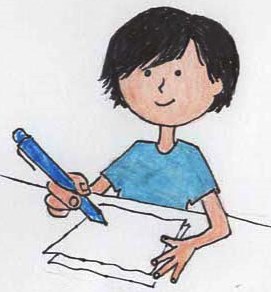
“Because you can start a ‘why’ answer with the word ‘because,” but I don’t know how to start a ‘how’ answer,” he said.

I looked through a 2016 New York State sixth grade exam to find out which kinds of questions comply with the Common Core State Standards, and here are some of the questions I found:

  • “Why are the results of the survey important?”
  • “How does Trina’s mood change?”
  • “Why does the relationship between Julianna and her father change?”
  • How does the father’s idea that Juliana needed to start looking at the whole landscape relate to his description of a painting?”

Then I thought of my students’ written answers to these questions, and sure enough, the “why” questions were responded to better than the “how” questions.

Both “why” and “how” questions require students to analyze a text, a harder task than recalling knowledge or proving understanding, according to Bloom’s taxonomy.  So in that sense, they begin at about the same difficulty level.

A “why” question usually requires one reason although two or three reasons might contribute to a more complete answer.  For example, the question, “Why was George W. Bush elected US President in 2000?” can be answered with one idea:  He gained enough electoral college votes to win.  More could be said about the popular vote and the Florida debacle, but it is not required.  The electoral college information suffices.

But the question, “How did George W. Bush win the election in 2000?” requires more information, especially about the Florida recount and the involvement of the US Supreme Court.

Usually “how” questions require a sequence of information—more than one idea—or a comparison of information.  A “why” question requires one idea only.

For example, in the “how” exam questions listed above, to describe how Trina’s mood changes, the student must describe three things:  her mood at the beginning, the event which changes that mood, and her mood at the end.

To describe how a father’s advice that Julianna must look at the whole picture relates to his painting, the student must first describe the fragmented way Julianna is talking about her boyfriend’s eyes, hair and cheek color, and then relate the fragmented way her father talks about painting a cow, a meadow or sunshine, and then relate both conversations to the father’s statement that putting it all together is when the magic happens.

My student’s insight taught me that I need to discuss with my students what kinds of information are required to answer “how” questions.  To prepare them better for their exams, together we need to respond to more “how” questions, first discussing the kinds of information needed to supply a complete answer.  In this case, it is the thinking through of the answer rather than the actual writing which is difficult for students.

 

What does teaching revising mean?

What could teachers do to help students revise?

When the essays are complete, teachers could reproduce a few sample student essays (with the students’ permission) and ask the class to analyze them. Teachers could ask:  Is there a thesis?  Do the topic sentences in the body support that thesis?  Is the thesis repeated in the topic sentences?  Is the thesis well supported in the body or is more information needed?  Does the information in each paragraph support the topic sentence of that paragraph?  If not, what should the writer do with that off-topic information?  Is the information presented logically?  Does the information in the introduction lead into the thesis?  Does the conclusion return to the ideas presented in the introduction?

Teachers could write and show their own response to the  prompt to offer an example of a well written response for the students to model.

Teachers could give students more time to improve their essays after they have analyzed other essays.

Teachers could have students read their essays to a partner for feedback before turning in their essays.

Before grading the essays, narratives, summaries, etc., teachers could return the writing marked with one idea for improvement.   Yes, the teacher would need to read each essay more than once.  But for the initial read, the teacher would need only to identify one glaring error which the student could then fix before receiving a grade.  Or if there is no glaring error, the teacher could suggest one idea for improvement (“How about turning this section into dialog?” Or “How about turning some compound sentences into complicated simple sentences?”)

The time to teach writing is not after the writing is graded but before and during the writing process while there is still time for the student to learn.  This is the time when students are most receptive to ideas which will help them become better writers.

What does revising mean?

In working with a middle grades student recently, I mentioned that, based on my experience, many English teachers don’t teach revising of essays.  “Not mine,” said the student proudly, opening his computer and pulling up a page called “Revising” written by his teacher.  “Read it,” he said.  I did.  Here is the gist of it.

  1. Find instances of the verb “said” in all its forms, count them, and replace ¾ of them.
  2. Identify pronouns, count them, and replace half with nouns.
  3. Identify certain “boring” words (from a list given by the teacher) and change 99% of them to  more detailed vocabulary.
  4. Make sure your writing follows your organizer.

One of the problems with these instructions (aside from their usefulness) is what is missing about revising.  Little or none of the advice deals with developing a thesis or main idea, organizing it, developing and sequencing ideas, writing logically, creating tone and voice, writing with varied sentence structures, or writing introductions and conclusions.  Yet these are far more important areas of writing than identifying the verb “to say” or replacing pronouns with nouns.

Students today are poor writers for many reasons.  Lack of practice, poor modeling, and little teacher intervention until the writing is being graded are a few.  But so is poor or little advice on how to revise, and the kind of teacher training which largely ignores research.

I suspect the teacher who composed the above revising instructions, like most teachers, is well-intentioned.  But she is probably not an experienced writer.  If she were, she would know that the verb “said” should not be replaced with words like “reported,” spoke,” “advised,” or “shouted.” Those synonyms draw attention away from what was said to how it was said, diluting the message.  Pronouns should not routinely be replaced with nouns.  At first reference, a noun should be used, but in subsequent referrals in the same paragraph, a pronoun should be used. Yes,  “boring” words should be replaced, especially verbs, with more precise vocabulary.  And yes again, first drafts should follow an organizer.

Two out of four are good advice.  50%.  This is  reason why students today are poor writers.

What parents want writing teachers / tutors to teach

When parents ask for writing help for their children, what kind of help do they want?Child writing

  • Grammar?
  • Vocabulary?
  • Sentence structures?
  • Organizing?
  • Transitions?
  • Introductions and hooks?
  • Conclusions?
  • Spelling?
  • Cursive handwriting?
  • Details?
  • Revising?
  • Particular types of writing (paragraphs? essays? book reports? short answer responses? long answer responses? summaries?)
  • Narrative elements (character development? plot? setting? foreshadowing?  point of view? conflict? dialog? voice? suspense?)
  • Verb tenses?
  • Paraphrasing?
  • Clarity?
  • Dialog?
  • Figures of speech?

Most parents have no idea so many elements combine to create good writing.  When they see a list like this, they are taken aback.

That is why it is important for parents and teachers to agree on what students should learn at various ages.  If a parent thinks the student should be perfecting grammar, but the teacher instead focuses on organization of information, the parent will not be happy.  Or if a parent thinks a student should be using a great piece of rhetoric as a model, but the teacher wants the student to develop his own way of expression, again the parent will be dissatisfied.

Only when a parent is aware of all that a student is expected to learn can the parent and teacher have a meaningful conversation about how to improve a student’s writing.

How to encourage more student writing and still have a life

If students are to improve their writing, what is the single best thing they can do?

Write  Write.  Write.

Teachers know this.  So why don’t teachers assign more writing?  To paraphrase a former President, “It’s the grading, stupid.”

Reading student writing takes a long time, but writing comments on the writing takes a life time.  A fifth grade teacher might have 28 or more student papers to grade.  A high school English teacher might have 128.

So how can a teacher, tutor, or parent encourage frequent writing without giving up her life?

Here is the solution one teacher, Jori Krulder, has found effective.

  • The teacher reads student essays without writing a word on them.
  • On separate papers, one for each student, the teacher records three things:
  • One, a score for the essay based on a rubric which the teacher and students have previously agreed upon.
  • Two, an element of writing which the student did well.
  • Three, an element of writing which the student needs to improve.
  • The teacher jots down on another paper the strengths and weaknesses of the class’s essays and adds ideas for mini-lessons to teach the whole class.
  • The teacher reports these strengths and weaknesses orally to the class.
  • The teacher returns the unmarked essays, giving each student a feedback paper to fill in. See the box.

  • While students work on their writing, the teacher meets for five minutes only with each student (taking up to three days of class time per class or section per essay). The teacher and student compare the score each gave the essay.  If the scores differ, the teacher talks to the student about the reasons for the discrepancy.  Then they talk about the rest of the information on the feedback sheet.
  • At the end of five minutes a timer rings and the conference ends. If students want to talk longer, they can visit the teacher after school.
  • Students as a group are given a resubmit date for their essays.

According to Krulder, students are able to focus on what the teacher says during the conference, take notes, and use that information to improve their essays.  The result is a noticeable improvement in the resubmitted essays.  An additional yet unexpected benefit is improvement in student-teacher relations.

For more information on Jori Krulder’s method of responding to student writing, go to edutopia.org.