Category Archives: writing assessment

11 ways to discourage student use of AI in writing assignments

As teachers prepare to return to school, many wonder how to incorporate AI into their curriculum.  For teachers of writing, the opposite might be true:  how to encourage original thinking by students who might be tempted to use AI to do their assignments.  For those teachers, here are eleven suggestions:
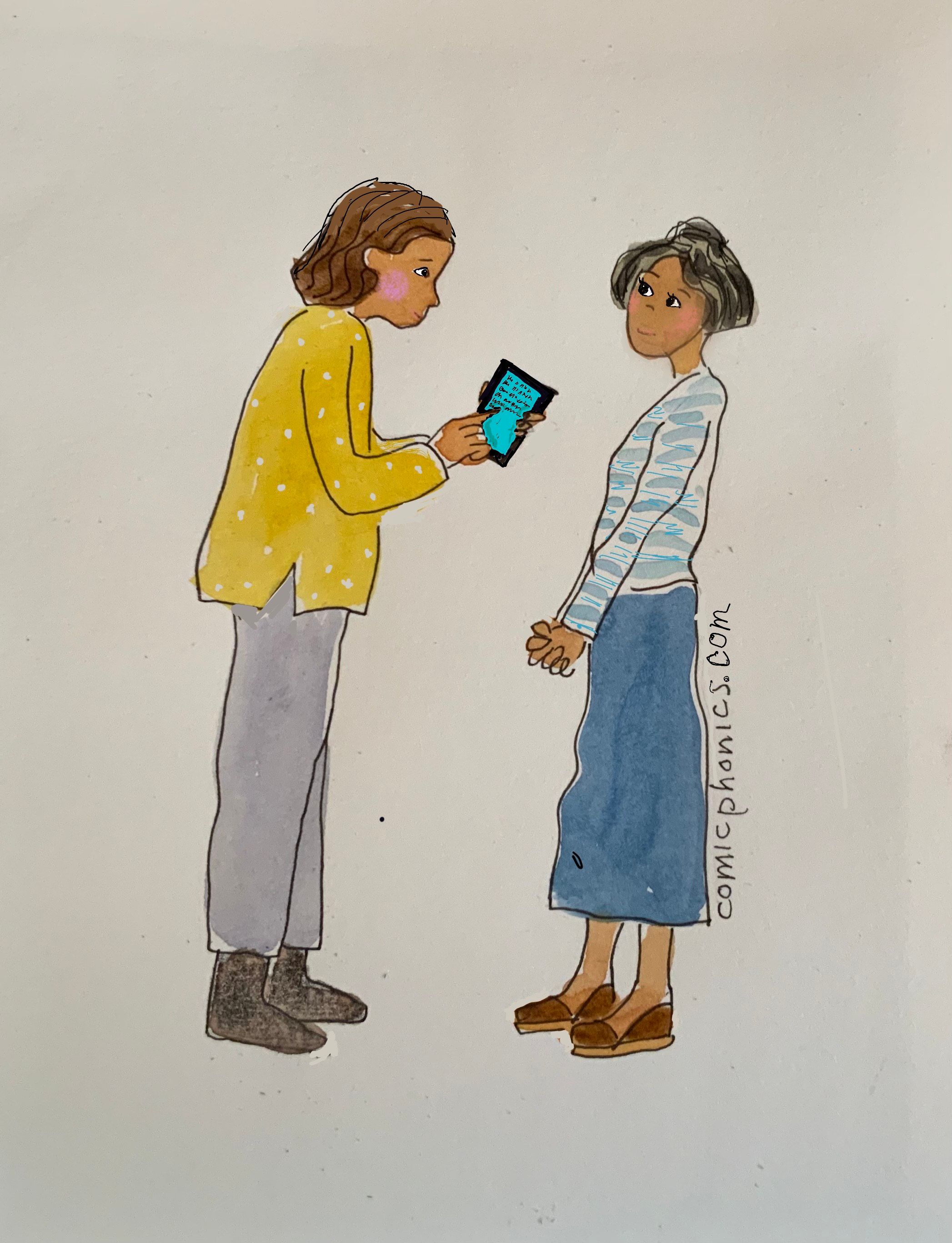
At the beginning of the school year, ask students to handwrite in class a paragraph on what they studied in ELA last year, what they liked, what they didn’t, and why. Hold onto that writing.  If you suspect a student is using AI to write, compare the writing style of the early document to the later one.  If they are not similar, ask the student to redo the assignment.

Require that students go through all the steps of writing, including writing an organizer, writing a main idea sentence, writing a first draft, and revising. Grade each of these steps in the writing process, not just the finished product.  Once you have approved the organizer, require students to continue organizing their writing the way they originally planned it.

Require all but the final draft to be done in class in handwriting on notebook paper. Provide the paper, marked a particular way for each class section you teach to discourage first period students from sharing with third period students.  If possible, require different essay topics from different class sections.  Collect work done in class at the end of class, and check to be sure each student has submitted his or her work.

Require that specific information of your choice—information that AI is not likely to have in its huge data base—be included in the student writing.  That information could be from a student’s personal experience, such as comparing a novel’s character to a teacher in the school or writing a new beginning to Huck Finn as if the student is Huck.

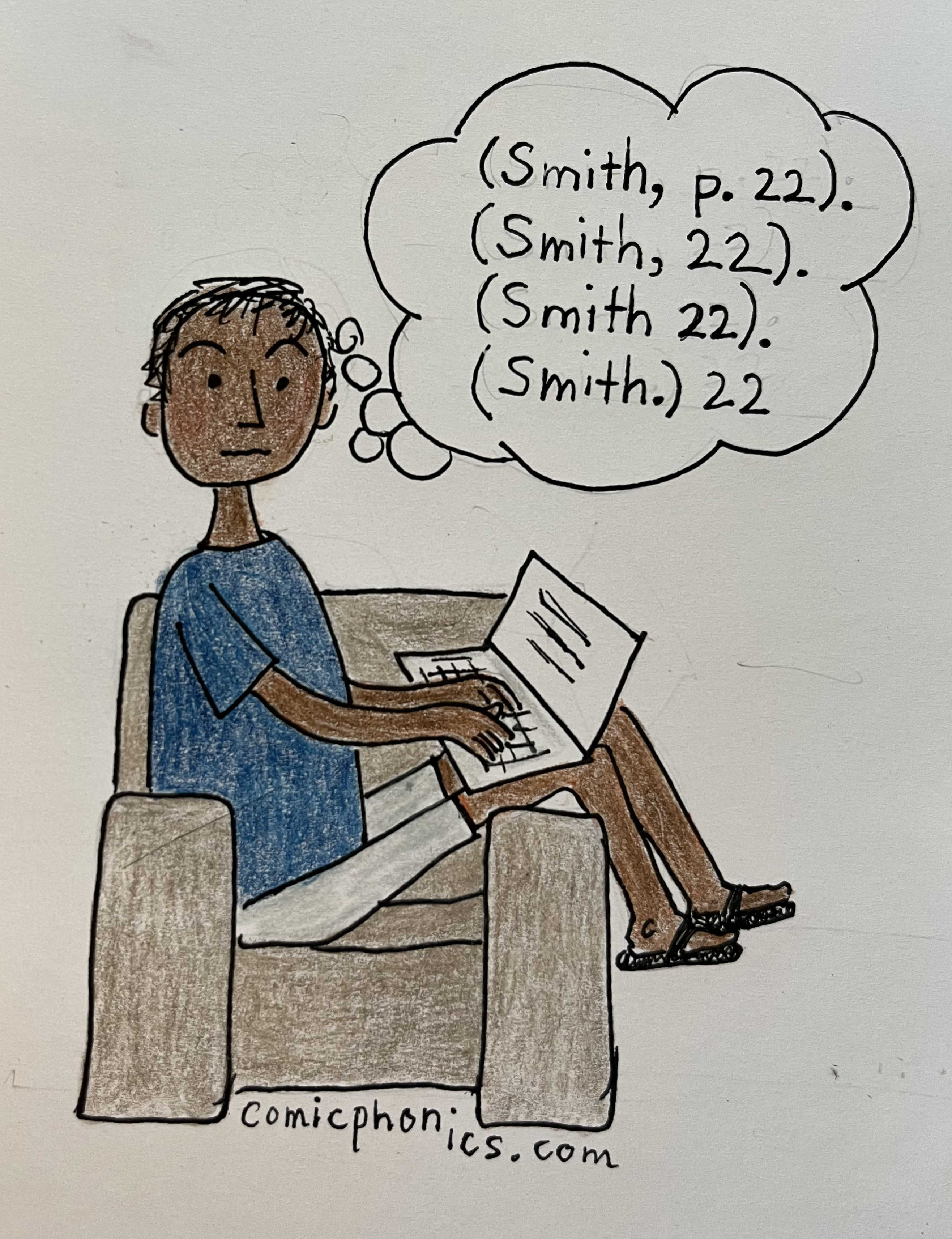
Provide citations which students must use in their writing.

Don’t assign tasks easily done by AI such as summaries. Assign tasks that require critical thinking such as analyzing, synthesizing and evaluating.
Require students to reflect in writing about the writing assignment: what they liked about it and what they found hard.  This can be done at any stage of a writing assignment.  The information might suggest a mini-lesson to help students overcome a writing problem.

If students are writing about a book, quiz them on details in the book. Make them prove they have read the book before they write about it.

As you read student work, notice vocabulary that seems too advanced for a particular student. Ask the student what that word means.  Also, notice if that same word is used in more than one student’s writing.  That could be a sign of AI involvement.

Assign more short assignments and fewer long assignments so students spend more time writing.

Remind students that you will use Turnitin, GPTzero, and Copyleaks if you suspect a student used AI in an assignment.
What does “to write” mean in 2023?

I used to think I knew what it meant to write and to teach how to write, but in recent weeks I am not so sure anymore.

I’ve read how AI Chat GPT can write paragraphs hard to distinguish from student-written paragraphs.  I’ve read some of those Chat GPT paragraphs, and I can’t tell the difference.  Is this how students—those who can afford Chat GPT—will write now:  input information and receive coherent, grammatically correct output to turn in for assignments?

Since students will certainly use Chat GPT and other AI like it, what do teachers teach?  If not on the writing process, should the focus be on key words?  Should teachers  look at the output and think, well, the input must have been pretty good to achieve this good of an output, so I’ll give the student an A+ on input.  Are key words what we will be grading from now on since we can expect the actual composing will be done by a machine?

Do teachers need to ask students to weave some highly local information—the spelling bee yesterday at XYZ School, the performance of substitute teacher Mrs. Poggi last week—into their writing so that AI has no way to access that local information into its output, and so students are forced to write for themselves?

Do teachers need to look at the kind of writing AI can do well—description, for example, and historical summaries—and no longer assign that kind of writing?  Do teachers need to look at the kind of writing AI can’t do well—hypothetical situations, for example, or inference or human emotions—and and assign writing embedding those concepts?  (If General Lee had asked for your advice when President Lincoln offered him command of the Union armies at the start of the Civil War, what would you have advised him in view of his reputation then and today?)

With visual information sources (streaming TV, YouTube, video games, and Facetime) replacing more static sources (newspapers, journals, and letters) in the 21st century, is the kind of writing teachers focused on in the 20th century no longer useful to students today?  Should English teachers stop asking students to write essays determining who is responsible for the deaths of Romeo and Juliet and instead ask students to create a video comparing the open carrying of swords in 16th century Verona to the open carrying of guns in the US today—complete with photos of swords and guns and videos of  sword fights and gun fights?

We are living in a period of rapid flux, with the technology of 2022 already out of date in 2023.  The teacher education I received in the early 1990s was outdated then, with no mention of how to incorporate computers into learning—and for that matter, no course on how to teach writing.  I assume courses on teaching writing are now offered, but I suspect none incorporate how to use Chat GPT as a writing tool.  And by the time they do, it will be supplanted by a more advanced technology.

Which brings me back to my point:  What does “to write” mean in 2023.

15 signs your child could benefit from a writing tutor

Does your child have poor grades in writing?

Does your child hide his writing or “forget” to show you it?

Does your child leave writing homework until the last moment?

Does your child not finish his writing homework?

Does your child’s school writing consist of a word or a phrase, not sentences or paragraphs?

Does your child balk at writing complete sentences?

Does your child’s teacher seldom require long written responses?

Are almost all tests multiple choice answers only?

Does your child show frustration, uncertainty or fear when writing?

Does your child’s teacher check only that the writing is done without offering feedback on the contents and execution?

Are your child’s writing assignments really grammar or editing assignments?

When your child writes, are the ideas illogical or incoherent?

When your child writes, are there many punctuation, grammar or word usage mistakes?

When your child writes, does he use general, vague vocabulary, not specific vocabulary?

When your child writes, do many sentences contain a single subject and a compound predicate?

All of these are signs of a weak writer, a student who is not practicing writing enough to become a proficient writer.  If this is your child, he or she could benefit from one-on-one instruction from a qualified writing tutor.

How to encourage more student writing and still have a life

If students are to improve their writing, what is the single best thing they can do?

Write  Write.  Write.

Teachers know this.  So why don’t teachers assign more writing?  To paraphrase a former President, “It’s the grading, stupid.”

Reading student writing takes a long time, but writing comments on the writing takes a life time.  A fifth grade teacher might have 28 or more student papers to grade.  A high school English teacher might have 128.

So how can a teacher, tutor, or parent encourage frequent writing without giving up her life?

Here is the solution one teacher, Jori Krulder, has found effective.

  • The teacher reads student essays without writing a word on them.
  • On separate papers, one for each student, the teacher records three things:
  • One, a score for the essay based on a rubric which the teacher and students have previously agreed upon.
  • Two, an element of writing which the student did well.
  • Three, an element of writing which the student needs to improve.
  • The teacher jots down on another paper the strengths and weaknesses of the class’s essays and adds ideas for mini-lessons to teach the whole class.
  • The teacher reports these strengths and weaknesses orally to the class.
  • The teacher returns the unmarked essays, giving each student a feedback paper to fill in. See the box.

  • While students work on their writing, the teacher meets for five minutes only with each student (taking up to three days of class time per class or section per essay). The teacher and student compare the score each gave the essay.  If the scores differ, the teacher talks to the student about the reasons for the discrepancy.  Then they talk about the rest of the information on the feedback sheet.
  • At the end of five minutes a timer rings and the conference ends. If students want to talk longer, they can visit the teacher after school.
  • Students as a group are given a resubmit date for their essays.

According to Krulder, students are able to focus on what the teacher says during the conference, take notes, and use that information to improve their essays.  The result is a noticeable improvement in the resubmitted essays.  An additional yet unexpected benefit is improvement in student-teacher relations.

For more information on Jori Krulder’s method of responding to student writing, go to edutopia.org.


Evaluating student writing

When I work with student writers, I ask them to evaluate their own writing.  The process I use is simple and works no matter what type writing the students do.

After the student has revised a piece of writing, I draw a large “T” which creates two columns.  I label the first “Did well” and the second “Needs improvement.”  I ask the student to identify what was done well and what needs work.

We start with the “Did well” column.  If the student is stumped, I ask questions about things which the student obviously did well.  “Did you have a beginning, middle and end?”  If he says yes, I ask him to write “B-M-E” under “Did well.” “Did you spell correctly?”  He writes “spelling” under “Did well.”

I try to list at least three things the student did well, no matter how basic his writing is.  Handwriting, starting sentences with capitals, writing periods and commas that look like periods and commas—I search for positives.  The more the better.

Then we move to the “Needs improvement” column.  Usually the student will mention errors we have just corrected during revision.  He might say “run-ons” and using a word like “so” or “just” over and over.  With practice he will identify the conceptual errors, such as organization problems or not writing a topic sentence.  I  bring up one of these larger issues and go back to the paper to show an example of that problem.

I limit “Needs improvement” to three so the student doesn’t get discouraged and so he can keep those three in mind the next time he writes.

After we do this many times, the student realizes he is making the same kinds of mistakes over and over.  When this happens and a student is about to write a  new draft, I ask him what mistake he is likely to make.  He says, “run-ons” or “a hook that doesn’t hook.”  This helps him focus on how to improve his writing while he is writing, long before we evaluate it.