Category Archives: AI or artificial intelligence

Teachers limit use of AI in English classrooms

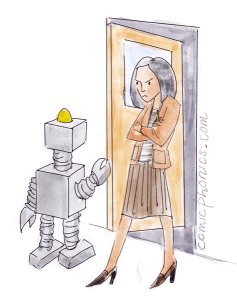
The news this week is that the Oscars have officially banned AI scriptwriters from receiving awards.  Only real people need apply.  This is just the latest act of frustration over AI doing human work.

Teachers, too, are banning AI writing by their students.  AI has caught on so quickly with students that they are using it to do their homework.  And if students suspect their teachers will recognize that AI did their work, students can resubmit the homework to AI and ask that it be rewritten to sound more like the student—a seventh grader with a C average who misspells their, there, and they’re and who doesn’t recognize run-on sentences.

According to December 2025 polling by RAND (a research organization, http://www.rand.org), 48 to 62 percent of middle, high school and college students used AI regularly for homework between May and December 2025.  It’s easy. For example, a student can type into ChatGPT a question like “Who really caused the tragic deaths of Romeo and Juliet?” In less than three seconds a response begins to appear, naming several possible culprits and reasons for their choice.  With slight finagling of words, the student has an answer good enough to turn in.  No thought about the question is necessary, and only minor thought is required about how to circumvent a teacher’s plagiarism detectors.

Another way students are using AI is to read summaries of whatever they need to read, and then responding to teacher questions based on the summaries, not based on the original writing.  Students are bypassing Shakespeare and J.D. Salinger to let AI tell them the gist of that literature.

Teachers have become as wily as students.  One way teachers have found to eliminate AI is to ban the use of classroom computers or other electronic devices.  Students are required to read original documents in class, leave the documents at school, and write about them only in school.  Some teachers have given up on requiring at-home writing altogether; rather, they require students to write in class in longhand on numbered papers the teacher distributes.  When students need to revise, they cut apart their rough drafts and tape them together in a better order.  For students who haven’t learned to print or use cursive clearly, this can be tough.

If teachers ban the use of electronics in classes because of embedded AI, are they denying students practice on the technology they will use in their future jobs?  Or are they preparing them to be good thinkers?

Ways AI can grade student writing

High school students complain about how slowly they receive their graded tests from teachers, especially written work.  Essays in particular are slow to be returned.  Weeks—sometimes even a month—will pass before a teacher hands back a graded essay to a student.

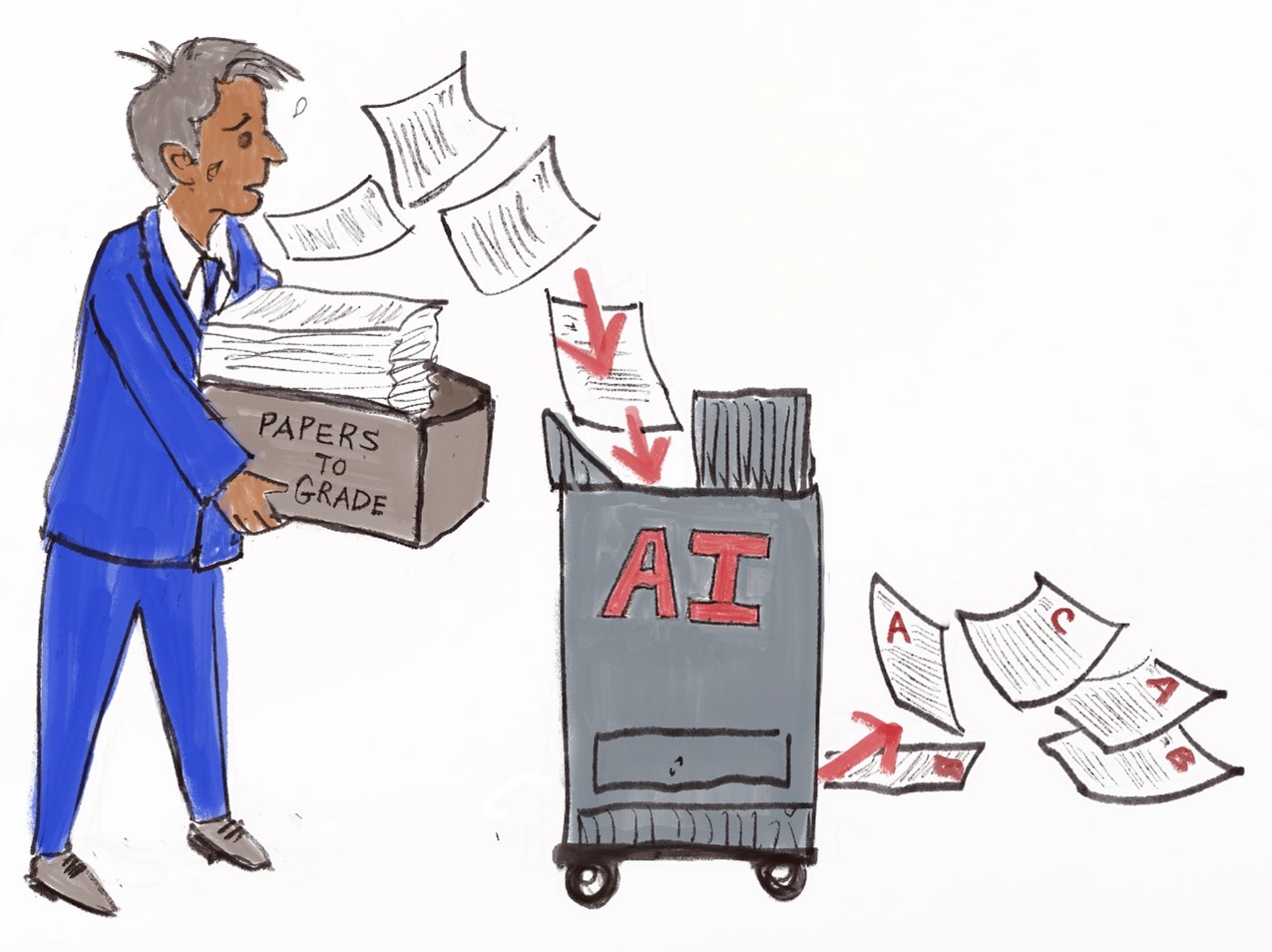
That is changing, or it could be, if teachers use an automated essay grading system (AEG).  Artificial intelligence (AI) embedded in software available online can do grading lickety-split almost as well as teachers can.  Some widely-used AEG systems include: 

The E-rater® (ETS).  This software is used to grade standardized tests like the GRE and GMAT. According to the E-rater website, this software uses AI and Natural Language Processing (NLP) to evaluate:

  • “content analysis based on vocabulary measures
  • “lexical complexity/diction
  • “proportion of grammar, usage and mechanics errors
  • “proportion of style comments
  • “organization and development scores
  • “rewarding idiomatic phraseology.”

IntelliMetric™.  This software evaluates over 400 features for a comprehensive analysis.  According to the IntelliMetric website, this product can score open-ended questions and give students immediate feedback.  It does this by “learning” responses made by experts and applying them to student work.  IntelliMetric software considers organization, development of ideas, sentence structure, style, conventions and coherence.

Intelligent Essay Assessor (IEA): This software uses Latent Semantic Analysis (LSA) to evaluate semantic content and meaning. It compares student written essays to pre-scored essays written by experts.  The scores that student essays earn when evaluated with this software compare to the scores human evaluators would give the essays, according to the IEA website.

PEG (Project Essay Grade): This software identifies patterns in a student’s writing (use of prepositional phrases, word count, and punctuation, for example) and correlates those features with complexity, fluency and mastery of conventions found in good writing.  According to the PEG website, PEG focuses on six traits of writing, including organization, style, development of ideas, word choice, sentence fluency, and conventions. All this is done using technology:  Latent Semantic Analysis (LSA), Latent Dirichlet Allocation (LDA), and large language models (LLMs).

Virtual Writing Tutor: This free online software can find grammar and spelling errors in student work.  It can also link you to an online tutor.

SmartMarq: Teachers can list their own criteria for evaluating student work, feed it into SmartMarq’s software, and have the software evaluate student work.  The evaluations are customized to the teacher’s criteria.

In reading the websites of the automated essay grading systems discussed above, I found one problem over and over.  The websites themselves seem not to have been evaluated for their readability. If you’re a computer expert, the words and abbreviations probably makes sense.  But based on my own trouble understanding these websites, I wonder if they make sense to English teachers who are teaching students to use standard English.


Making peace with AI, one word at a time

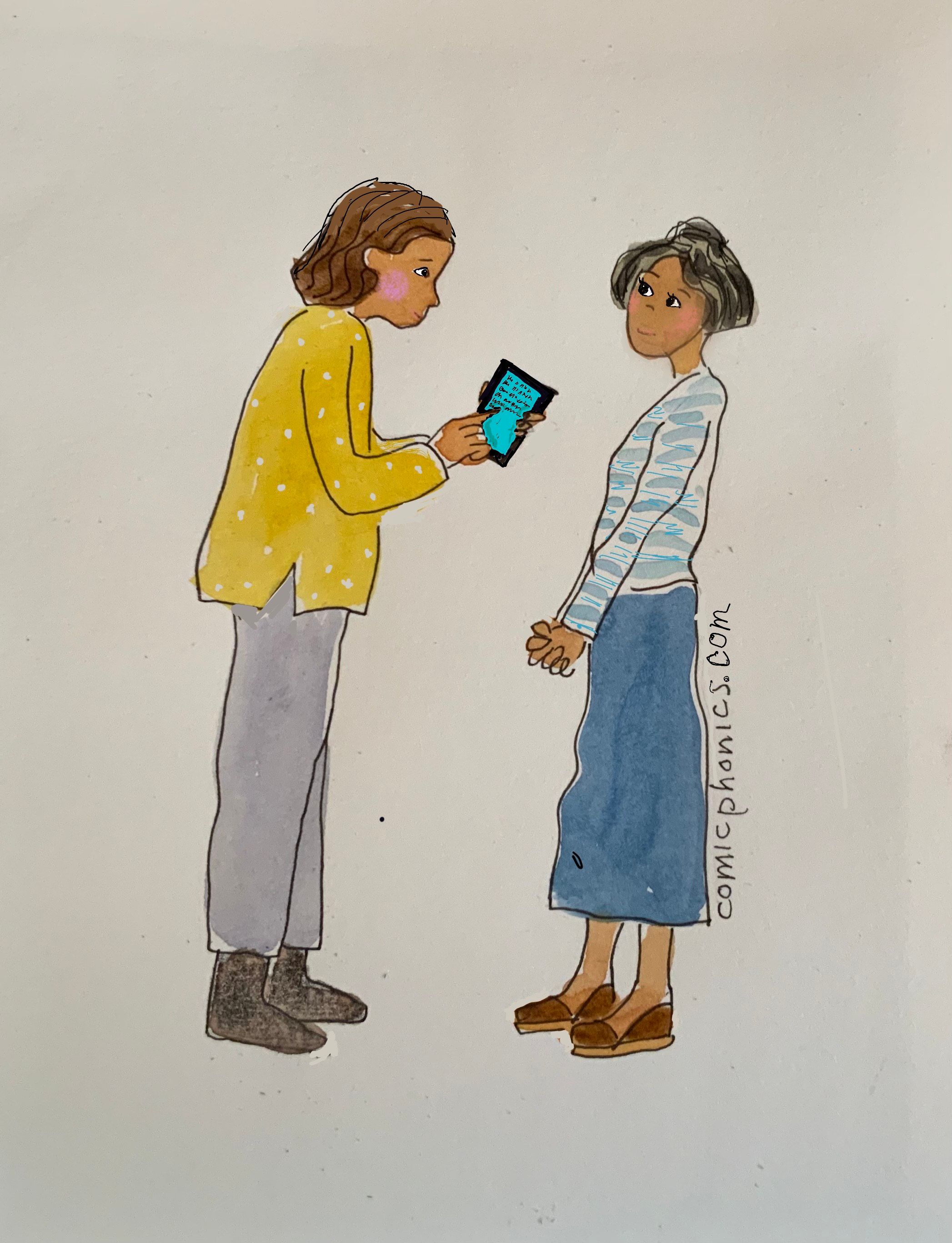
A student was writing about a vacation experience using an iPad.  As he lengthened words into phrases and phrases into sentences, corrections automatically appeared on his google document.  For example,

  • My student wrote, “We stoped at” but before he could write the next word, google’s AI changed “stoped” to “stopped.” My student did not need to think why his spelling was wrong or how to fix it.  AI subtly did that for him, allowing the student to focus on the content of what he was writing.
  • My student wrote, “but we couldn’t eventually see.” Google AI changed the word order to “but eventually we couldn’t see.” No explanation was given to my student for this change.  He probably didn’t notice it because he was finishing the sentence.

When I work in Microsoft Word, that software makes similar changes.  Right now, as I type the word “type,” over that word appears the correct spelling.  The software has guessed what word I want and has suggested how to spell it.  I don’t need to know how to spell.

As a teacher [teacher, teaches, and teaching just appeared as I wrote the word “teacher”], I realize my students are not forced to spell correctly, or to understand proper word order, or to remember that the pronoun “I” needs to be capitalized.  As long as they compose on electronic equipment in its default mode, they need not learn the nitty gritty of writing.

What is a teacher to do?  Allow AI to do its magic?  Or interrupt a student’s flow to ask why AI made a particular change?

My decision is to allow AI to fix my students’ work.  My students will likely be writing on a computer or tablet or phone for years to come, and will avail themselves of these fixes outside of class.  So why not in class?  Kids used to take pencil to paper to write; now they take fingers to a keyboard.  I see this situation as similar to allowing math students to use calculators, or letting my phone remember phone numbers, or letting GPS direct me on vacation.

I have another student taking an AP course.  Soon she will need to take a test requiring her to write several paragraphs in longhand.  Without AI to correct her, her poor grammar skills will show.  Even if her thinking is flawless, if she cannot write a coherent sentence to show her thinking, her grade will disappoint.

Yet looking at my students’ futures, how often will they be required to write in longhand?  Is the teacher requiring longhand for a test being realistic?  Writing in longhand is becoming passé.

I suspect this blog will seem ridiculous to my grandchildren when they are my age.  Technology will have changed so much by then.  And the changed technology will change the expectations of teachers and students.  Better they learn to use technology than how to spell “stopped” correctly.  Their future depends on technology, not on correct spelling.

11 ways to discourage student use of AI in writing assignments

As teachers prepare to return to school, many wonder how to incorporate AI into their curriculum.  For teachers of writing, the opposite might be true:  how to encourage original thinking by students who might be tempted to use AI to do their assignments.  For those teachers, here are eleven suggestions:

At the beginning of the school year, ask students to handwrite in class a paragraph on what they studied in ELA last year, what they liked, what they didn’t, and why. Hold onto that writing.  If you suspect a student is using AI to write, compare the writing style of the early document to the later one.  If they are not similar, ask the student to redo the assignment.

Require that students go through all the steps of writing, including writing an organizer, writing a main idea sentence, writing a first draft, and revising. Grade each of these steps in the writing process, not just the finished product.  Once you have approved the organizer, require students to continue organizing their writing the way they originally planned it.

Require all but the final draft to be done in class in handwriting on notebook paper. Provide the paper, marked a particular way for each class section you teach to discourage first period students from sharing with third period students.  If possible, require different essay topics from different class sections.  Collect work done in class at the end of class, and check to be sure each student has submitted his or her work.

Require that specific information of your choice—information that AI is not likely to have in its huge data base—be included in the student writing.  That information could be from a student’s personal experience, such as comparing a novel’s character to a teacher in the school or writing a new beginning to Huck Finn as if the student is Huck.

Provide citations which students must use in their writing.

Don’t assign tasks easily done by AI such as summaries. Assign tasks that require critical thinking such as analyzing, synthesizing and evaluating.

Require students to reflect in writing about the writing assignment: what they liked about it and what they found hard.  This can be done at any stage of a writing assignment.  The information might suggest a mini-lesson to help students overcome a writing problem.

If students are writing about a book, quiz them on details in the book. Make them prove they have read the book before they write about it.

As you read student work, notice vocabulary that seems too advanced for a particular student. Ask the student what that word means.  Also, notice if that same word is used in more than one student’s writing.  That could be a sign of AI involvement.

Assign more short assignments and fewer long assignments so students spend more time writing.

Remind students that you will use Turnitin, GPTzero, and Copyleaks if you suspect a student used AI in an assignment.

Are autocorrect software features a help or a hindrance to learning?

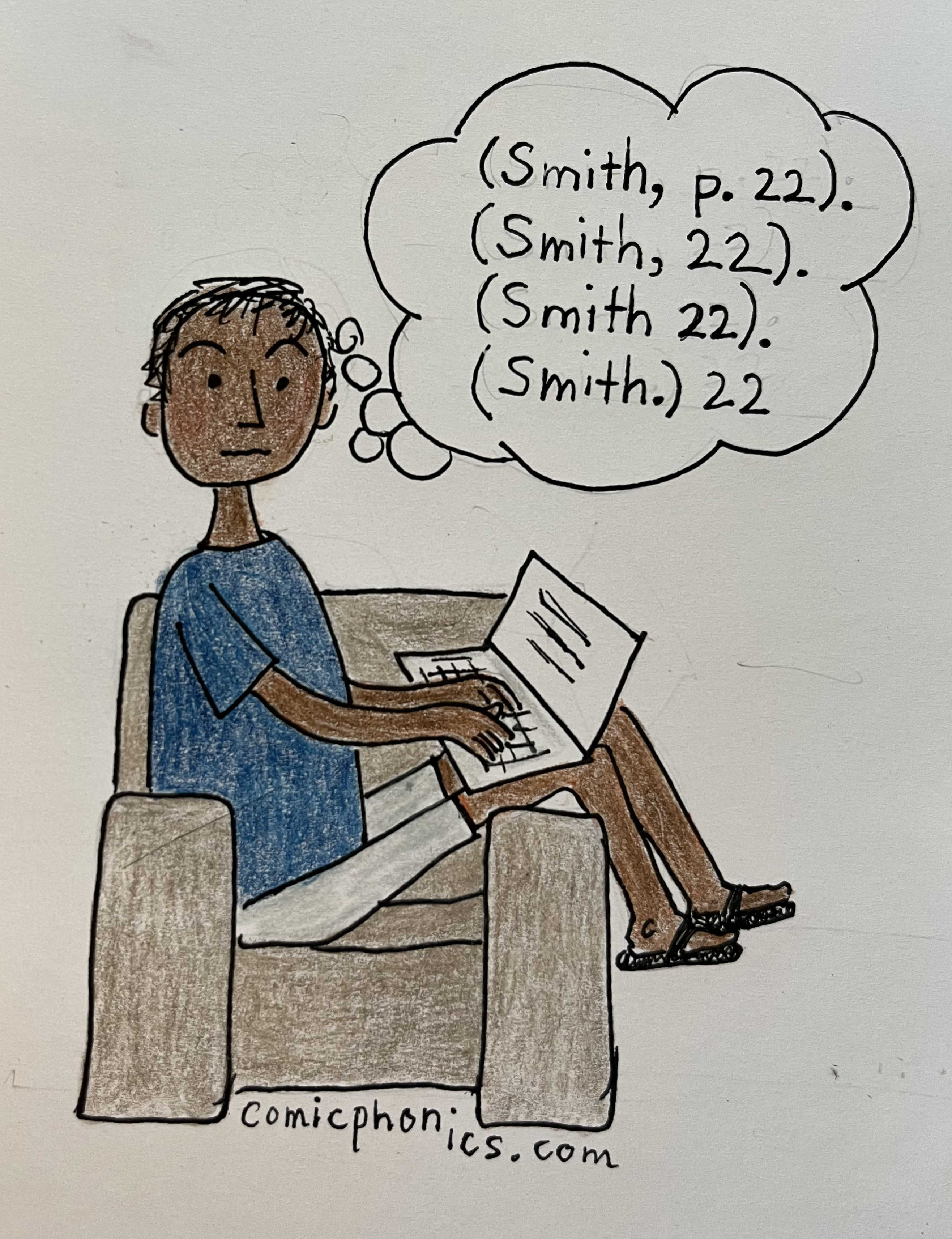
When I work with student writers online, they make spelling mistakes, verb tense and number mistakes, and punctuation mistakes.  When they do, a squiggly underline alerts students that they have made an error.  What almost always happens next is that the student clicks on the error, notices a correction suggested by the software, and clicks on that suggestion, replacing the error with the suggested correction.  The student rarely tries to figure out what the error is, and rarely tries to figure out if the offered solution is correct.

AI to the rescue.

But is this a good idea? Using AI this way offers many benefits.

  • Students can correct errors immediately. No trying to figure out what is wrong and no trying to figure out how to correct it.
  • Student writers become more efficient, spending their time thinking about content rather than grammar or spelling.
  • The correction software is free, embedded in the Word or Google Doc software. No need to subscribe to Grammarly or Microsoft Editor.
  • Dyslexic students and others can work independently with confidence that their writing is error-free, or almost.

Using AI also offers drawbacks.

  • Students do not improve their spelling, use of apostrophes, or subject-verb agreement. There is no incentive to improve if the software can do it all.
  • Sometimes the software makes mistakes such as when the student writes slang, acronyms or abbreviations. It can’t detect homophones and might leave as uncorrected this sentence:  The bare walked in the backyard.
  • If the student’s spelling is way off, the software might not be able to tell what the student means and might not detect an error or know how to fix it.
  • Students can become over-reliant on autocorrect software. If they are tested by writing on notebook paper, their work is full of common mistakes.
  • Specialist words not commonly used in everyday writing might not be recognized by the autocorrect software.

The corrections can be turned off easily, but none of the students I work with do that.  They depend on the autocorrect feature—some because English is their second language and some because their teachers have not focused on spelling and grammar.

What’s a teacher to do?  Allow or not allow autocorrect?

I have decided to allow it for the reasons noted above.  Using it saves time and allows me to focus on composition rather than spelling and grammar.  If I see a student making the same error over and over, I will draw his or her attention to it, and we might have a lesson on it.

Many of my students’ parents disagree.  They want me to focus on spelling and grammar during the rough draft stage of writing.  I used to explain that doing this interrupts the flow of ideas.  Now I don’t need to explain because students make corrections with the click of a mouse long before their parents see their errors.

In their adult lives, students will be working on computers, tablets or other electronic devices with built-in autocorrections.  Using autocorrections will be as normal as using microwave ovens.  Schools should prepare students for the real world of tomorrow, not for the world of their grandparents.