Yearly Archives: 2016

When should I use a comma?

“When should I use a comma?” is the question about writing I am asked  more than any other.
student thinking about what to write

Below are the rules.  But experts disagree on many of them, and good writers ignore some of the rules.  If you are a student, ask your teacher what she expects.  Language is always changing, and that includes rules for writing language.  In general, as American English has become more informal, fewer commas are used today than in the past.

  • The rule: In a series of three (red, white, and blue), use two commas.  The practice:  Many people skip the comma before the word “and.”  They think, if I don’t need a comma between “white and blue,” why do I need one for “red, white and blue”?
  • The rule: In a compound sentence, a comma goes after the first clause.  (I like snow, so I like winter sports.)  In practice:  If the clauses are short, most good writers skip the comma if the meaning is clear.  If the clauses are long, they use the comma.
  • The rule: Use a comma after a stand-alone adverb which starts the sentence.  (First, let me eat.  Then, we can talk.)  The practice:  Sometimes the comma is used, but many times it is not if the meaning is clear.
  • The rule: When a dependent clause starts a sentence, end that clause with a comma before writing the independent clause.  (The previous sentence is an example of that.)  The practice:  Good writers follow this rule.  What if the first clause is the independent clause?  No comma is needed.  Students make lots of mistakes with this rule, especially when using the word “because.”
  • The rule: When you start a sentence with “because,” you cannot put a period at the end of that clause.  Instead, you must end that clause with a comma and continue the sentence with an independent clause.  The practice:  Teachers tell students they can’t start sentences with “because” to avoid students’ writing fragments.   Of course, you can start a sentence with almost any word, including “because,” if you use correct sentence structure and punctuation.
  • The rule: Appositives require commas before and after.  (My teacher, Mrs. Smith, gives lots of homework.)  If an appositive ends the sentence, then the “after” comma becomes a period.  The practice:  Commas are often not used with appositives.
  • The rule: The identity of the person speaking a direct quote needs to be set off with a comma.  (Mom said, “Eat your dinner.”  “Eat your dinner,” Mom said.)  If the spoken words end with a question mark or exclamation point, then the comma is not used.  (“Look!” said Mom.  “Where?” I asked.)  The practice:  Most good writers use this rule.  If the quote is indirect, commas might or might not be needed.  (Eat your dinner, my mother said.  I said I would.)
  • The rule: Between cities, states and countries commas are needed, but not between states and zip codes.  The practice:  This rule is used.
  • The rule: Between days of the week, dates, and years, commas are needed.  (My vacation stopped on Saturday, August 13, 2016, when I returned home.)  Notice that if the date does not end the sentence, a comma is required after the date or year.   The practice:  This rule is followed by good writers.
  • The rule:  If just a month and year are used, no comma is required.  (He graduated in May 2016.)  The practice:  This rule is generally used, but some grammar books require a comma in the last sentence.  (He graduated in May, 2016).
  • The rule: If “yes” or “no” begin a sentence, those words are followed by a comma.  (Yes, I can hear you.)  The practice:  This rule is followed.
  • The rule: When speaking directly to someone, a comma is used before or after the person’s name.  (Lou, come here.)  The practice:  This rule is followed.
  • The rule: To offset a negative phrase, commas are used before and after.  (I saw Annushka, not Sei, at the movies.)  The practice:  This rule is followed.
  • The rule: For house numbers, no comma is needed.  But for other numbers of a thousand or more, commas are needed to separate every three numerals beginning from the right or decimal point.  The practice:  This rule is followed.

If you are using a grammar book as a reference, check the date.  Older versions require more commas.  If you are using a source from outside the US (English booklets prepared by a foreign company, for example), more commas will be required.  If you are a high school or college student, ask your teacher which style book he or she will use to grade your work and follow that style book’s rules.
The new SAT writing essay is an improvement

Big changes have come to the SAT essay.

  • It’s optional, not required any more.
  • You have 50 minutes, not 25, to complete it.
  • It’s based on a reading passage, not an out-of-the-blue idea.
  • It will be judged on three criteria: your understanding of the reading passage, your ability to analyze the reading passage, and your writing skills.

It’s still not easy, but it’s certainly more like the writing students do in college.  Often college students need to read a book or a journal article and write a response to it.  Students need to show that they understand what the reading is about, that they can analyze the thinking that went into the passage, and that they can do so in clear, sophisticated English.  Rarely are college students ever offered a philosophical problem with no warning and no preparation, and rarely too are they asked to respond with an essay in one sitting.

The old, 25-minute limit was ridiculous.  Planning a response was reduced to three minutes; writing was limited to 20 minutes; and checking for errors lasted about two minutes, or more often, not at all.  When I work with students on writing anything we spend significant time on planning, developing details and ordering the paragraphs.  You can’t do that in three minutes.  And for most of the writing college students do they have overnight or longer to provide a response.  Good writers put their writing down, take a walk or a hot shower, and then return to the writing inspired.  At least with the new SAT there is breathing room.

Even though the reading selection might contain highfalutin vocabulary, you don’t need to understand every single word to get the gist of a reading selection and to analyze it.  The reading passage is long enough and contains enough persuasive arguments that the student can readily understand it with a strong high school vocabulary.

And the essay is optional.  For students who can write, this is their chance to prove it, adding another way to impress college admission officers.  For students who can’t write well, their lack of skill will show in the multiple choice section of the writing test.

Google the new SAT writing test to find websites offering greater perspective on the change.  See if you agree that the change has improved the test.

How many words are too many words?

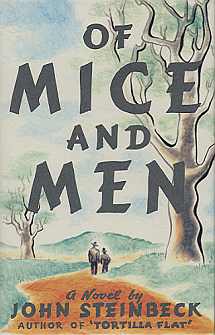
“Write concisely” always appears on rules for good writing.  And some writers follow that rule.of-mice-and-men-book-cover

  • John Steinbeck’s Of Mice and Men has 29,150 words. He later won the Nobel Prize for Literature.
  • Ernest Hemingway’s Old Man and the Sea, which won the Pulitzer Prize in 1953, has 26,601 words. He too won the Nobel Prize for Literature.
  • Agatha Christie, the best-selling writer of all time, wrote novels averaging between 40,000 and 60,000 words, with female murderers’ stories usually using fewer words than male murders’ stories.
  • F. Scott Fitzgerald’s The Great Gatsby, required reading in many American high schools, has 47,094 words.persuasion-book-cover
  • K. Rowling’s first Harry Potter novel has about 77,000 words but her fifth and longest one has about 250,000 words—more than three times as many as her first.
  • Jane Austen, the second most widely known English writer today (Shakespeare is first), wrote Persuasion, considered her best novel by many critics, with 87,978 words.

But other writers have ignored the advice to write concisely, and they have done well for themselves.

  • Charlotte Bronte’s Jane Eyre has 183,858 words.
  • Leo Tolstoy’s Anna Karenina has around 349,700 words English translations and his War and Peace has between 561,000 and 587,000 words, depending on the translation.
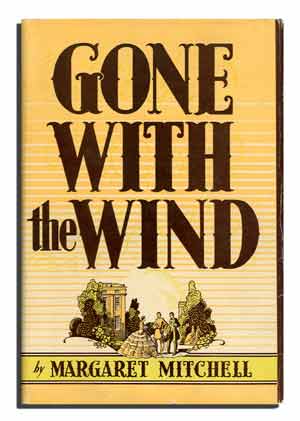
  • Margaret Mitchell’s Gone with the Wind has 418,053 words. It won the Pulitzer Prize in 1937.

gone-with-the-wind-book-coverIs there an optimal number of words in novels?  It turns out publishers think so.

  • 20,000 to 55,000 is best for middle grades novels.
  • 60,000 words is best for young adult fiction.
  • 80,000 words is best for most general adult fiction, mystery fiction, and literary fiction. (Memoirs, which are nonfiction, also top off at 80,000 words.)
  • 110,000 words is the ideal length for sci-fi fiction and fantasy fiction.

How to use vocabulary workbooks as the basis for writing lessons

Teachers and tutors, do you want to save time and get double or triple use from the same source?  Use your students’ vocabulary workbook to teach writing.

EPSON MFP imageMany of my  students use the Wordly Wise 3000 series (which I recommend).  It has 20 lessons per booklet, one booklet per grade, first through twelfth.  In each lesson is an annotated list of new vocabulary words plus exercises using the words.

Like other vocabulary building series, each lesson also has a reading selection in which each new vocabulary word is used.  These reading selections are followed by many questions asking the student to use one of the new vocabulary words in a complete sentence answer.

But other ways to use the vocabulary and reading selections augment their original purpose and make them valuable as writing tools.  Here are some I have used.

  • Summarizing.  I teach students to underline the most important or key words in each paragraph.  Next, I show how to analyze each paragraph and to write an identification in the margin next to the paragraph.  Those phrases might be “dodo bird’s appearance,” “raising $ for Statue of Liberty base,” or “Renaissance dates and definition.”  Then, using the underlines and margin information, I teach the student to write a summary of each paragraph in about one or two sentences.  When he is done, he has a good summary of the reading selection.
  • Paraphrasing.  Taking one sentence at a time, I ask students to rewrite the sentence, keeping the meaning but changing the sentence structure and, where possible, the vocabulary.
  • Writing RACE responses.  I write a question based on the article.  Then I ask the student to respond using the RACE format (Repeat the question, Answer the question, Cite part of the article used as evidence, and Elaborate on that evidence with more evidence).
  • Writing sentences using new vocabulary words.  So many times students can define a word but they cannot use it properly in a sentence. I ask them to write sentences using vocabulary words. This shows their weakness in understanding certain words and helps me to explain the words better to them.
  •  Writing paragraphs using new vocabulary words.  I ask students to write each new word in a coherent paragraph or two. Writing a paragraph takes more skill than writing independent sentences.  Not only does the student need to know how to use the word, but he needs to know its noun, adjective and verb forms and whether it is the best word in a given situation.  Forming a coherent whole takes imagination and hard work.
  • Writing narratives.  Put a person or animal into the nonfiction situation in the reading passage and write about it. What if you were a dodo bird encountering your first human being?  What if you were a Cherokee forced to say good-bye to your land in North Carolina and trek toward the unknown?  What if you were Leonardo’s apprentice, entrusted to carry the rolled up canvas of the Mona Lisa from Florence to France?

If you are teaching children to write, you know that coming up with a writing topic is tedious.  But by using the reading selections from the vocabulary workbooks, the subject matter is identified, the student has prior knowledge, and the vocabulary words are identified.

There is no need to reinvent the wheel.

Why write sonnets? To inspire creativity

I often have wondered why poets lock themselves into the constraints of certain poetic forms, particulary sonnets.  They are so hard to write, yet the best poets have done so, from Shakespeare to Robert Frost.  Consider the difficulties imposed by the Shakespearean sonnet:

  • The sonnet must have 14 lines.
  • Those 14 lines must be divided into two or three parts: the first part is always 8 lines and the second part is either 6 lines or a combination of 4 lines plus a final couplet.
  • A sonnet must follow a rigorous rhyme pattern: a b a b, c d c d, e f e f, g g.
  • Each line of the sonnet must have ten beats.
  • For each of line, the second, fourth, sixth, eighth and tenth beat must be stressed (iambic pentameter).
  • In the first 8 lines the poet states a problem or a situation; in the second four lines the poet offers a solution or a different perspective; and in the final couplet, if there is one, the poet offers a surprise.

Phew!  Why would any writer box himself in to such a strict format?

It has to do with creativity.  Research has shown that real breakthroughs in creativity occur right after the poet / thinker is stumped and gives up.  It’s too hard!  I can’t do this!  I give up.  And then the poet sleeps on it or drinks on it or walks his dog and voila!  Out of nowhere (it seems) comes the solution, and not just any solution but the perfect solution.  This is that lightbulb moment depicted in cartoons.

Problem leads to frustration leads to giving up leads to subconscious making connections leads to eureka.

With a devilish form like the sonnet, the poet is forced to turn his brains inside and out, churning outrageous ideas before the answer sneaks up, seemingly out of the blue.  Without the difficulty of the sonnet form, the mastery of language, rhythm, rhyme and idea would not fuse into a gorgeous whole.

And that is why poets write sonnets.