To paraphrase is not to summarize

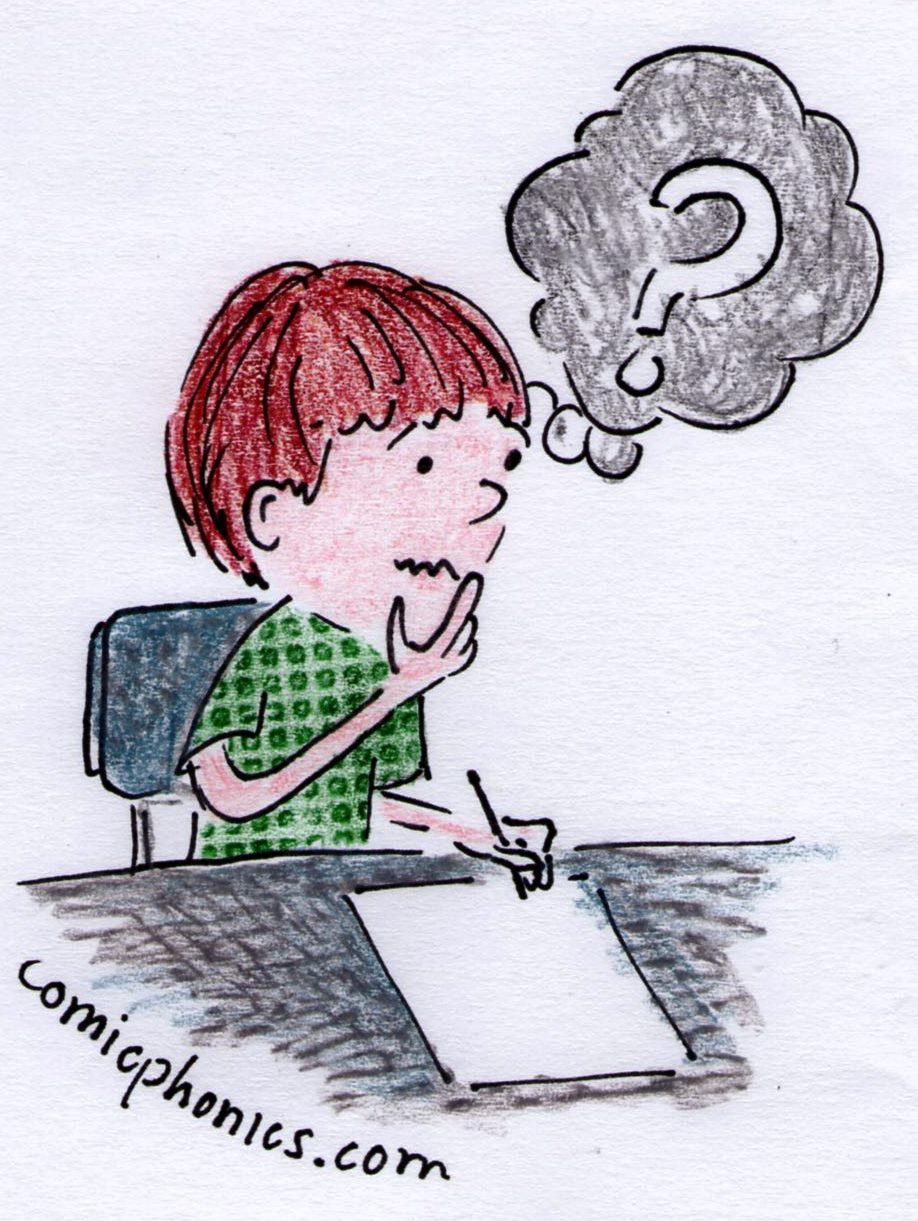
Paraphrasing means restating, using your own words and grammar to interpret the essence of a document.  Paraphrases contain about the same number of words as the original.  In paraphrases, you write the ideas in the same order as in the original.  You include all the original ideas and details, but you use spot-on synonyms for all key words and you use your own phrasing and sentence structure.  To follow the original sentence structure, merely substituting synonyms for significant words, is plagiarism.girl writing and thinking

Summarizing also means restating while using your own words and grammar.  But summaries are much shorter than the original.  A summary includes all the main ideas, but names only the most important details.  Summaries need not follow the original document  in order of presentation of ideas, though a summary should identify the original method of organization.  Nor does a summary need to include information from every paragraph.  Hooks can be eliminated.

Summaries distill the focus of the original document into concise language.  If your summary seems like a list of data, then it is poorly written.  You should use logic to connect ideas.

Why are summarizing and paraphrasing so important?  If you can paraphrase or summarize an article well, that shows you understand the original.  Paraphrasing is much like translating from one language to another.  You leave nothing out while finding the right vocabulary, grammar and tone to express the original document’s ideas.  Summarizing is also like translating, but for an impatient listener who wants only the important ideas.

Using long direct quotes is frowned upon in both paraphrases and summaries.  The exception is if the original document contains famous phrases or words.  Even then, only snippets of the original should be used.  If you are paraphrasing Abraham Lincoln’s “Gettysburg Address,” for example, quoting “of the people, by the people, and for the people” would be okay since those words are so identified with the document.  But quoting the whole sentence from which those words should not be done most of the time.

If you are paraphrasing or summarizing a writer or document whose style is important–Hemingway, for example–then showing that style by using direct quotes would be necessary.  Another way to handle that style issue would be to write your paraphrase or summary in the style of the original document and then point that out to the reader.

How many words are the right number of words?

Consider the following

  • 300 words was the length of the average paragraph from the 1400s to the 20th century.
  • 100 to 200 words is the length of the average paragraph today.
  • 15 to 20 words per sentence is the average that experts recommend today.
  • Of those 15 to 20 words, the ideal syllable count is 25 to 33 and the ideal character count is 75 to 100.*
  • Gov.uk, the United Kingdom’s government website, promises it will not publish a sentence exceeding 25 words.
  • 300 to 500 words is the desired length of most news stories for the Associated Press, according to a memo from editors in 2014.

I suspect the trend to write shorter paragraphs, shorter sentences, and shorter articles has to do with the inviting look of white space, as well as the decreasing attention span of readers.

White space—the kind shown here between paragraphs—makes writing look friendlier, and people are more apt to read friendlier writing.

A paragraph indentation has a bit of white space, but not much.  For that reason, I think, the default spacing of computers gives extra white space between paragraphs.  More white space means more friendly means more likely to be read.

When the newspaper USA Today first was published in 1982, it looked different from other newspapers:  color graphics accompanied stories; bullets were used in place of or in addition to paragraph indentations; paragraphs were short.  Some critics at the time called USA Today “McPaper or “television you can wrap your fish in” because, like TV news, its stories were short.  Two years later USA Today had the second largest circulation of any US newspaper.  Traditional newspapers were forced to incorporate a similar graphic style to compete.

I use bullets all the time, in part to add white space.  The white space surrounding a bullet and the extra white space preceding every line of type that starts with a bullet adds readability to my text.

Using 1.15 spacing (not 1.0 spacing) between lines is another way to add  readability.  That extra smidgen of white space separates the lines of type just enough to make them more readable.  My computer’s default spacing is 1.15, and yours probably is too.

How many words are the right number of words?  The only thing certain is that the right number is smaller, much smaller, than in the past, and appears in a larger sea of white space.

To encourage student writing, publish it

When I was in fifth grade, I wrote an article about how a piece of paper goes from being part of a tree to being a page in a newspaper.  I turned it in.  My teacher returned it with a good grade.  I was satisfied.

Days later, I was asked if I could return the article.  The eighth graders were publishing a school newspaper and wanted to use my article.  They wanted to print my article.  Oh my gosh, I thought to myself.  I’m a writer.

If you know a student whose writing you wish to encourage, publish it.  How?

  • Type it up, print it and make it look good. Or ask the student to.  When I show students versions of their work printed on white paper with no erasures, no cross-outs, and no mistakes,  they are speechless.  When writing looks professional, students think it is professional, and by extension, they think of themselves as writers.


  • Turn the writing into booklets. Type the words in small sections about three inches wide.  Carefully cut the sections apart and paste them at the bottoms of folded white paper.  (8 ½ by 11 computer paper is fine.)  Ask the child to illustrate the top of the page in crayon or colored pencils.  Or cut out illustrations from magazines or clip art online.  Add a cover page which includes a title and the student author’s name.  Add an “about the author” page at the end with the student author’s autobiography and photo.  Staple the pages together along the fold.


  • If you are computer savvy, do all that online and download it or email it to special people—grandparents, former teachers, friends.


  • Start a family blog and include your student’s writing with family news and pictures. Make it possible for your child to show her friends her online writing via an app.


  • Encourage your child’s school to create a “Writers’ Wall” where the good writing of students is displayed for classmates to see.


  • At home begin a three-ring binder of student writing and display it on your coffee table for guests to browse. At school do the same thing for classroom writers with tabs to section off each student’s work or the work of each grade.


  • Make a video of your child reading his work aloud. Email it.  Add it to a family blog.  If appropriate, let it serve as your family’s  holiday greeting.

It’s not the publishing, but what that publishing means in the mind of students.  Their self-perception changes from the fifth kid in the third row to published writer.

If we want to encourage anything, we need to celebrate it.

“Automatic pilot” sentences can reveal character

Do you have “automatic pilot” sentences, the kind you use most of the time when you aren’t thinking about grammar or effect, the kind you use when you are speaking off the cuff or writing to a friend?  Most of us do.

Do you know that these “automatic pilot” sentences reveal how we think?  Take a look at the following sentences and some possible interpretations.

Dogs bark.   Simple sentence, subject followed by verb, no modifiers.  Clear thinker?  Simplistic thinker?  Black and white thinker?

Some dogs bark, but not all dogs bark.  Compound sentence, simple grammar, modifiers, repetition of idea.  Clear thinker?  Simplistic thinker?  A thinker who hedges?  A thinker who repeats for emphasis?  A thinker who wants to prevent misunderstanding?

Although some dogs bark, not all dogs bark.  Complex sentence, less important idea stated first, modifiers, repetition of idea.  Complex thinker?  A thinker who hedges thoughts?  A thinker unwilling to impose views on others?

Although some dogs bark, not all dogs bark, and not all barking animals are dogs.  Compound-complex sentence, complex grammar, multiple qualifiers, repetition of idea, convoluted logic.  Complex thinker?  A thinker who hedges thoughts?  Muddled thinker?  An attorney?  A trickster?

When I talk to immigrants for whom English is not a first language, my automatic pilot sentences are short and usually simple or compound.  I use no contractions.  My vocabulary is basic unless I recognize that they are comfortable with English.  My sentences use active, not passive, verbs.  My sentences seem to show I am a simplistic thinker.

But when I speak to native born English speakers and especially to savvy adults, I speak in long and complicated automatic pilot sentences, like this one.  I use contractions and, unless I am talking to a child, an academic vocabulary.  My sentences seem to show that I am a complex, well educated thinker.

Take a look at an email you’ve written.  What do your automatic pilot sentences reveal about your mind?

If it matters, put it last

When most people talk, they make their point, pause, reconsider it, and add a bit more.  They ramble.  For example,

  • I went to the store this morning, and bought some coffee, but not my usual brand–they were out of that–but you know, I am glad I  did because I like the new brand better.

But when good writers write, they consider their sentence structure carefully, naming their most important information last for emphasis.  For example,

  • Grandpa watched the fly flit from lamp to chair to table, chuckling as the curious insect enjoyed a balmy summer flight before Grandpa smashed it dead.

If you write a compound sentence, with clauses connected by the coordinating conjunction “and,” you lose the opportunity for most end of sentence emphasis.  That is because “and” connects clauses of equal weight.  Even so, whatever is said in the second clause gains a slight weight just because it comes last.

If you change the “and” to “but,” a stronger end of sentence emphasis emerges.  That is because a clause after the conjunction “but”  either qualifies or contradicts the previous clause, thereby having the final word.  For example,

  • I ate the sandwich Mom prepared, but first I removed the cheese.

If you write a complex sentence, you write an independent clause and a dependent (subordinate clause).  The information in the independent clause is always more significant because an independent clause is more significant than a dependent clause.  Even so, whichever clause is written last in the sentence gains additional emphasis simply because it comes last.

Abraham Lincoln used this end-of-sentence emphasis to his advantage when he wrote his “Gettysburg Address.”  His uppermost thought throughout the speech was that the the US democracy must survive.  Notice how he emphasizes this thought in the last few words of his last sentence:

  • “. . .that we here highly resolve that these dead shall not have died in vain, that this nation shall have a new birth of freedom, and that government of the people, by the people, for the people shall not perish from the earth.”

Many poems place great emphasis on the last words.  Notice how important–and thought provoking–is the emphasis on the last word in “The Road Not Taken” by Robert Frost.

  • Two roads diverged in a wood, and I—
    I took the one less traveled by,
    And that has made all the difference.

Jane Austen’s opening sentence in Pride and Prejudice, like the punchline of so many jokes, uses the last word for irony and humor:

  • It is a truth universally acknowledged, that a single man in possession of a good fortune, must be in want of a wife.

To write better, consider your point and make it the last word.