Category Archives: teaching writing

11 ways to discourage student use of AI in writing assignments

As teachers prepare to return to school, many wonder how to incorporate AI into their curriculum.  For teachers of writing, the opposite might be true:  how to encourage original thinking by students who might be tempted to use AI to do their assignments.  For those teachers, here are eleven suggestions:
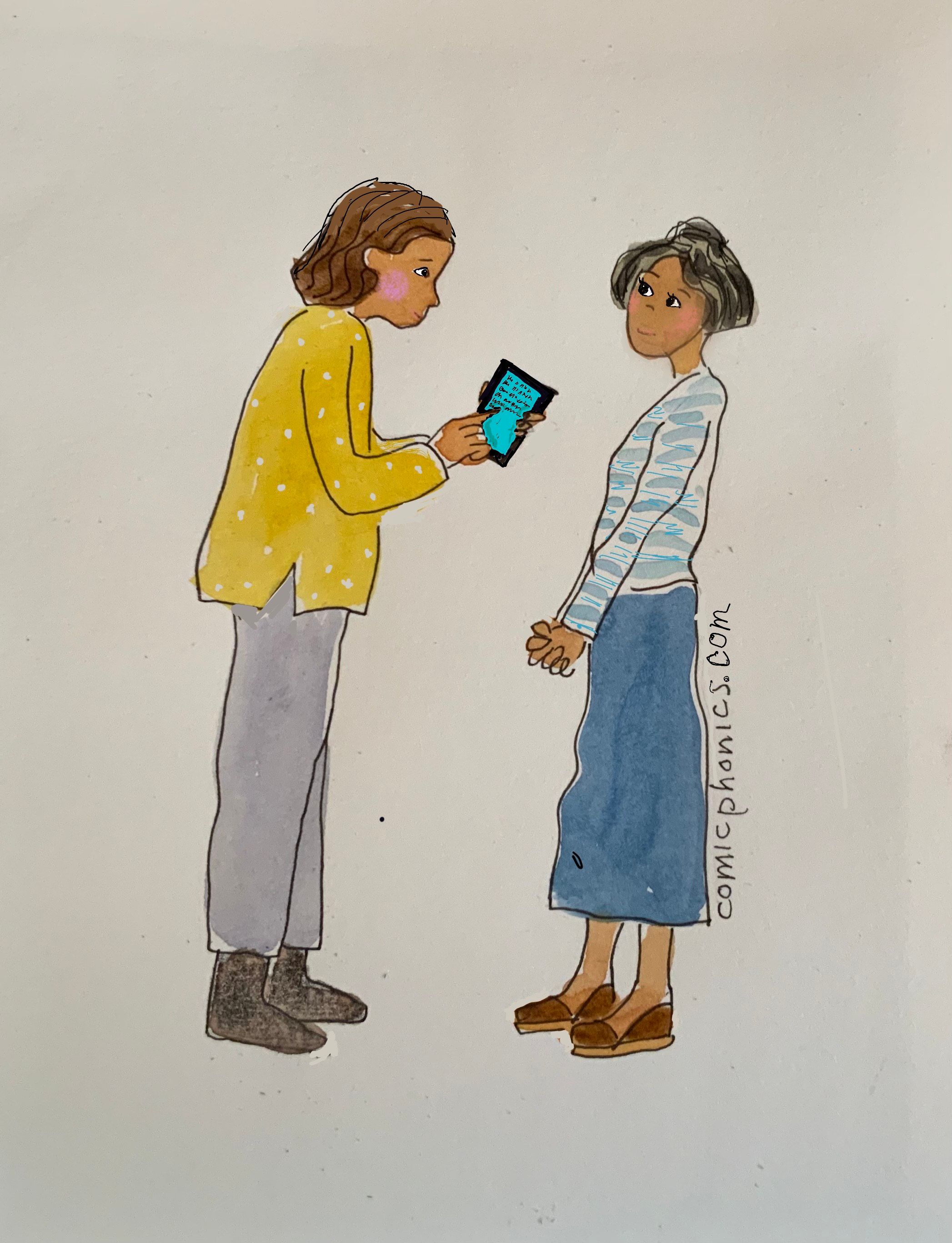
At the beginning of the school year, ask students to handwrite in class a paragraph on what they studied in ELA last year, what they liked, what they didn’t, and why. Hold onto that writing.  If you suspect a student is using AI to write, compare the writing style of the early document to the later one.  If they are not similar, ask the student to redo the assignment.

Require that students go through all the steps of writing, including writing an organizer, writing a main idea sentence, writing a first draft, and revising. Grade each of these steps in the writing process, not just the finished product.  Once you have approved the organizer, require students to continue organizing their writing the way they originally planned it.

Require all but the final draft to be done in class in handwriting on notebook paper. Provide the paper, marked a particular way for each class section you teach to discourage first period students from sharing with third period students.  If possible, require different essay topics from different class sections.  Collect work done in class at the end of class, and check to be sure each student has submitted his or her work.

Require that specific information of your choice—information that AI is not likely to have in its huge data base—be included in the student writing.  That information could be from a student’s personal experience, such as comparing a novel’s character to a teacher in the school or writing a new beginning to Huck Finn as if the student is Huck.

Provide citations which students must use in their writing.

Don’t assign tasks easily done by AI such as summaries. Assign tasks that require critical thinking such as analyzing, synthesizing and evaluating.
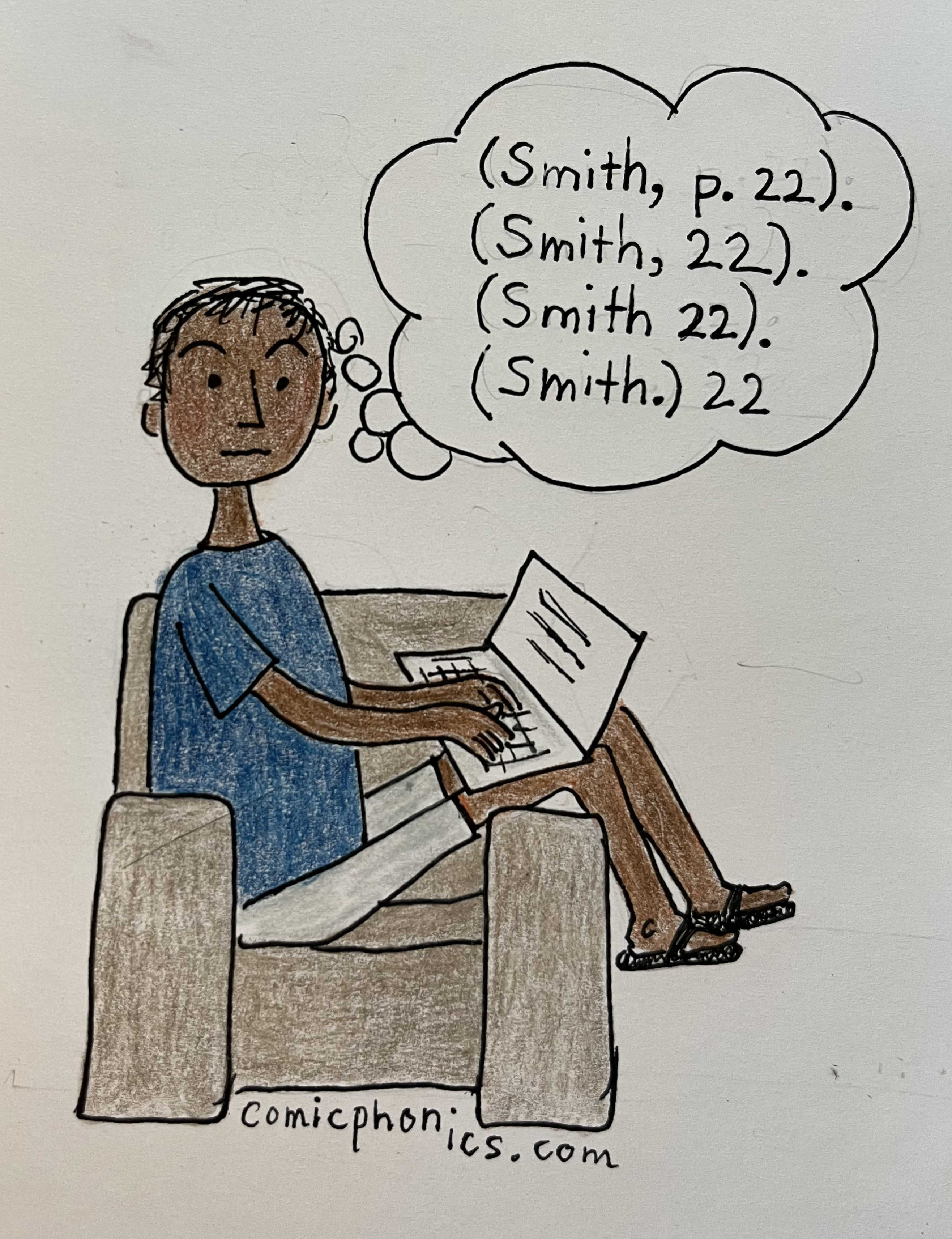
Require students to reflect in writing about the writing assignment: what they liked about it and what they found hard.  This can be done at any stage of a writing assignment.  The information might suggest a mini-lesson to help students overcome a writing problem.

If students are writing about a book, quiz them on details in the book. Make them prove they have read the book before they write about it.

As you read student work, notice vocabulary that seems too advanced for a particular student. Ask the student what that word means.  Also, notice if that same word is used in more than one student’s writing.  That could be a sign of AI involvement.

Assign more short assignments and fewer long assignments so students spend more time writing.

Remind students that you will use Turnitin, GPTzero, and Copyleaks if you suspect a student used AI in an assignment.
Let students learn from other students’ writing

Students love to read what other students have written, especially if everyone is writing about the same thing and if everyone is the same age.  Students are immediately engaged, checking to see how their peers handle the same writing assignment as themselves.

For example, I have asked elementary students to read the textless picture book Flora and the Penguin by Molly Idle.  Then I have asked them to analyze the table below.  It contains student-written versions of parts of the Flora story.

Linda Marion Nancy
One day there was a girl On a cold winter day a girl Once upon a time Flora
There was a penguin who wanted to play with her. When a penguin poked its beak out of the water A penguin named Steve put his body in the water.
They started to dance while ice skating.  They did more and more ice skating until they were tired. They skated this way and that way. They skated and danced together.  They jumped and twirled.  They slid across the ice.
When the penguin saw a fish, he jumped in the water. The penguin smelled a school of fish. Steve poked his head in the water.  Flora said, “What are you doing?”  Steve disappeared.
When he came out he had a fish in his mouth.  Then the penguin gave it to her as a present. The penguin came back with a fish in her mouth.  Flora was outraged.  The penguin gave the fish to Flora. Steve got a fish.  He gave it to Flora as a present.  Flora thought the fish was disgusting.
She threw it back in the water. She threw it back in the water. So, she threw it back in the water.
Before she left, she put her [shoe]lace in the water and tried to get a fish.  So, she kept on pulling until she got a fish. Flora felt sorry for the penguin, so she took off one of the lacings on her skates.  She dipped it in the water so she could get a fish for the penguin.  The two of them pulled as hard as they could and out came a fish. She took her [shoe]lace out.  She put it in the water just like a fishing net.  A fish approached.  They both tugged and tugged and tugged and tugged on the lace.  They caught the fish.
The fish got eaten by the penguin. They started skating and they were happy. They started skating all over again.

Usually when  students analyze the writing of other students, they recognize when it is good.  They note that “This version has dialog” or “This version tells that it’s morning.”  Analyzing the writing in the table above, one second grader said he like the “tugged and tugged and tugged and tugged” part because it shows how hard it was to catch a fish.  Another said she liked “They skated and danced together.  They jumped and twirled.  They slid across the ice.” because it showed different kinds of play.

Students are surprised to see that some second graders write better than some fifth graders.  We discuss what the second graders do that the fifth graders don’t.  “More details.”  “Different ways to start sentences.”  “More interesting verbs.”

Help your students become better writers by exposing them to the writing of other students.  Encourage them to analyze why some writing is better than others.  Take a simple scene such as a girl and a penguin sliding across ice and ask students to describe it.  Then share responses and discuss what is good about them.

As they say, good writing is not rocket science.  Mostly it’s revising.

Encourage complex thinking in little kids’ writing

When children start to write sentences, teachers and workbooks encourage simple sentences (sentences with one complete subject and one complete predicate).  Such a sentence might be “I am seven years old” or “My dog had pups yesterday.”

As students progress, teachers encourage compound sentences (two simple sentences connected with a FANBOYS—for, and, nor, but, or, yet, so—conjunction).  Such sentences might be “I am seven years old but I can ride a bike” or “My dog had pups yesterday and I can name one.”

As students progress to a greater age, and in theory, to more complex thinking, teachers encourage complex sentences (two simple sentences connected in such a way that one sentence is clearly more important).  Such sentences could be “I am seven years old although I look older” or “My dog had pups yesterday while I slept.”

Teaching sentences this way presupposes that little children think in simple sentences, then gradually grow into thinking in compound sentences, and then as they mature more, think in complex sentences.

The problem is, this pairing of sentence types to maturity is a false correlation.  Have you ever listened to four- and five-year-olds speak?  “I want five candies because Johnny has five candies” (complex sentence).  “For Halloween, I want to be a princess with a long pink dress and a sparkly crown in my hair and maybe ballerina slippers” (simple sentence).  “She pushed me into the snow with a real hard push, the kind of push of a football player mad at the guy carrying the football.” (simple sentence)

These sentences in the previous paragraph contain complex thoughts (cause and effect, layered details, and a metaphor).  Yet only the first sentence is a complex sentence, and of the three, it is the least complex in thought.  The other two show far more complexity of thought, yet they are simple sentences.

The complexity of these sentences can be shown by boldfacing the simple subject and predicate, and by stacking the dependent ideas  above (if they are said first) and below (if they are said after the subject and predicate).  Notice how the two simple sentences show more layers (more complexity of thought) than the complex sentence.

I want five candies

because Johnny has five candies.


For Halloween

I want to be a princess

with a long pink dress

and a sparkly crown

in my hair

and maybe ballerina slippers


She pushed me

into the snow

with a real hard push

the kind of push

of a football player

mad

at the guy

carrying the football


My point:  Little children speak with complex ideas.  Encourage them to write with complex ideas too.

Use a template to write a persuasive essay introduction

Suppose a student wants to write a persuasive essay.  A million and one ways to begin such an essay exist, small comfort to a student looking for just one reliable way to write an introduction.  Does such a template exist?

Yes.  And using it, a student can write the introduction in five sentences, too, which many teachers require.

  • First, think about the topic and write a general sentence relating to that topic.
  • Second, write more specifically about the topic in two sentences, heading in the direction of your main idea (thesis) which you should already know from organizing your ideas.
  • Third, transition to your main idea (thesis) by connecting what you have just written to what you will write next.
  • Fourth, write your main idea.

Let’s try a few examples.

Suppose a fifth grader wants to persuade that soccer is a good sport for kids.  Here is one opening:

  • When my grandmother was a kid, none of her friends played soccer.
  • Why? Hardly any soccer leagues for kids existed then.  There were baseball leagues and basketball leagues and football leagues, but there were hardly any youth soccer leagues.
  • Nowadays, almost every city or town in the US has soccer teams for kids.
  • Soccer is a great sport for kids to play because it strengthens muscles, teaches teamwork, and teaches how to accept defeat.

For that same fifth grader, here is another essay introduction:

  • My friend, Mario, says baseball is a better sport than soccer for kids.
  • My other friend, Julio, says football is better than soccer for kids.
  • My sister, Emma, who is tall, says basketball is better than soccer for kids.
  • I think they are all wrong.
  • Soccer is a great sport for kids to play because it strengthens muscles, teaches teamwork, and teaches how to accept defeat.

Here is a third possible introduction written at a high school level:

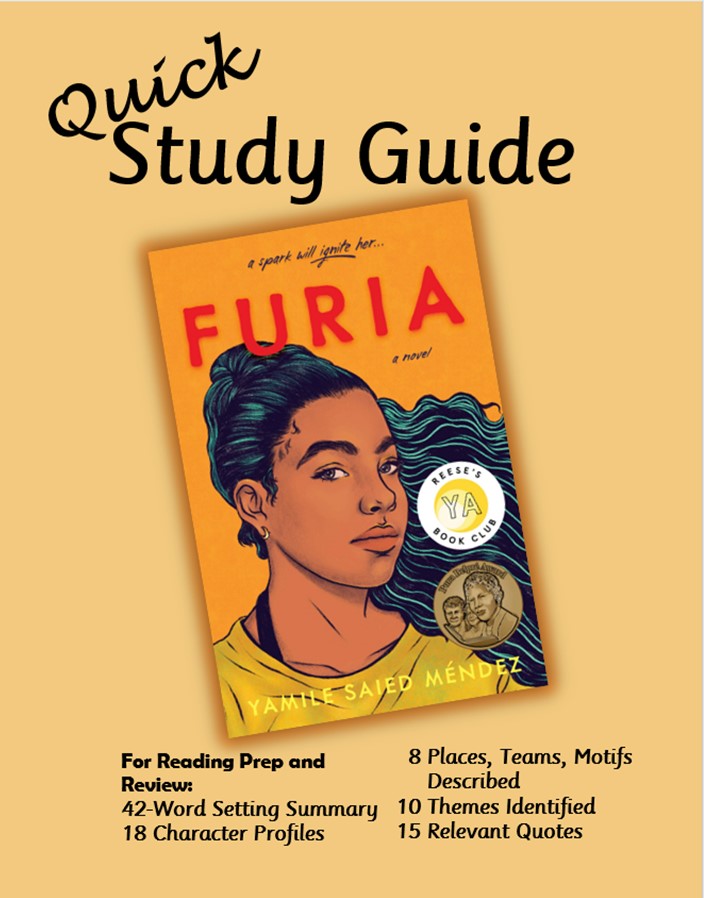
  • Furia by Y.S. Mendez is a novel about a teenage girl from Argentina who wants to play professional soccer.
  • But Camilla is growing too old to be thinking of soccer, according to her father who thinks adult soccer is for men only.
  • She should be thinking about boyfriends, he thinks, especially a rich local boy who has made it to a professinal soccer team.
  • But Camilla cannot give up her dream to play soccer as an adult, and why should she?
  • Soccer is a great sport for young adults to play because it strengthens muscles, teaches teamwork, and teaches how to accept defeat.

Notice that each of these three introductions uses the word “soccer” in the first sentence, alerting the reader that the essay will be about soccer.  Neither first sentence hints that the essay will be about why soccer is good for a kid or young adult.  That doesn’t come until the last sentence of the paragraph, the topic sentence.

All three introductions start out with general ideas:  the first one, that no one in the US played soccer years ago; the second one, that various people think a particular sport is better than soccer; and the third one, that a novel focuses on a girl who wants to play soccer.  Each first sentence idea is developed in the next two sentences.  In the fourth sentence, the focus shifts to an idea connecting the first three sentences to the main idea (thesis) sentence.

What I am suggesting is a pattern you can use to write introductions to persuasive essays.  You don’t need to start from scratch each time you write.  You can use the steps I describe above, fill in the blanks, and write an okay—maybe even great—essay introduction.

For more ideas on how to write, read my book How to Write a 5th Grade (or any other grade) Essay.  Or contact me for tutoring lessons.  I am now scheduling fall online classes.

Use a template to write an essay introduction

Starting essays—writing introductions—is one of the hardest writing challenges for many students.  They look at white space on their notebook paper or on their laptop and wonder, “How do I begin?”

What if they had a template that worked?  Here’s one I have developed for students who need to write an essay about some feature of a novel, film or play.

  • First sentence: name the novel, name the author and identify the location of story and when the story takes place.


  • Second, write a two-sentence summary of the story.


  • Third, write a transition sentence to connect the summary to the main idea.


  • Fourth, write the main idea (thesis).

Let’s try it out.  Suppose a fourth-grader is writing about what a silly little brother Fudge is in Tales of a Fourth Grade Nothing.  How would that introduction begin?

  • Tales of a Fourth Grade Nothing by Judy Blume takes place in New York City in modern times.


  • A big brother, Peter, is bothered by his little brother, Fudge.  Some people who don’t know Fudge think Fudge is cute.


  • But even Fudge’s mother and father get mad at him.


  • In the book, Fudge does some really dangerous things like fall off a rock, lose his shoe on a subway, and eat a turtle.

Now, suppose an eighth grader needs to write about a theme in To Kill a Mockingbird. How might that introduction begin?

  • To Kill a Mockingbird by Harper Lee takes place in Alabama during the 1930s.


  • Two children, Scout and her big brother, Jem, are fascinated by a neighbor, Beau, whom they have never seen.  They think he must be a monster because he never goes outside.


  • But a few times Beau does come out without Scout and Jem knowing it.


  • Beau comes outside to show friendship when he places trinkets in a hole in a tree, when he puts a blanket on Scout, and when he saves Jem’s life.

How about one more.  A high school student needs to write about sonnets in Romeo and Juliet.  How would that introduction go?

  • Romeo and Juliet is a five-act play by William Shakespeare which occurs in Verona, Italy, around the year 1600 or a little earlier.


  • In the play, two star-crossed lovers meet, fall in love at first sight, and marry.  They are forced to separate, and their efforts to reunite fail.


  • Shakespeare tells this love story using puns, words with double meanings, and figures of speech.


  • But some of the play’s most clever lines are in sonnet form, and an example of this is the prologue of the play.

Each of these examples is five lines long, the length many teachers require.  Each names the title and author and summarizes the plot.  The fourth line connects the summary to the main idea which is the last sentence of the introduction.  Yet each essay is different because the summaries, transition sentence and thesis are different.

This template follows a pattern that students can use over and over to begin an essay about a novel, film or play.  This template works in most situations where a novel, play, or fictional film is the starting point of an essay.

For more ideas on how to write, read my book How to Write a 5th Grade (or any other grade) Essay.  Or contact me for tutoring lessons.  I am now scheduling summer and fall classes.