Category Archives: writing tips

One easy way to write a persuasive essay introduction

Suppose you are assigned to write a persuasive essay.  You don’t know how to begin.  Does a template for the introduction to a persuasive essay exist?  Is there  a way that works almost all the time?

Yes.

Five steps for a persuasive essay graphic

Let’s try a few examples.

  • Suppose a fifth grader wants to write a persuasive essay showing that soccer is a good sport for kids. She writes a thesis:  “Soccer is a great sport for kids to play because it strengthens muscles, teaches teamwork, and teaches how to accept defeat.”  Now she sets that aside for a moment.
  • Next, she writes a general sentence about soccer: “When my grandmother was a kid, none of her friends played soccer.”
  • She continues to write about soccer, heading toward her thesis idea: “Why?  Hardly any soccer teams for kids existed then.  There were baseball teams and basketball teams and football teams, but there were hardly any youth soccer teams.”
  • She writes a transition sentence from soccer in the past to soccer today: “Nowadays, almost every city or town in the US has soccer teams for kids.”
  • She goes back to the main idea sentence she set aside, and she moves it to this spot: “Soccer is a great sport for kids to play because it strengthens muscles, teaches teamwork, and teaches how to accept defeat.”

Here is her finished introduction:

When my grandmother was a kid, none of her friends played soccer.  Why?  Hardly any soccer teams for kids existed then.  There were baseball teams and basketball teams and football teams, but there were hardly any youth soccer teams.  Nowadays, almost every city or town in the US has soccer teams for kids.  Soccer is a great sport for kids to play because it strengthens muscles, teaches teamwork, and teaches how to accept defeat.

Here is another essay introduction for that same main idea:

  • My friend, Mario, says baseball is a better sport than soccer for kids.girl kicking soccer ball
  • My other friend, Julio, says football is better than soccer for kids.
  • My sister, Emma, who is tall, says basketball is better than soccer for kids.
  • I think they are all wrong.
  • Soccer is a great sport for kids to play because it strengthens muscles, teaches teamwork, and teaches how to accept defeat.

Here is a third possible introduction written at a high school level:

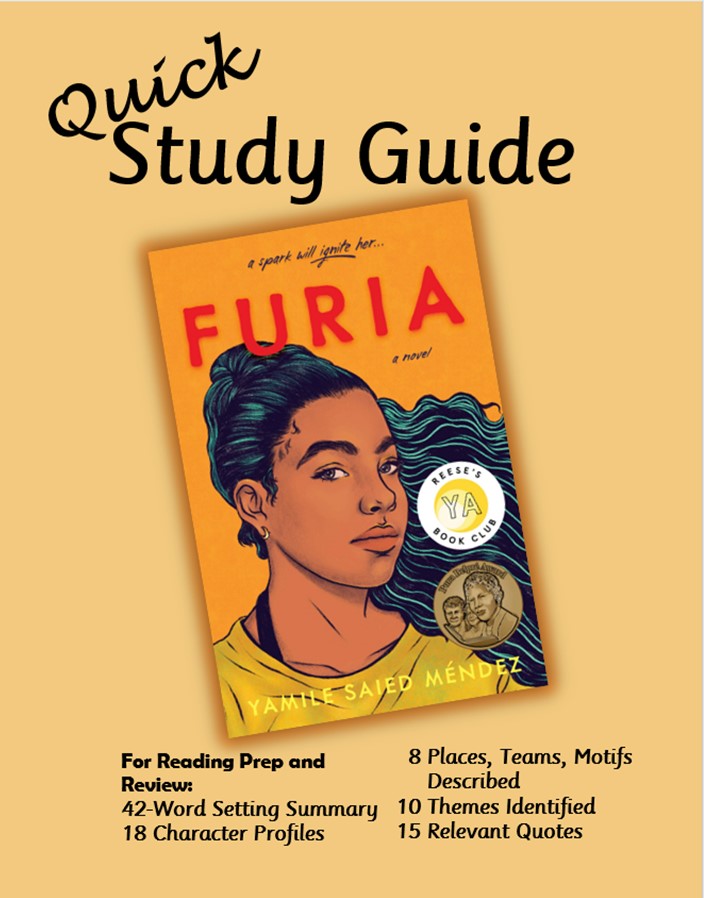
  • Furia by Y.S. Mendez is a novel about a teenage girl from Argentina who wants to play professional soccer.
  • But Camilla is growing too old to be thinking of soccer, according to her father who thinks adult soccer is for men only.
  • He thinks she should be thinking about boyfriends, especially about a rich local boy who plays professional soccer.
  • But Camilla cannot give up her dream to play soccer as an adult.  And why should she?
  • Soccer is a great sport for young adults to play because it strengthens muscles, teaches teamwork, and teaches how to accept defeat.

Notice that each of these three introductions uses the word “soccer” in the first sentence, alerting the reader that the essay will be about the topic of soccer.

All three introductions start out with general ideas:  the first one, that kids in the US didn’t play soccer years ago; the second one, that someone thinks a particular sport is better than soccer; and the third one, that a novel focuses on a girl who wants to play soccer.  Each first sentence idea is developed in the next two sentences.  In the fourth sentence, the focus shifts and links to the main idea (thesis) in the fifth sentence.

This is a pattern you can use to write almost any introduction to a persuasive essay.  You don’t need to start from scratch each time you write, wondering how to begin.  You can use the steps above, fill in the ideas, and write a satisfactory—maybe even great—essay introduction.

For more ideas on how to write, read my book How to Write a 5th Grade (or any other grade) Essay.  Or contact me for tutoring lessons.  I am now scheduling summer and fall classes.

Use a template to write an essay introduction

Starting essays—writing introductions—is one of the hardest writing challenges for many students.  They look at white space on their notebook paper or on their laptop and wonder, “How do I begin?”

What if they had a template that worked?  Here’s one I have developed for students who need to write an essay about some feature of a novel, film or play.

  • First sentence: name the novel, name the author and identify the location of story and when the story takes place.


  • Second, write a two-sentence summary of the story.


  • Third, write a transition sentence to connect the summary to the main idea.


  • Fourth, write the main idea (thesis).

Let’s try it out.  Suppose a fourth-grader is writing about what a silly little brother Fudge is in Tales of a Fourth Grade Nothing.  How would that introduction begin?

  • Tales of a Fourth Grade Nothing by Judy Blume takes place in New York City in modern times.


  • A big brother, Peter, is bothered by his little brother, Fudge.  Some people who don’t know Fudge think Fudge is cute.


  • But even Fudge’s mother and father get mad at him.


  • In the book, Fudge does some really dangerous things like fall off a rock, lose his shoe on a subway, and eat a turtle.

Now, suppose an eighth grader needs to write about a theme in To Kill a Mockingbird. How might that introduction begin?

  • To Kill a Mockingbird by Harper Lee takes place in Alabama during the 1930s.


  • Two children, Scout and her big brother, Jem, are fascinated by a neighbor, Beau, whom they have never seen.  They think he must be a monster because he never goes outside.


  • But a few times Beau does come out without Scout and Jem knowing it.


  • Beau comes outside to show friendship when he places trinkets in a hole in a tree, when he puts a blanket on Scout, and when he saves Jem’s life.

How about one more.  A high school student needs to write about sonnets in Romeo and Juliet.  How would that introduction go?

  • Romeo and Juliet is a five-act play by William Shakespeare which occurs in Verona, Italy, around the year 1600 or a little earlier.


  • In the play, two star-crossed lovers meet, fall in love at first sight, and marry.  They are forced to separate, and their efforts to reunite fail.


  • Shakespeare tells this love story using puns, words with double meanings, and figures of speech.


  • But some of the play’s most clever lines are in sonnet form, and an example of this is the prologue of the play.

Each of these examples is five lines long, the length many teachers require.  Each names the title and author and summarizes the plot.  The fourth line connects the summary to the main idea which is the last sentence of the introduction.  Yet each essay is different because the summaries, transition sentence and thesis are different.

This template follows a pattern that students can use over and over to begin an essay about a novel, film or play.  This template works in most situations where a novel, play, or fictional film is the starting point of an essay.

For more ideas on how to write, read my book How to Write a 5th Grade (or any other grade) Essay.  Or contact me for tutoring lessons.  I am now scheduling summer and fall classes.

Use a cheat sheet to write better

Having a cheat sheet nearby when writing can, like a recipe, help students remember all the “ingredients” of good writing.  Here is a cheat sheet I recommend:

As the parent/teacher, you can reproduce this cheat sheet to be used as a check list each time a student writes.  You can go over the list together and compare the student’s writing to the check list.  Using such a list doesn’t guarantee great writing, but it guarantees improved writing for upper elementary grade, middle grade, and ESL students who are new to writing in English or are not confident about their skills.

Write first, revise second, third, fourth, and edit last

Revising and editing are distinct actions.

Revising means changing text in significant ways, such as adding or deleting words, sentences, paragraphs or even whole scenes.  Revising means changing weak verbs to stronger, specific verbs.  Revising means changing sentence order or sentence beginnings or combining sentences or separating too many ideas in one sentence.  Revising means making big changes and should be done before editing.

Editing means polishing text in subtle ways, such as changing punctuation, spelling, and choice of synonyms and antonyms.  Editing means deleting most -ly adverbs, many adjectives, and obvious information.  Editing means making small changes, sometimes stylistic changes, and should be done after revising.

Which are revising and which are editing?

revising editing
Deleting backstory from the beginning of text
Using simple Anglo-Saxon vocabulary instead of longer, more complicated words
Replacing abstract nouns with concrete verbs
Deleting vague, qualifying words (e.g. some, never)
Deleting “that” except when needed for clarity
Combining sentences to delete unnecessary words
Adding information for clarity
Using “said” instead of “told,” “related,” “cried,” and other words saying how a person spoke
Replacing forms of the verb “to be” with specific verbs, action verbs if possible
Rewriting sentence beginnings for variety
Replacing most compound sentences or compound predicates with complicated simple sentences
Deleting overused words like “so,” “then,” “just” and “like”
Rewriting conclusions to add meatier ideas
In dialog between two people, not identifying who is speaking for each line of dialog
Writing direct dialog rather than indirect dialog.
Calculating words per sentence to keep within 15 to 20 words on average.
Looking for the kind of grammar mistakes you often make, such as run-ons, and fixing them.
Showing, not telling.

A mistake student writers make is to edit as they write, losing the flow of their thoughts.  It’s better to keep going, even though you know you spelled a word wrong and are tempted to look it up.  Writing is harder than editing which is why writers are tempted to edit as they go.  This is particularly true of perfectionists.

Editing before revising is a waste of time.  Good revising will delete many early edits.  Write first, revise second and third and forth, and edit last.

One easy way to improve your writing:  Read it aloud

When students and I revise their writing, the first thing I ask them to do is to read their draft aloud.  New-to-me students balk at this.  “Oh, that’s all right,” they tell me.  “You can read it.”

girl with pony tail on floor writing“No, you read it,” I say, attempting to instill in them this habit.  I have asked them to read aloud before our lesson, but they haven’t.  I can tell they haven’t read aloud previously because they stop in the middle of sentences, pause, and then make changes in their draft.

They are hearing mistakes with their ears that they don’t see with their eyes.

What kinds of mistakes do they hear?  Errors that sound wrong, even if sometimes they are grammatically correct.  These include

  • Long sentences that contain so much information that the student writer gets lost.
  • Sentences that have been revised but still contain some of the no-longer-needed words.
  • Confusing pronouns, such as when the writing is about two boys, and he writer uses “he” and “him” over and over without identifying the boys by their names.

What kinds of mistakes don’t they hear?  Visual errors are hard to hear.  These include

  • Homophones (words which sound the same but are spelled differently, such as pair and pear).
  • Spelling errors (such as reading “hoping” as “hopping”).
  • Run-on sentences separated by a comma, especially if the second clause begins with a subject pronoun.

Reading aloud doesn’t lead to finding all errors, but I have rarely worked with a student who doesn’t find at least one error when reading aloud.