Category Archives: writing tips

What to revise to improve writing

Students often think revising means editing, that is, making small changes. Adding an apostrophe or improving spelling is not revising.  Revising means making significant improvements to writing.  Revising is the process by which okay writing becomes great.

So what exactly is revising?  Here are some examples, though there are many more.

Change weak (nonspecific) verbs to specific verbs.  If possible rewrite the verb to be (is, are, was, were) and come, go, give, take, get, start, put, look, and see, but not say or said.

  • I got tired raking leaves, so I came inside and took a nap.  This becomes, After I tired from raking, I snuggled on my bed and napped.

After weak verbs, find infinitives or nouns that can be turned into strong verbs.

  • When the car started to spin, Mom took her foot off the gas pedal. This becomes, When the car spun, Mom released the gas pedal.

Use active, not passive verbs.

  • The apple was eaten by Mary. This becomes, Mary ate the apple.

Change long nouns (e.g., encouragement, contamination, habitation) to verbs.

  • Use moderation in your dietary habits. This becomes Moderate your diet.

Combine frequent small sentences (fewer than 10 words) to add sophistication to writing.

  • That’s my brother. His name is Akhil.  He is seven.  He can write a two-wheeler.  This becomes My seven-year-old brother, Akhil, can ride a two-wheeler.

Delete a sentence with just one bit of new information and put that information in another sentence to eliminate wordiness.

  • The baby fell out of the carriage. The carriage rolled down the hill.  This becomes, The baby fell out of the carriage which rolled down the hill.

Combine sentences to eliminate wordiness.

  • My uncle was wounded playing football. He played for the University of Georgia twenty years ago. He played before I was born.  This becomes, My uncle broke his leg playing football for the University of Georgia twenty years ago, before I was born.

Identify the sentence structures used (simple, compound, complex and compound-complex).  Rewrite the sentences to create more complicated simple sentences and easy-to-understand complex sentences, and to eliminate most compound sentences.

  • I watched the Rose Bowl Parade on TV, and I enjoyed it. I could not believe the floats!  They were covered with flowers, seeds, leaves, and other living things.  I hope, when I am older, to see the parade in person.  This becomes, I enjoyed watching the Rose Bowl Parade on TV.  Flowers, seeds, leaves and other living things covered the floats.  Someday, I hope to see that unbelievable parade in person.

Limit the number of dependent clauses in sentences to two.

  • The resort where we vacationed used to be a private club that attracted millionaires in the 19th century who arrived by train before wealthy people had air conditioning. This becomes, We vacationed at a resort that used to be a private club for millionaires.  In the 19th century, wealthy people arrived there by train.  They wanted to escape the heat in an era before air conditioning.

Change first words of sentences to add variety. 

  • See previous changes.

Count the number of words in each sentence.  Average them.  Aim for an average of 14 to 18 words with some longer and some shorter.  If the average is 10 or below, increase the number of words per sentence.  If the average is 20 or above, decrease the number of words per sentence.  Don’t count the number of words per sentence until you have made other changes or you will need to recount.

Use wordless picture books to teach reading and writing

Wordless picture books are just what they seem to be—beautifully illustrated picture books without any words.  Most tell stories with everything you’d expect from a story—a setting, characters, a plot, a crisis, and a resolution.  Wordless picture books are a great way to teach reading and writing.

How can you use them to teach?

For a nonverbal toddler, show the pictures and ask the child to show what is happening by acting out the story. Let the child linger over the pictures to gain as much meaning as possible.

For a verbal preschooler who cannot write, show the pictures one at a time, and ask the child to tell you what is happening. To round out the child’s observations, ask questions about emotions shown, relationships of people and animals, and predictions of what will happen next.  Ask if the story is scary or silly or serious.

For a child who can write a little, show the pictures and ask the child to write one sentence about each page. Focus on the content of the sentence.  Encourage the child to figure out the main idea of a page and write about that.  But remind about capital letters and punctuation.

For older elementary grade children, look at the pictures first. Discuss what happens at the beginning, middle and end.  Ask about the setting (time and place), what problem needs to be solved, who is the main character/s, who or what opposes that character, and how the character overcomes the problem.  Now ask the students to write an outline—not sentences, but words or phrases to remind the students what they want to include in the story.  You might share  a check list of elements to include.  Now have them write the story.

For middle school students, show the story to them once for them to get the gist of it. Then ask the students to write (one word/phrase to a line) the following situations:  exposition, inciting action, rising action, crisis, falling action, resolution.  Review these words if students seem forgetful.  Now show the pages of the book again, slowly, and ask the students to identify what happens in the book for each situation.  When done, discuss the student choices and help students match the scenes in the book with the six situations.  Now ask the students to write the story.

Where can you find wordless picture books?  Search online or, if you have a children’s librarian at your school or public library, ask the librarian.  Look for books with enticing illustrations that tell a story with a beginning, middle and end.  Two of my favorites are The Fisherman and the Whale  by Jessica Lanan and The Farmer and the Clown by Marla Frazee.

You can also use wordless films.  A favorite of mine is La Luna by Pixtar.

Eight simple ideas to improve your writing

Don’t start a sentence with there is, there was, there are, there were.  When you start this way, you start with a filler word (“there”), not with the subject. You also use a form of the linking verb “to be” which is the weakest verb you can use.  Eliminating “there is” forces you to put your subject before your predicate and to use a stronger verb.

Write short sentences.  Usually, the longer a sentence is, the more clauses it contains.  The more clauses in a sentence, the harder it is for the reader to keep the ideas straight.  Limit the number of clauses in a sentence by limiting the number of words.

Use “said,” not “spoke,” “told,” “asserted,” “claimed,” and other words which mean “said.”  “Said” is an inconspicuous word which does not draw attention to itself.  As a writer, you should be highlighting what was said, not how it was said.

Use everyday but specific vocabulary.  Highfalutin words distance writers from many would-be readers.  If you are quoting a person who uses SAT words generously, repeat his language.  But keep your own words inconspicuous, so the focus is on your message, not on your  vocabulary.

Use short transition words.  “And,” “also,” “but,” “later,” and “then” are better choices than “additionally,” “furthermore,” “however,” and “subsequently.”  Longer transition words draw attention to themselves as words, so they take the reader’s attention away from the thoughts of the text.  They interrupt the flow.  Use modest one- and two-syllable transitions.

Keep paragraphs short.  Books written 100 or 200 years ago contain long, deadly paragraphs.  More recently written books contain shorter paragraphs with more white space on the page.  That white space makes the writing look friendly and nonthreatening.  To increase the white space, use smaller paragraphs.

Use dialog—direct quotes, not indirect quotes.  With indirect quotes, the author is distilling the original quotes.  Readers want to hear the original quotes so they can make up their minds as to what is important. Readers want to hear the tone of voice, the interruptions, the pauses, the inferences, and the vocabulary of the speakers.  Readers want to be there.

Keep yourself invisible unless you are writing a first-person account, or you are a character in your narrative.  Readers should not be aware someone wrote the words they are reading.  They should be aware of the information.  But if you do need to insert yourself into the writing, say “I,” not “this reporter” or “this listener.”

You might say, “But I know writers who ignore these ideas all the time.”  I do too.  Once you reach the stature of a Tracy Kidder or Ian McEwan, you can do what you want.  But until you do, you’re more likely to be read and understood if you follow these suggestions.

****

Need a writing tutor?  Contact me through this website.  I tutor writers from second grade through high school, in the US and overseas.

Three qualities of Tolstoy’s writing you can use to improve your own

I am always hunting for information on how to write better.  Most of what I find I’ve found before.  But occasionally I find new insights, as I did last week when I read a biography of the Russian novelist Leo Tolstoy by A. N. Wilson.

Tolstoy is considered a literary genius based on his two most famous novels, War and Peace (published serially beginning in 1865), and Anna Karenina (1875).  I learned three important ideas to improve my writing from reading Wilson’s biography.

First, Tolstoy’s stories contain “hardly an incident, conversation or character” that is not autobiographical, according to Wilson.  War and Peace “evolved out of Tolstoy’s purely private preoccupations and fantasies with his own family.” “Almost every particle of War and Peace bears a relation to something in Tolstoy’s personal experience.”

His epic story of Napoleon’s invasion of Russia centers on the Rostovs, a family based on his wife’s real family, the Bers.  The animated Natasha Rostov is based on the personality of Tolstoy’s young sister-in-law, Tatyana Bers.  When Tolstoy’s wife, Sofya, was pregnant and unwell, Tolstoy took Tatyana to a ball. Their experience becomes the famous ball scene in which Natasha dances with Prince Andrey.  Princess Marya’s isolated existence in the countryside is based on Tolstoy’s mother’s and wife’s lives, one imagined and one observed.  His own life as a soldier in the Crimean War became the basis for the Nikolay Rostov’s fighting Napoleon.

Second, Tolstoy’s characters are so believable because he knew most of them intimately as real people.  While writing, he infused himself into their souls as he brought them to life.  He became each character as he wrote, finding aspects of each character that we, the readers, can sympathize with.  Each character “is imagined with all the intensity of Tolstoy’s being.  He is each character.”

Tolstoy took people born a generation or more after the events of 1812 and transposed their ages and relationships.  The characters were so true to life that his family recognized themselves as they read the pages of the novel.

He also used his eye for telling details to make his characters believable.  For example, Princes Marya practiced “a Dusek sonata, the difficult passages repeated twenty times.”  The Rostov carriage “dove down the straw-laid street.”  Jealous Sonya “turned pale, then red, and tried as hard as she cold to hear what Nikolai and Julie were saying to each other.”

Third, Tolstoy focuses on scenes, not on plot or historical accuracy.  In Anna Karenina, the first part of the story moves from one scene to another:  Stiva’s half-hearted regret for his affair with the French governess, Levin’s club dinner with Stiva, Levin’s meeting with Kitty at the ice skating rink, Anna’s arrival at the Moscow train station where she meets Vronsky, the home party where Kitty refuses Levin’s proposal, the dance where Kitty realizes Vronsky is in love with Anna, the snowy train scene where Anna is agitated by memories of Vronsky.  Each scene contains one essential quality:  the forward thrust of life.  These scenes are like short stories strung loosely together by the actions of repeating characters.

Of course, analyzing a great writer, and understanding what makes his or her writing great, does not guarantee that a writer will write well.  I have heard some people advise to hand write, word for word, a paragraph of a great writer, and then to substitute words to make your own writing great.

A much better idea, I think, is to look at these three qualities of Tolstoy’s writing and incorporate them into your own fiction.  Base characters on people you know well.  Describe them as completely as you can, warts and all.  And show them off in scenes where they live fully.

One easy way to write a persuasive essay introduction

Suppose you are assigned to write a persuasive essay.  You don’t know how to begin.  Does a template for the introduction to a persuasive essay exist?  Is there  a way that works almost all the time?

Yes.

Five steps for a persuasive essay graphic

Let’s try a few examples.

  • Suppose a fifth grader wants to write a persuasive essay showing that soccer is a good sport for kids. She writes a thesis:  “Soccer is a great sport for kids to play because it strengthens muscles, teaches teamwork, and teaches how to accept defeat.”  Now she sets that aside for a moment.
  • Next, she writes a general sentence about soccer: “When my grandmother was a kid, none of her friends played soccer.”
  • She continues to write about soccer, heading toward her thesis idea: “Why?  Hardly any soccer teams for kids existed then.  There were baseball teams and basketball teams and football teams, but there were hardly any youth soccer teams.”
  • She writes a transition sentence from soccer in the past to soccer today: “Nowadays, almost every city or town in the US has soccer teams for kids.”
  • She goes back to the main idea sentence she set aside, and she moves it to this spot: “Soccer is a great sport for kids to play because it strengthens muscles, teaches teamwork, and teaches how to accept defeat.”

Here is her finished introduction:

When my grandmother was a kid, none of her friends played soccer.  Why?  Hardly any soccer teams for kids existed then.  There were baseball teams and basketball teams and football teams, but there were hardly any youth soccer teams.  Nowadays, almost every city or town in the US has soccer teams for kids.  Soccer is a great sport for kids to play because it strengthens muscles, teaches teamwork, and teaches how to accept defeat.

Here is another essay introduction for that same main idea:

  • My friend, Mario, says baseball is a better sport than soccer for kids.girl kicking soccer ball
  • My other friend, Julio, says football is better than soccer for kids.
  • My sister, Emma, who is tall, says basketball is better than soccer for kids.
  • I think they are all wrong.
  • Soccer is a great sport for kids to play because it strengthens muscles, teaches teamwork, and teaches how to accept defeat.

Here is a third possible introduction written at a high school level:

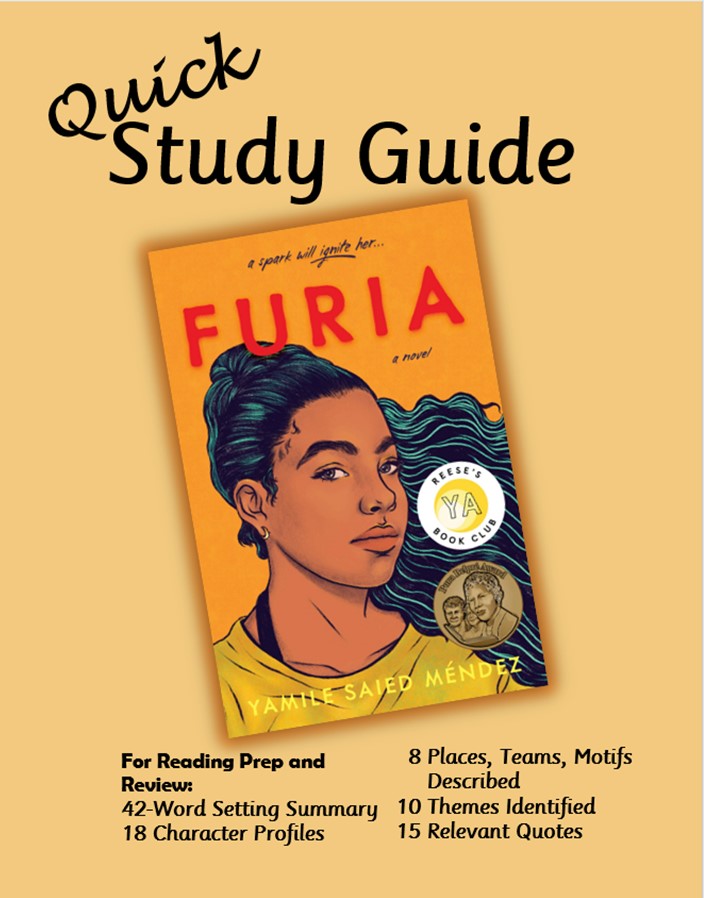
  • Furia by Y.S. Mendez is a novel about a teenage girl from Argentina who wants to play professional soccer.
  • But Camilla is growing too old to be thinking of soccer, according to her father who thinks adult soccer is for men only.
  • He thinks she should be thinking about boyfriends, especially about a rich local boy who plays professional soccer.
  • But Camilla cannot give up her dream to play soccer as an adult.  And why should she?
  • Soccer is a great sport for young adults to play because it strengthens muscles, teaches teamwork, and teaches how to accept defeat.

Notice that each of these three introductions uses the word “soccer” in the first sentence, alerting the reader that the essay will be about the topic of soccer.

All three introductions start out with general ideas:  the first one, that kids in the US didn’t play soccer years ago; the second one, that someone thinks a particular sport is better than soccer; and the third one, that a novel focuses on a girl who wants to play soccer.  Each first sentence idea is developed in the next two sentences.  In the fourth sentence, the focus shifts and links to the main idea (thesis) in the fifth sentence.

This is a pattern you can use to write almost any introduction to a persuasive essay.  You don’t need to start from scratch each time you write, wondering how to begin.  You can use the steps above, fill in the ideas, and write a satisfactory—maybe even great—essay introduction.

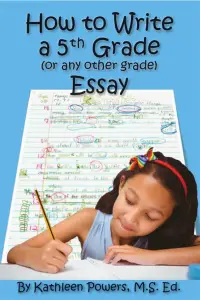
For more ideas on how to write, read my book How to Write a 5th Grade (or any other grade) Essay.  Or contact me for tutoring lessons.  I am now scheduling summer and fall classes.