Category Archives: research on writing

Is there an ideal election ballot?

Is there an ideal election ballot, one written and designed clearly so that it is easy to read and use?

Yes.  It has ten features.*

2016-election-ballot

  • The ballot uses mostly lower case letters. Why? ALL UPPERCASE LETTERS ARE HARDER TO READ compared to lower case letters.
  • The names on the ballot, instructions, and other words are aligned to the left, not centered. With left-aligned type, it is easy for the eye to find where the next line begins.  With center-aligned type, the eye has to work to figure out which is the next line.
  • Font size matters. For ballots on a touch screen computer, type should be at least 25 point.  For optically scanned ballots, type should be at least 12 point.  Voters should not need magnifying glasses in order to read the ballot.
  • Fonts should be sans-serif (a lettering style without those little tabs at the tops or bottoms of letters). Sans-serif type faces are cleaner and therefore quicker to read than serif styles.
  • Optically scanned ballots should have instructions at the beginning and page numbers on every page. Touchscreens should offer continuous instructions (for example, at the top of each screen), language options, and a navigation system which is identical on every page of the ballot.
  • Instructions should be presented in simple, easy-to-understand English (or other language). So should ballot initiatives, changes to constitutions, and proposed changes to tax law.  Sample ballots should be available at polling stations so that voters can read complete written instructions and law changes before entering the polling booth.
  • Visual instructions, such as an arrow indicating to turn the page at the bottom of a touchscreen ballot, should be obvious and consistent.
  • Only informational icons, such as a stop sign at the end of the ballot, should be used—no elephants or donkeys.
  • Color, boldfacing or boxing should be used consistently. For example, if instructions are in color or in a shaded box on page one, they should appear the same way throughout the ballot.  However, color cannot be the only way to call attention to important information.
  • Layout and text size should be used to indicate importance of information. For example, on the page of Presidential candidates, the words indicating a vote for President should be bigger and more obvious than the names of candidates.  The candidates’ names should be bigger and more obvious than their party affiliation.  Also, all candidates’ names should be presented equally in font size and darkness of font.

* Design for Democracy, a strategic initiative of AIGA, the professional association for design, developed these guidelines.  AIGA worked with the US Election Assistance Commission and did testing on potential voters to develop these guidelines.  Because holding elections is a function of the states and not the federal government, each state is free to create its own ballots according to its own criteria.  After the election of 2000, many states changed their ballots to make them clearer, easier to use and less likely to be challenged.
 

How many words are too many words?

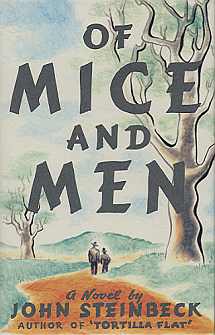
“Write concisely” always appears on rules for good writing.  And some writers follow that rule.of-mice-and-men-book-cover

  • John Steinbeck’s Of Mice and Men has 29,150 words. He later won the Nobel Prize for Literature.
  • Ernest Hemingway’s Old Man and the Sea, which won the Pulitzer Prize in 1953, has 26,601 words. He too won the Nobel Prize for Literature.
  • Agatha Christie, the best-selling writer of all time, wrote novels averaging between 40,000 and 60,000 words, with female murderers’ stories usually using fewer words than male murders’ stories.
  • F. Scott Fitzgerald’s The Great Gatsby, required reading in many American high schools, has 47,094 words.persuasion-book-cover
  • K. Rowling’s first Harry Potter novel has about 77,000 words but her fifth and longest one has about 250,000 words—more than three times as many as her first.
  • Jane Austen, the second most widely known English writer today (Shakespeare is first), wrote Persuasion, considered her best novel by many critics, with 87,978 words.

But other writers have ignored the advice to write concisely, and they have done well for themselves.

  • Charlotte Bronte’s Jane Eyre has 183,858 words.
  • Leo Tolstoy’s Anna Karenina has around 349,700 words English translations and his War and Peace has between 561,000 and 587,000 words, depending on the translation.
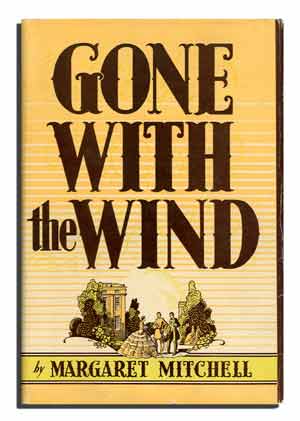
  • Margaret Mitchell’s Gone with the Wind has 418,053 words. It won the Pulitzer Prize in 1937.

gone-with-the-wind-book-coverIs there an optimal number of words in novels?  It turns out publishers think so.

  • 20,000 to 55,000 is best for middle grades novels.
  • 60,000 words is best for young adult fiction.
  • 80,000 words is best for most general adult fiction, mystery fiction, and literary fiction. (Memoirs, which are nonfiction, also top off at 80,000 words.)
  • 110,000 words is the ideal length for sci-fi fiction and fantasy fiction.

Six rules for clear thinking and writing by George Orwell

One excellent yet pithy set of rules for writing well comes from 70 years ago by the British writer, George Orwell, author of 1984 and Animal Farm as well as numerous essays.  The rules are part of an essay called “Politics and the English Language” in which he argues that poorly written English results from bad habits of thought.  Get rid of the bad habits and clearer thinking emerges in the mind of the writer and on paper.

His six rules are

  • “Never use a metaphor, simile or other figure of speech which you are used to seeing in print.
  • “Never use a long word where a short one will do.
  • “If it is possible to cut a word out, always cut it out.
  • “Never use the passive where you can use the active.
  • “Never use a foreign phrase, a scientific word or a jargon word if you can think of an everyday English equivalent.
  • “Break any of these rules sooner than say anything outright barbarous.”

Do typos matter? How about grammar errors?

Suppose you are a young adult looking for someone to rent a bedroom in your house or apartment.  You receive the following email:

Hey! My name is Pat and I’m interested in sharing a house with other students who are serious abuot there schoolwork but who also know how to relax and have fun. I like to play tennis and love old school rap. If your someone who likes that kind of thing too, maybe we would mkae good housemates.

Would you rent to this person?

According to the University of Michigan, which studied how volunteers responded to such inquiries, emails containing typos and grammar errors lowered the chances of a prospective housemate. Typos had a more negative effect than grammar errors.

Moreover, researchers found that extroverts reading the emails were more likely to ignore typos and grammar mistakes when deciding whether to rent, while introverts were more likely to judge the prospective renter negatively.

So what?  How does this research affect you and me?

  • Typos can usually be found with spell-check. A writer who doesn’t bother to change typos might be judged lazy or not careful.
  • Grammar errors can be harder to detect and so might be excused. On the other hand, knowing how to spell “their” and “you’re” correctly is an elementary school skill.  Adults are expected to know these grammar skills.
  • Your response to typos and grammar errors says a lot about you. Does your skin crawl when you receive an email which contains errors from a friend?  Do you judge that person based on such errors?  Should you?

Years ago, before spell-check and even word processors, I had a job requiring me to proofread a weekly newspaper before it was printed.  One day a highly respected man in our community let me know he had found an error in the latest issue, an error I had not detected.  I could see that this man no longer held me in the same esteem as before.

You never know who will be reading your writing or what impact your writing could have on your future.  If your emails are error-free, people are not likely to notice that.  It’s expected.  But if your emails contain errors, that will be noticed.  And even though polite people might never tell you, some could hold those errors against you.

For more information on the U of M study, go to http://journals.plos.org/plosone/article?id=10.1371%2Fjournal.pone.014988.

Which is better for taking notes—a laptop or handwriting?

For ideas which stick in the brain, taking notes by hand is better, according to Princeton and UCLA researchers*.

Their results are summarized in the chart below.

laptop longhand
word-for-word note taking  x
keeping up with lecturer  x
focusing on concepts x
recalling facts x x
remembering information longer x
using notes for review  x

The researchers say that even though taking notes in longhand is slower, this mode forces students to summarize the gist of the ideas presented.  To do that, the note takers must analyze what they are hearing as they are hearing it, evaluate  what is important and relate various ideas to one another.  Often as they take notes, they organize their notes, making them useful for further study.

The computer note takers, on the other hand, type almost every word but spend less time thinking about the lecture.  Their notes are copious but not digested, making them unweildly for study.

*For more information, go to http://www.psychologicalscience.org/index.php/news/releases/take-notes-by-hand-for-better-long-term-comprehension.html.  There the work of psychologist Dr. Pam A. Mueller of Princeton University and Dr. Daniel Oppenheimer of UCLA can be read in Psychological Science, the journal of the Association for Psychological Science.  Their experiment was reported in 2014 after being conducted on college students.