Category Archives: persuasive essay

Use PEE or PIE to develop body paragraphs in persuasive writing

PEE (Point, Evidence, Explain) is term to describe how paragraphs in persuasive writing should be developed.  It comes from research at the University of Arizona by Dr. Anne-Marie Hall who called it PIE (Point, Illustration, Explanation).  Paragraphs developed this way form good body paragraphs of persuasive writing.
Using this format, students write an opening topic sentence.  They follow it with facts to back it up.  Lastly, they connect the topic sentence and facts, analyzing how the facts support the topic sentence.

PEE is a method used in elementary grades to prepare students for persuasive writing.  Older students will use the same kind of logic in writing a thesis and in locating good research to cite to back a thesis.  PEE also teaches children the importance of facts such as names, numbers, and precise quotations if they want their opinions to be respected.

Here is a break-down of what PEE means, using and example that fourth graders could write:

P stands for Point, the point you are making in your answer to a question.  This point is made in a single sentence.  For example, the question could be, “Are you having a spelling test today?”  Your answer (point) could be, “Yes, I am having a spelling test today.

E stands for Evidence, the facts or examples that prove your point.  This evidence consists of facts such as numbers, dates, precise names, sources, and direct quotations.  For example, the evidence could be 1) It is Friday, and my teacher, Mrs. Spilling, always gives spelling tests on Friday.  2) Mrs. Spilling posted on September 23 on her school website (MrsBSpilling@ABCschool.edu) that my class is having a spelling test today.  3) My mother heard me my spelling words at 7:30 last night the way she always does the night before my spelling tests.
The second E stands for Explain.  That means to connect the point and the evidence.  For example, So because today is Friday, and my teacher, Mrs. Spilling posted on her website on Tuesday, September 23 that my class would have a spelling test today, and because my mother heard me my spelling words last night, I know I am having a spelling test today.

(A related idea which I have discussed previously in this blog is the sandwich method of introducing a quotation/citation into writing.)

The PEE or PIE format is not used for essay introductions or conclusions.  It shows a way to develop body paragraphs.

Use a template to write a persuasive essay introduction

Suppose a student wants to write a persuasive essay.  A million and one ways to begin such an essay exist, small comfort to a student looking for just one reliable way to write an introduction.  Does such a template exist?

Yes.  And using it, a student can write the introduction in five sentences, too, which many teachers require.

  • First, think about the topic and write a general sentence relating to that topic.
  • Second, write more specifically about the topic in two sentences, heading in the direction of your main idea (thesis) which you should already know from organizing your ideas.
  • Third, transition to your main idea (thesis) by connecting what you have just written to what you will write next.
  • Fourth, write your main idea.

Let’s try a few examples.

Suppose a fifth grader wants to persuade that soccer is a good sport for kids.  Here is one opening:

  • When my grandmother was a kid, none of her friends played soccer.
  • Why? Hardly any soccer leagues for kids existed then.  There were baseball leagues and basketball leagues and football leagues, but there were hardly any youth soccer leagues.
  • Nowadays, almost every city or town in the US has soccer teams for kids.
  • Soccer is a great sport for kids to play because it strengthens muscles, teaches teamwork, and teaches how to accept defeat.

For that same fifth grader, here is another essay introduction:

  • My friend, Mario, says baseball is a better sport than soccer for kids.
  • My other friend, Julio, says football is better than soccer for kids.
  • My sister, Emma, who is tall, says basketball is better than soccer for kids.
  • I think they are all wrong.
  • Soccer is a great sport for kids to play because it strengthens muscles, teaches teamwork, and teaches how to accept defeat.

Here is a third possible introduction written at a high school level:

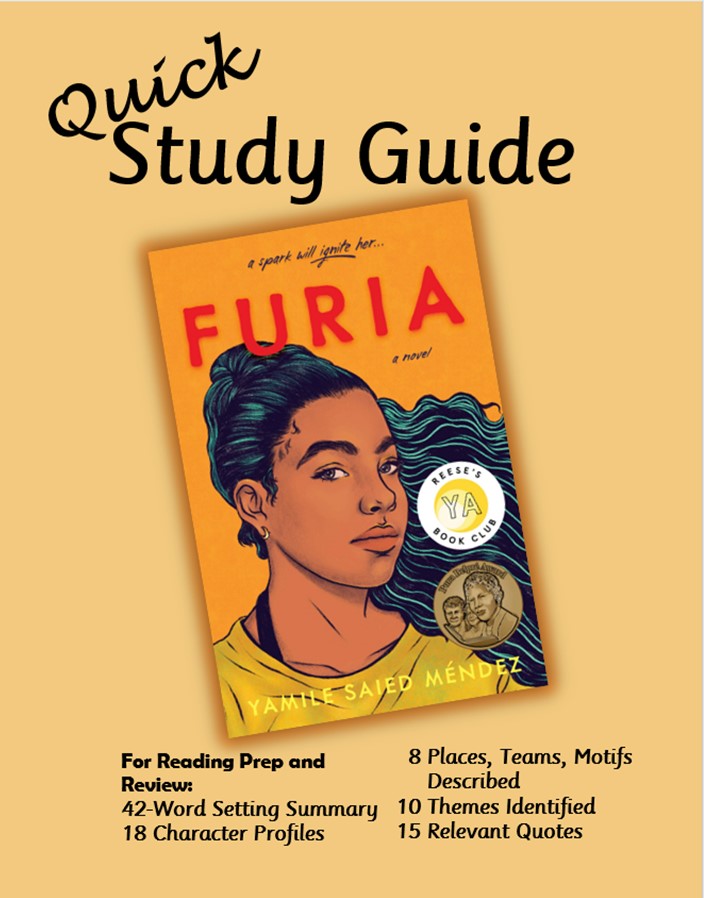
  • Furia by Y.S. Mendez is a novel about a teenage girl from Argentina who wants to play professional soccer.
  • But Camilla is growing too old to be thinking of soccer, according to her father who thinks adult soccer is for men only.
  • She should be thinking about boyfriends, he thinks, especially a rich local boy who has made it to a professinal soccer team.
  • But Camilla cannot give up her dream to play soccer as an adult, and why should she?
  • Soccer is a great sport for young adults to play because it strengthens muscles, teaches teamwork, and teaches how to accept defeat.

Notice that each of these three introductions uses the word “soccer” in the first sentence, alerting the reader that the essay will be about soccer.  Neither first sentence hints that the essay will be about why soccer is good for a kid or young adult.  That doesn’t come until the last sentence of the paragraph, the topic sentence.

All three introductions start out with general ideas:  the first one, that no one in the US played soccer years ago; the second one, that various people think a particular sport is better than soccer; and the third one, that a novel focuses on a girl who wants to play soccer.  Each first sentence idea is developed in the next two sentences.  In the fourth sentence, the focus shifts to an idea connecting the first three sentences to the main idea (thesis) sentence.

What I am suggesting is a pattern you can use to write introductions to persuasive essays.  You don’t need to start from scratch each time you write.  You can use the steps I describe above, fill in the blanks, and write an okay—maybe even great—essay introduction.

For more ideas on how to write, read my book How to Write a 5th Grade (or any other grade) Essay.  Or contact me for tutoring lessons.  I am now scheduling fall online classes.

One easy way to write a persuasive essay introduction

Suppose you are assigned to write a persuasive essay.  You don’t know how to begin.  Does a template for the introduction to a persuasive essay exist?  Is there  a way that works almost all the time?

Yes.

Five steps for a persuasive essay graphic

Let’s try a few examples.

  • Suppose a fifth grader wants to write a persuasive essay showing that soccer is a good sport for kids. She writes a thesis:  “Soccer is a great sport for kids to play because it strengthens muscles, teaches teamwork, and teaches how to accept defeat.”  Now she sets that aside for a moment.
  • Next, she writes a general sentence about soccer: “When my grandmother was a kid, none of her friends played soccer.”
  • She continues to write about soccer, heading toward her thesis idea: “Why?  Hardly any soccer teams for kids existed then.  There were baseball teams and basketball teams and football teams, but there were hardly any youth soccer teams.”
  • She writes a transition sentence from soccer in the past to soccer today: “Nowadays, almost every city or town in the US has soccer teams for kids.”
  • She goes back to the main idea sentence she set aside, and she moves it to this spot: “Soccer is a great sport for kids to play because it strengthens muscles, teaches teamwork, and teaches how to accept defeat.”

Here is her finished introduction:

When my grandmother was a kid, none of her friends played soccer.  Why?  Hardly any soccer teams for kids existed then.  There were baseball teams and basketball teams and football teams, but there were hardly any youth soccer teams.  Nowadays, almost every city or town in the US has soccer teams for kids.  Soccer is a great sport for kids to play because it strengthens muscles, teaches teamwork, and teaches how to accept defeat.

Here is another essay introduction for that same main idea:

  • My friend, Mario, says baseball is a better sport than soccer for kids.girl kicking soccer ball
  • My other friend, Julio, says football is better than soccer for kids.
  • My sister, Emma, who is tall, says basketball is better than soccer for kids.
  • I think they are all wrong.
  • Soccer is a great sport for kids to play because it strengthens muscles, teaches teamwork, and teaches how to accept defeat.

Here is a third possible introduction written at a high school level:

  • Furia by Y.S. Mendez is a novel about a teenage girl from Argentina who wants to play professional soccer.
  • But Camilla is growing too old to be thinking of soccer, according to her father who thinks adult soccer is for men only.
  • He thinks she should be thinking about boyfriends, especially about a rich local boy who plays professional soccer.
  • But Camilla cannot give up her dream to play soccer as an adult.  And why should she?
  • Soccer is a great sport for young adults to play because it strengthens muscles, teaches teamwork, and teaches how to accept defeat.

Notice that each of these three introductions uses the word “soccer” in the first sentence, alerting the reader that the essay will be about the topic of soccer.

All three introductions start out with general ideas:  the first one, that kids in the US didn’t play soccer years ago; the second one, that someone thinks a particular sport is better than soccer; and the third one, that a novel focuses on a girl who wants to play soccer.  Each first sentence idea is developed in the next two sentences.  In the fourth sentence, the focus shifts and links to the main idea (thesis) in the fifth sentence.

This is a pattern you can use to write almost any introduction to a persuasive essay.  You don’t need to start from scratch each time you write, wondering how to begin.  You can use the steps above, fill in the ideas, and write a satisfactory—maybe even great—essay introduction.

For more ideas on how to write, read my book How to Write a 5th Grade (or any other grade) Essay.  Or contact me for tutoring lessons.  I am now scheduling summer and fall classes.

How to keep students writing this summer

For me, as a writing tutor, one of the hardest aspects of enabling a student to write is finding a topic.  A few students with vivid imaginations could write fantasy narratives each week, but they balk at writing informational or persuasive essays.

Most boys have one inexhaustible writing topic—playing video games—which I nix.  Too many of my students have written such essays with poor, unintelligible results.  And boys don’t like my idea of writing about “why I like video games” or “what I learn from video games.”

The students I tutor—and I assume they are like most other students—know nothing about what is happening in the world.  (Last fall some didn’t know a Presidential election was underway.)  Writing about current events is out unless I spend a big part of the class bringing students up-to-date on world events.

Students don’t read books unless forced by their teachers. Writing about book themes, characters, or settings is possible, but because the number of books my students have read is minuscule, such writing opportunities are meager.  They balk at reading books during the summer.  “It’s vacation!” they wail.

What to do?  Here are my solutions.

For my high school students, I search for well-written newspaper articles.  Recently, for example, The New York Times had one on underinvestment in the computer chip industry, and The Wall Street Journal had one on a forgotten jazz composer.  I create SAT-like questions about each article, including identifying vocabulary meanings.  Then I create a specific narrative, informational or persuasive question about the article for the student to respond to in essay fashion.

Using news stories has many advantages.  It offers a broad range of subject matter for students to read and for me to ask questions about.  It offers up-to-date reading material—students can’t believe they are reading and writing about something in yesterday’s paper.  It requires intense reading but just for 350 to 500 words, far less effort than reading a book.  It allows me to assign an essay every other class or sometimes every class, using class time to discuss the answers to the questions I give a student and to critique the essay.  Homework often is to revise the essay in ways we discuss in class.

The drawback is that I must spend time finding good articles and then writing questions about them.  But this is my job.

For my middle school students and fifth graders, I assign the reading of stories with questions to answer.  www.edconpublishing.com produces 40-plus stories of classic books like David Copperfield and Tom Sawyer, grouped by difficulty level.  Ten pages of reading are followed by ten pages of multiple choice questions.  I assign these, one a week or one every other week.  After a student has read a story, and we have gone over the questions to be sure the student comprehends them, I assign a narrative, informational or persuasive essay.

Using booklets like these has advantages.  They introduce students to great stories.  They force the student to read and to prove they understand what they have read.  They offer students and me a common topic about which to write.  I must come up with essay questions, one for each type essay middle grades students are expected to master.  We critique the essays and revise them based on the most serious errors or shortcomings.

Sometimes for fifth graders I assign books to read such as Judy Bloom’s Fudge series or the first Harry Potter book, and I create essay questions based on those books.  I choose books I have read and know well to cut down on my class preparation time.

These days I interact with students via Zoom.  I find the results are good.  Students share their essays with me via Google drive.

It is possible to keep students reading and writing about what they read during the summer.  Perhaps you have found some other ways?  If so, please share them with me at this blog.  Or if your student needs a tutor, contact me.

How to better use prewriting organizers

Organizing writing before the first sentence is written is a sure way for students to improve their writing.  Yet many students (most students?) don’t do it.  Why?  Some kids are in a hurry and don’t want to take the time to create an organizer.  Some kids don’t know how to create useful organizers.  Some kids think skipping an organizer won’t harm their writing.

What can teachers do to encourage students to create organizers and to use them?

Teachers could insist students use a prewriting organizer before writing a single sentence, and grade it or include it as part of the writing assignment grade.  For a given assignment, the teacher could reproduce several student prewriting organizers (and the teacher’s own prewriting organizer) for the class to analyze.  What ones are effective?  Why?  The teacher could ask students to compare those to their own organizers.  Then the teacher could ask students to improve their organizers before they write their essays.

Teachers could insist that students follow their organizers, and grade the essay, in part, on whether the organizer was followed.  Teachers could ask students to exchange organizers and essays before they are turned in for grades.  Classmates could alert students who have not followed the organizer.  Teachers could give those students more time to align their essays with their organizers.

Teachers could limit the kinds of organizers students use to

  • Either mindwebs or semiformal organizers for most informational and persuasive essays,
  • Either Venn diagrams or charts for comparison or contrasting information, or
  • Modified time lines for narratives.

Teachers could spend more time teaching how to use organizers without requiring the resulting essays.  Not every organizer needs to lead to an essay.

Teachers could provide exercises using poor organizers for students to analyze.  Students would need to identify why those organizers are poor and how they could be improved.