Category Archives: narratives

How to write a narrative essay

A narrative essay is a short story.  It has all the parts of a short story—a beginning, a middle, and an end.  But that doesn’t tell you how to begin or what to include.  Wouldn’t it be nice if there were some formula, some plan, that would help you get going?  Well, there is.  Here’s how: 

On your planning paper or computer screen, write the word “setting.” Now draw two small arrows from the end of “setting.”  Next to the top arrow write the word “place.”  After the word “place,” identify the location of your narrative essay.  It’s easier if you have only one place such as your math classroom, the soccer field or the airplane gate.  If you have two or more places, your essay will get complicated.  Since you are at the stage when you need a pattern to follow, keep things simple.  Identify one location only.

After the bottom arrow, write the words “time/day/season.” Identify when your story takes place.  Sometimes a general idea, like “morning” is enough.  If the day of the week or the season or temperature or climate is important to your story, identify them.  Usually, you will identify only one or two of these times.

Stories are about people or animals–living creatures, so identify characters: the people and animals important in your story. Sometimes that person will be you.  (Write “me.”)  Sometimes it will be named people.  Other times it will be unnamed people whose relationship is important such as the bus driver or the stray dog.  Keep your list short—maybe two or three characters.  The more characters you use, the more complicated your story will become.  Identify which character is the protagonist, the central character of your story.

Identify the point of view (POV) your story will have: first person (told by someone who is part of the story); or third person objective (told from the POV of a video taper of your story who does not know what people are thinking); or third person limited (told from the POV of someone who can hear the thinking of one or more of the characters).

Identify the problem to be solved (sometimes called the theme) in your story. Is it about a student forgetting her lunch?  Is it about your mother nagging you to do your homework?  Is it about an athlete breaking his leg running to first base?  Every story needs a problem for the main character to solve or to learn from.

Identify the major plot points in your story, the important happenings in your story. A story has to start somewhere.  That’s the first plot point.  Something has to happen to cause a problem.  That might be the same plot point (if you start in the middle of the action, which is a good idea) or it might be the second plot point if you include exposition.  Later, something or somethings have to happen to complicate the action and to head your characters toward the end, the last plot point.

Identify the mood you want to convey. Is your story frightening?  Funny?  Nostalgic?  Mysterious?  You need to know before you begin so you know what kind of vocabulary and sentences to use, what to highlight, and what to hide.

Now you can almost begin.  Read next week’s blog for how to start that first paragraph.

Does a narrative have a thesis?

Does a narrative have a thesis?

Yes, though it’s not called a thesis.  It’s called a story arc.  Think of some of the best-selling novels or movies you’ve read or seen.  Do they contain a story arc?


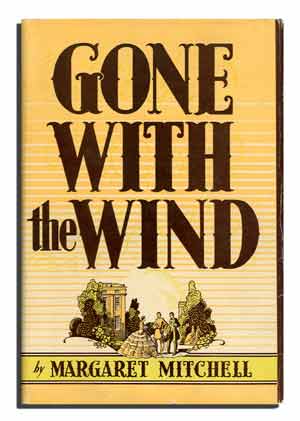
How about Gone with the Wind?  The story starts with flirty Miss Scarlett surrounded by young men, all madly in love with her.  The story moves upstairs at the Wilkes’ mansion where the girls are reclining—all but Scarlet who slips downstairs, draws Ashley Wilkes into the library, and declares her love for him.  He politely says no, but  Scarlett won’t accept his refusal.  When Ashley leaves, Scarlet throws china at the fireplace.  An amused Rhett Butler, who has overheard everything, is aroused.  Scarlet wants Ashley and will do what it takes to get him.  And Rhett wants Scarlett.

How about Anna Karenina?  In the opening pages, Mrs. Karenina visits her brother who has recently had an affair.  She meets a military officer and by her return home a few days later, she is in love, as is Count Vronsky.   Anna Karenina wants Count Vronsky and flaunts society to live as his mistress.

As Huckleberry Finn begins, Huck tries repeatedly to get away from the Widow Douglas who represents rules and civilized behavior–anathema to Huck. Pretty soon he does slip away, finding a raft and floating down the Mississippi with Jim, an escaped slave.  Huckleberry Finn rides the Mississippi in order to experience freedom.

How about Casablanca?  Rick, a stoic bar owner, lives without love until his old flame and her husband appear in his bar.  He must choose:  keep Elsa for himself and be safe or help her husband and her to escape the Nazis and become a wanted man.  Rick wrestles with emotions he thought were dead to make his choice.

Agatha Christie wrote dozens of murder mysteries all with the same story arc:  Who done it?  You know when you start to read one of her books that someone will die, and eventually, someone will be exposed as the killer.  Person A kills person B and either Hercule Poirot or Miss Marple solves the crime.

Have you ever read a story lacking a story arc?  I have started several, but if I can’t figure out where the story is going early on, I don’t continue.  So a story arc is like a thesis in that it tells readers what they can expect to learn from the story.  A story arc is usually stated more obliquely than a thesis, but it must be present for the story to be satisfying.

Things you can learn from a narrative

Original cover of Huckleberry FinnGreat lives can be lived anywhere.  Hogwarts School. Macomb, Alabama.  On the Orient Express.  On a raft on the Mississippi River.

Life usually works out.  Elizabeth Bennett marries Fitzwilliam Darcy.  Brian Robeson gets rescued from the wilds of Canada.  Phileas Fogg wins his bet.

If not, wait for a sequel.  ScarlettLittle House on the PrairieDouble Fudge.

Odd names won’t hold you back.  Farley Drexel Hatcher.  Hercule Poirot.  Huckleberry Finn.  Jeeves.

It’s good to be odd, to be complex, to be eccentric.  Sherlock Holmes.  Junie B. Jones.  Huck Finn.  Anna Karenina.

Secondary characters can be fascinating.  Mercutio.  Mrs. Malaprop. Severus Snape.  Grover.

original cover of Sherlock HolmesThe best characters are not perfect.  Jay Gatsby.  Tom Jones.  Ebenezer Scrooge.  Lady Brett Ashley.  Scout.

When things go wrong, hang in there.  After all, tomorrow is just another day.

How to better use prewriting organizers

Organizing writing before the first sentence is written is a sure way for students to improve their writing.  Yet many students (most students?) don’t do it.  Why?  Some kids are in a hurry and don’t want to take the time to create an organizer.  Some kids don’t know how to create useful organizers.  Some kids think skipping an organizer won’t harm their writing.

What can teachers do to encourage students to create organizers and to use them?

Teachers could insist students use a prewriting organizer before writing a single sentence, and grade it or include it as part of the writing assignment grade.  For a given assignment, the teacher could reproduce several student prewriting organizers (and the teacher’s own prewriting organizer) for the class to analyze.  What ones are effective?  Why?  The teacher could ask students to compare those to their own organizers.  Then the teacher could ask students to improve their organizers before they write their essays.

Teachers could insist that students follow their organizers, and grade the essay, in part, on whether the organizer was followed.  Teachers could ask students to exchange organizers and essays before they are turned in for grades.  Classmates could alert students who have not followed the organizer.  Teachers could give those students more time to align their essays with their organizers.

Teachers could limit the kinds of organizers students use to

  • Either mindwebs or semiformal organizers for most informational and persuasive essays,
  • Either Venn diagrams or charts for comparison or contrasting information, or
  • Modified time lines for narratives.

Teachers could spend more time teaching how to use organizers without requiring the resulting essays.  Not every organizer needs to lead to an essay.

Teachers could provide exercises using poor organizers for students to analyze.  Students would need to identify why those organizers are poor and how they could be improved.

How to end a narrative essay

One way to end a narrative is to look to the future.  When J.K. Rolling ended her final Harry Potter book, she skipped forward 20 years to show a new generation of students—Harry’s, Ron’s and Hermione’s kids—heading off to Hogwarts School.  This ending of the series reminds readers of the beginning of the series when Harry, Ron and Hermione first headed to Hogwarts.  The author takes us full circle, back to the beginning, but not the same beginning.

boy writing on a window benchEven if your story is only a few pages long, you could look to the future.  The character could wake up hours after your story seems to end and think back—with fright?  with happiness?—at what happened earlier in your story.  Or if a dramatic rescue happens near the end of the story, you could jump forward an hour or two to let the characters describe how they feel, or to show them sleeping safely.

Another way to end a narrative is to stay in the present time of the stories but have a final scenes which leave the reader with an important emotion.  That emotion could come from a single image, the last image of the story.  Maybe your babysitter has worked really hard to care for a cranky toddler.  The babysitter leaves, exhausted and thinking she will never return.  But as she looks back, she sees the toddler looking out the window, smiling and waving.

Still another way to end is with action, as if, on to the next adventure.  Superman stories often end this way, with Superman solving a problem, and then flying off.  We assume he is off to solve another problem, but his real reason for leaving is that the story is done, and the writer needs to find a way to end it.

I have had some students end their stories with cliff-hangers,  scenes where something awful  happens, and we, the readers, of course want to know how the disaster is resolved.  But all we read is “To be continued.”  This is really not an ending but a way of pausing when a student is tired or out of ideas.  Don’t use this kind of ending or your audience will be disappointed.

If you have used dialog in your narrative, then ending with dialog (or the thoughts of a character) makes sense.  But the dialog should not be preachy or try to tie up loose ends.  Instead, use dialog to create a mood.  That mood becomes the lasting impression which the reader has.

Do you need to explain everything at the end?  No.  If the details are not important, let the reader guess at them.  That’s part of the fun for the reader.

Think about what mood or question you want your audience to dwell on as they finish your narrative.   Then figure out a good way to convey that idea.  If you do, your ending will be satisfying.