Category Archives: English Writing Instruction

Writing well takes study and practice.

Jane Austen’s naming style

We writers can learn to compose better by reading the work of recognized authors.  One of my favorites is Jane Austen.  Lately I’ve been thinking about the names Austen uses, and what I can learn about naming my own fictional characters from her novels.

Austen (1775-1816), chooses names from common English first names for her main male characters such as Charles Bingley (Pride and Prejudice), Charles Musgrove Sr. and Jr. and Charles Hayter (Persuasion); John Dashwood, Sir John Middleton, and John Willoughby (Sense and Sensibility) and John Knightly (Emma); William Collins, Sir William Lucas, and Fitzwilliam Darcy (Pride and Prejudice) and William Elliot (Persuasion); and George Wickham (Pride and Prejudice) and George Knightly (Emma).

Similarly, Austen reuses common names of women for important characters:  Elizabeth Elliot (Persuasion) and Elizabeth Bennett (Pride and Prejudice); Mary Elliot Musgrove (Persuasion), Mary Parker (Sanditon), Marianne Dashwood (Sense and Sensibility), and Mary Bennett (Pride and Prejudice); Kitty Bennett and Lady Catherine de Bourgh (Pride and Prejudice); Jane Bennett (Pride and Prejudice) and Jane Fairfax (Emma); Charlotte Lucas (Pride and Prejudice) and Charlotte Heywood (Sanditon); Georgiana Darcy (Pride and Prejudice) and Georgiana Lamb (Sanditon); Anne Taylor Weston (Emma) and Anne Elliot (Persuasion).

Why does Austen repeat the same names when so many others exist?  Tradition is one reason.  Austen writes about “three or four families in a country village” where traditional values are shown by fathers passing down names to their sons and mothers to their daughters.  Names hold communities together. 

(I am reminded of the naming tradition in the Irish hamlets my grandparents came from.  Children would be known by their own first name as well as their father’s and grandfather’s names.  I would have been known as Kathy Tommy Johnny.)

Love of family is another reason Austen repeats names of characters within a family.  Isabella Knightly (Emma) names her children Henry (after her father), John (after her husband), Bella (perhaps after her mother), Emma (after her sister), and George (after her brother-in-law).  Characters’ respect for the royal family is another reason for choosing names.  Many men in Austen’s books are named George. (George I, George II, and George III all served as kings in the late 18th and early 19th centuries when Austen was writing.)

Sometimes Austen shows who the outliers are in her books by giving them unusual names, such as Augusta Elton.  Women of fashion are named newer names such as Louisa, Caroline and Lydia.

Almost none of Austen’s characters are known by nicknames.  Elizabeth Bennett (Lizzy, Eliza) and her sister, Kitty, are exceptions.  The novels come from a time when people addressed each other by their family names (Mr. Collins, Mrs. Dashwood) or by their titles (Sir William, Lady Catherine).  In a culture of such formality, nicknames were used only at home, and not always then.

In the months before her death in 1816, Austen began Sanditon, a novel set in a fictitious seaside resort which was literally financed and built by characters who come from elsewhere and are not bound by tradition.  For this book, Austen breaks with the traditional names she uses in her earlier books and gives many of her characters names she hasn’t used before such as Clara, Esther, Arthur, and Sidney.  The names seem to say change.

What worked for Austen might not work for us.  But what we can learn is that none of her characters are named randomly.  The name of each character serves a purpose.

For more information see http://www.JASNA for an article in issue 19 of Persuasions by Susannah Fullerton as well as several online articles.

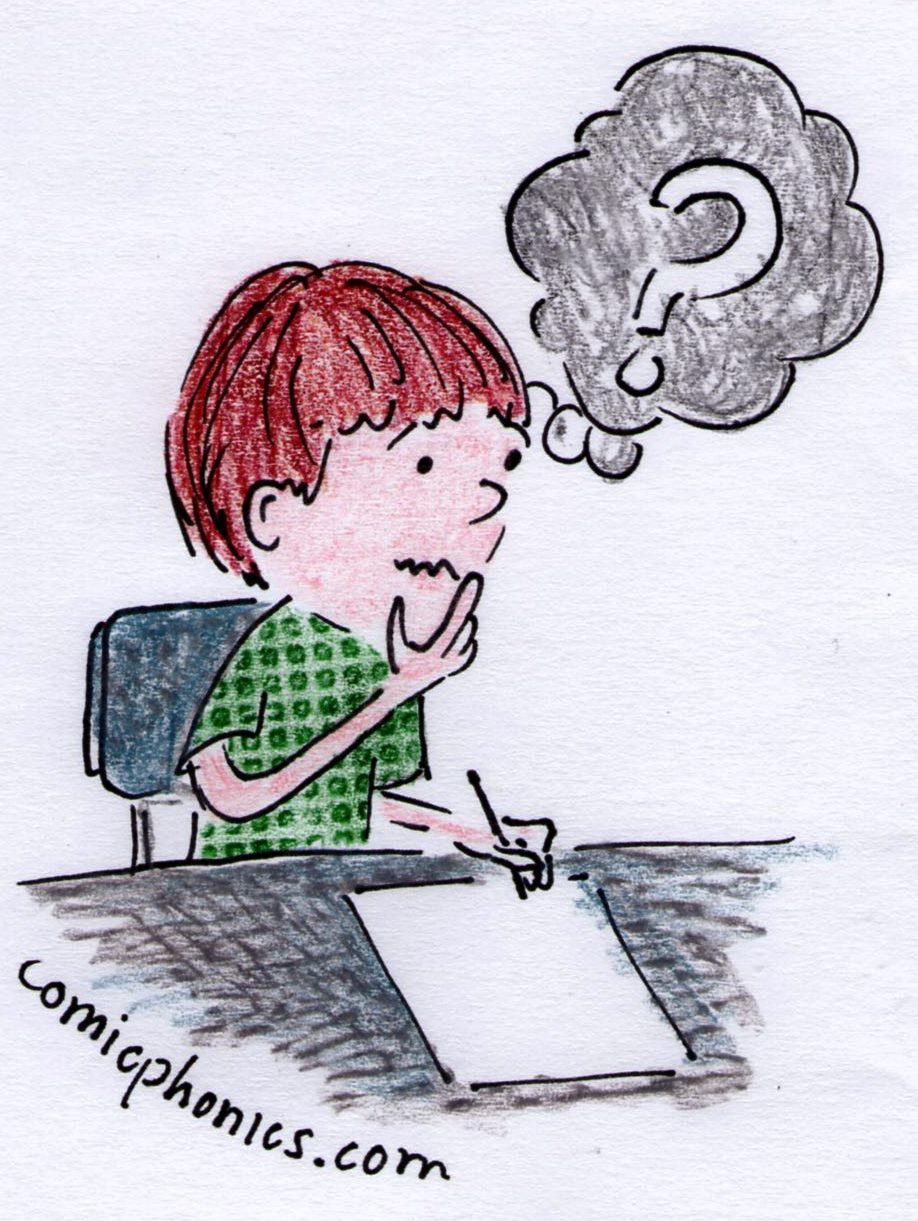
Coherence, the most important element in writing

Writing well requires following certain steps in sequence:

  • Narrowing your topic
  • Organizing your information, including writing an overarching topic sentence or thesis and subtopic sentences or plot lines
  • Writing a first draft
  • Revising, revising, revising
  • Editing

Once your first draft is complete, revising becomes most important.  So many tasks comprise revising—checking for complete sentences, tightening wordiness, analyzing ideas for logic, honing vocabulary, fixing grammar errors, adding figures of speech and style.  Students wonder where to begin.

Begin with coherence, the most important element of writing.  Coherence means making sure all your sentences make sense and flow from one to another.  Coherence means making sure your readers understand what you mean—easily, at first read, without an interpreter.

How do you do that?  Some ways include:

  • Make sure every sentence in the body paragraphs supports the thesis. If you use an anecdote, make sure it is an example of the ideas in the thesis.  If you use a simile or metaphor, make sure it fits with the topic.  If the topic is igneous rock, for example, the simile “as hot as the steam from a steam boat” is off topic, whereas “as hot as a lava lake” is on topic.
  • If you use numbers (three kinds of rocks, five members of my family, one favorite memory), check that you have named all the numbers and no more.
  • Use logical transitions. “Because” means something causes something else.  Make sure you have named a cause and an effect if you use “because.”  “Finally” means the last one in a series or the last point.  If you have only two or three points, you shouldn’t use “finally.” You should use “secondly,” or “next,” or “third.”
  • If you use a pronoun, make sure you have named the noun the pronoun refers back to. And make sure you have named that noun before you use the pronoun (not “When she fell, Mary broke her arm,” but “When Mary fell, she broke her arm.”  If you use “this,” make sure your reader can know in a word or phrase what “this” refers to.  If “this” is vague or complicated, add a noun after “this” (this situation, this erosion, this loss of interest).  If you have two women talking, make sure if you use “she,” the reader knows which one you are referring to.  Otherwise, use her name or title or position.
  • Check that your sentences are complete thoughts–not fragments or run-ons.  Make sure your complex sentences contain no more than two dependent clauses so readers needn’t hold multiple ideas in their minds at once.  Check that your sentences vary in length, with most more than ten and fewer than 20 words.
  • Change your weak, vapid verbs to active, dynamic verbs.  Eliminate the verb “to be” and passive voice verbs.

If what you write lacks coherence, no matter how specific the vocabulary, no matter how beautiful the description, no matter how lofty your aim, your writing will flop.  Your writing must make sense to a reader without you standing at her elbow explaining, “Well, what I mean is. . .”

What is a strong verb?

The surest way to improve writing is to write strong verbs.  But what are they?

  • verbs which show specific actions
  • verbs with one unambiguous meaning
  • verbs of Anglo-Saxon origin
  • verbs of one or two syllables
  • verbs stated in the active voice

The surest way to weaken writing is to write weak verbs.  What are they?

  • linking verbs, especially forms of the verb “to be”
  • verbs with multiple meanings
  • verbs with general, nonspecific meanings
  • three-, four-, and five-syllable verbs of Latin origin
  • verbs stated in the passive voice

Take the quiz to see if you can spot the strong verb.

1a.  The Senator waited for the election returns.
1b.  The Senator sweated out the election returns.
1c.  The Senator listened for the election returns.

2a.  Grandma looked peaceful sleeping in her rocker.
2b.  Grandma slept in her rocker.
2c.  Grandma giggled while sleeping in her rocker.

3a.  The toddler squealed while opening his gift.
3b.  The toddler was excited while opening his gift.
3c.  The toddler cried out while opening his gift.

4a.  The coffee burned my tongue.
4b.  The coffee scalded my tongue.
4c.  The coffee hurt my tongue.

5a.  I was startled when the cat appeared.
5b.  I was surprised when the cat appeared.
5c.  I leapt when the cat appeared.

Answers:

1b.  “Sweated out” is more specific.

2c.  “Giggled” is an action.

3c.  “Squealed” is more specific.

4b.  “Scalded is more specific.

5c.  “Leapt” is an active voice verb.


black or Black?

In the 1950s and 1960s, the correct word was “Negro.”

In the 1970s, the terminology changed to “black” and then to “African American.”

Now in the 21st century, “black” has again predominated.

But with so much attention lately focused on racism and particularly unconscious racism, the question this summer is “black” or “Black”?

On June 19, the AP Stylebook, the longstanding rulebook for print journalists, changed its policy about referring to Black Americans.  Now using a capital B in “Black” is preferred in a “racial, ethnic or cultural context.”

In the two weeks since, several prominent news outlets have made the change.  They include The Los Angeles Times, NBC News, The New York Times, and the USA Today Network.

Why does it matter?  Media reflect culture.  Most large media outlets are owned and run by white males.  Whether consciously or unconsciously, they have used a lower case b which Black Americans have interpreted as condescending.  (In contrast, media focused on a Black audience such as Ebony Magazine have long used a capital B.)

Our culture is changing.  This subtle change in a single letter reflects this change by the most powerful media in our country.  They have looked at how racism can be shown in something as simple as a single letter.  And to their credit, they changed.

As Aretha Franklin sang a generation ago, “R-E-S-P-E-C-T”—now with a capital B.

Forbidding am, is, are, was, were, be, been, being

1  What if you could not use any forms of the verb “to be”?  No am, is, are, was, were, be, been or being.  No progressive verb tenses.  Fewer passive verbs. No “that’s” or “it’s.”  Could you do it?

2  That’s what two of my high school students were asked to do on a research paper due today.  Any form of the verb “to be” was outlawed by their teacher, even if that verb was part of a direct quote.

3  With no choice, they wrote and rewrote sentences.  They pared down direct quotes or paraphrased them.  They eliminated passive voice.  And then they asked me to scour their writing to be sure no forms of “to be” still lurked.

4  And they did it!

5  I was telling this to another student, an eighth grader, whose writing we had just revised, and for the heck of it, we re-revised, eliminating the verb “to be” in all its forms.  A funny thing happened.

6  The student’s writing became more concise.  The student’s writing contained more active verbs and fewer linking verbs.  “It’s better,” the student said.  “Oops,” he added, realizing he had said “it’s.”

Let’s try the strategy on this blog now.

In paragraph 1, I cannot eliminate the forms of the verb “to be” or you might not know what I am talking about.

Paragraph 2 begins with “That’s,” meaning “that is,” and later in the sentence, contains the passive verb “were asked.”  I can rewrite that sentence to say “Two of my high school students needed to do. . .” dropping the “were asked” part.  In the next sentence “was outlawed” and “was” need to be eliminated.  Instead I can write, “Students could use no form of the verb “to be” even if the verb occurred within a direct quote.”

Paragraph 3’s last sentence contains the infinitive “to be.”  I could rewrite that sentence like this:  “And then they asked me to scour their writing until. . .”

Paragraph 4 passes okay.

Paragraph 5 begins with “I was telling.”  I could easily change that to “I told.”

Paragraph 6 passes okay.

When I first heard about the “confining” verb choices for my students’ assignment, I said to myself, “Ridiculous.”  But now I am an ardent fan of this way of writing.  The results convinced me.  Fewer words.  Tighter sentences.  Fewer linking verbs.  More specific verbs.  More active voice.

Win-win.