Monthly Archives: November 2018

Scoring higher on the SAT essay

Let’s look at the SAT essay and how you can score higher on it.
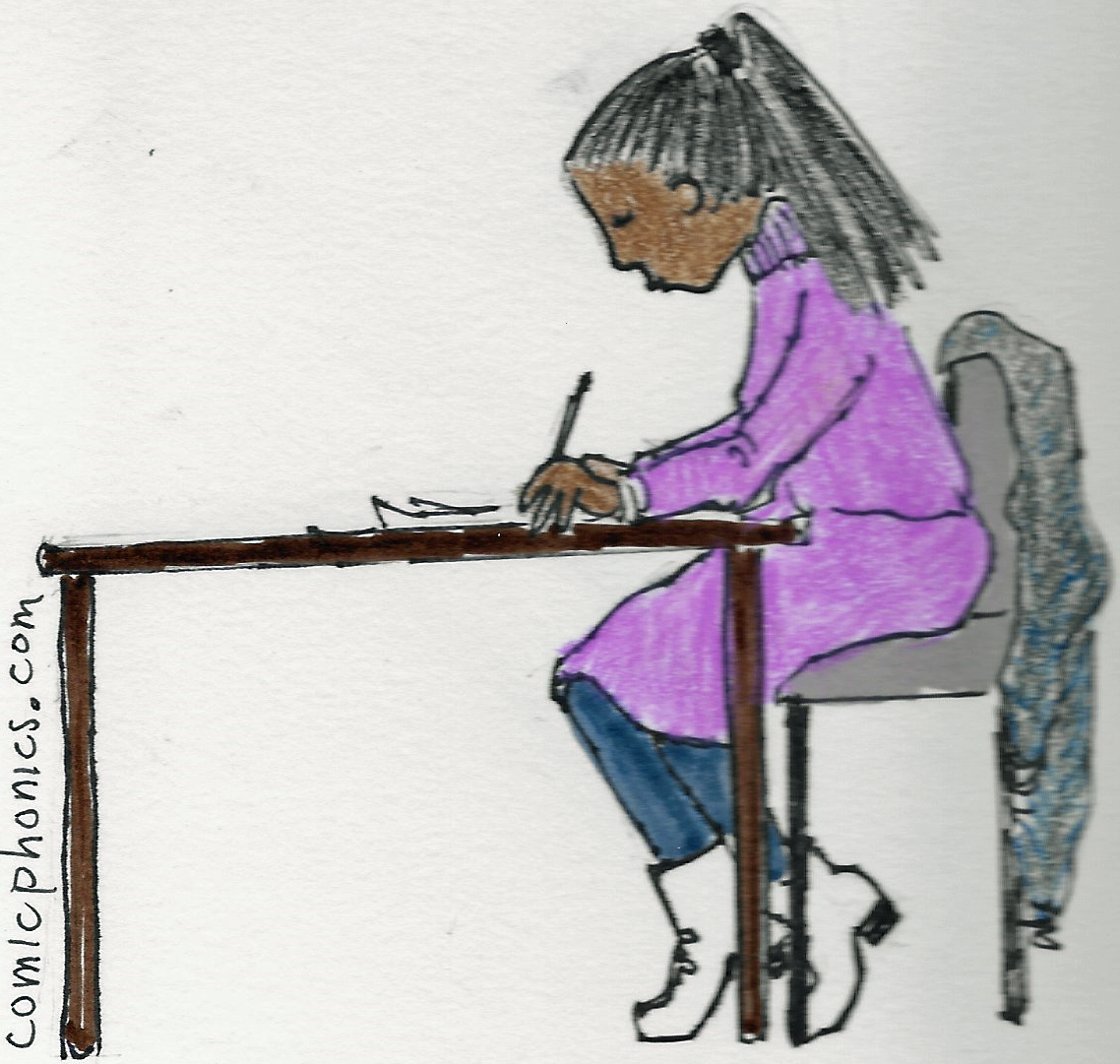
Your response to the prompt (a persuasive essay provided in your testing packet) is an essay.  It is judged based on three criteria:

  • Naming the author and title of the prompt; identifying the thesis of the prompt, and summarizing the main ideas in the prompt plus important details.
  • Identifying what persuasive techniques the author of the prompt uses, pointing out examples of those persuasive techniques in the prompt, and explaining why those persuasive techniques work.
  • Writing your response in standard essay format (an introduction, body, and conclusion) while using excellent, stylish English.

Today let’s look at the first of the three criteria, the summary.

Before you read the essay prompt, I would go straight to the paragraph after the prompt ends.  That paragraph directs you to write an essay, but more importantly, it identifies the thesis of the prompt.  You don’t need to figure out what the thesis is because the test information identifies it.  Underline the thesis and in the margin write “thesis.”

(Yes, you can write in your test booklet.  It will be shredded after the test, so no one but you will see it.  Write any notes that help you.)

Now that you know what the essay prompt is all about, you can read the prompt aware of what you are looking for, that is, the main ideas backing up that thesis.  Underline the main ideas as you read and in the margin next to the ideas write “MI1” or “MI2.”  Why?  You need to be able to find the main ideas quickly later on.  Underlining them and annotating them in the margins makes finding them easier

Usually the prompt is five or six paragraphs, so you might wind up with four or five main ideas, one per body paragraph.  But sometimes an author begins the first main idea in the first paragraph and offers the last main idea in the last paragraph.  So read carefully.

Now that you know what the prompt is all about you can write your summary paragraph.  I would make that summary the first paragraph of your essay.  No need for a separate introduction–and no time.  In your first sentence, write an overall summary of the essay, and in the next few sentences, identify the main ideas.  That’s right.  Write a one sentence summary of the article to start your essay.

Remember, the SAT is a test designed to see if you are ready for college.  In writing the summary of the essay prompt, the test is asking you to prove you can read and understand college level material, and to prove that by summarizing the material.

How can you become proficient at this kind of writing without working with a tutor like me?  Go online to a well-written newspaper and read an op-ed article (an opinion essay on the page opposite the editorial page).  Do this several times a week.  Download one copy and mark it for its thesis and main ideas.  Write a five or six sentence summary.  Choose different authors with different writing styles and topics.

Or from your library, take out a book of essays and do the same thing.  Or find a book of essays from a resale book store or Goodwill which you can mark.  Choose persuasive essays because that is the kind you will be tested on.
 

Should you write the SAT essay?

Will you or your child be taking the SAT  in December?  Here are some facts to keep in mind as you make your decision about writing the essay.

None of the Ivy League universities (Brown, Columbia, Cornell, Dartmouth, Harvard, Pennsylvania, Princeton and Yale) requires the SAT essay any more.

Stanford strongly recommends writing the essay as does Georgia Tech.  West Point requires it.

About 10% of US colleges and universities require the essay.  The less prestigious the college, the more likely it does not require the essay.

Unlike the multiple choice math and writing sections of the SAT, the essay score is subjective based on the judgment of two readers (possibly two machine readers).  A perfect score is 8 based on each of the two readers giving a score of from 1 to 4.

The score on the essay is based on one written response to one essay prompt, unlike the scores on the math and writing portions which are based on dozens of questions, each with just one correct answer.

Factors that could influence your score include your reaction to the subject matter of the prompt, your familiarity with the culture and writing style of the prompt writer, and who grades your essay.

The likelihood that you will achieve a perfect 8 on the essay is one percent, according to an analysis of College Board data by Compass Education Group.

The essay you need to write is judged on three criteria:  how well you summarize the main points of the essay; how well you identify and analyze why the prompt persuades; and how well you write your essay in English).  The hardest of these three criteria to score well on is the analysis of the prompt’s persuasive techniques.

More than 80% of test takers receive a score of 4, 5, or 6 on the summary and writing aspects of the essay but receive a 3, 4, or 5 on the analysis, according to Compass Education Group.  Readers/scorers of the essays seem reluctant to give the highest or the lowest scores.  So like a bell curve, most scores cluster in the middle range of possible scores.

You can think of the essay scoring as like the scoring of competitive gymnasts, with each athlete’s score decided somewhat subjectively by the judges.  If you score a 6 on your essay and your friend scores a 5, does that mean your essay is  better than hers?  No.  What if you score a 6 and your friend scores a 4?  Yes, in that case, you probably did write a better essay.

If your college choices don’t require an SAT essay, then you should probably skip writing the essay and lose no sleep over that decision.  But if you are an excellent writer, then you should probably write the essay.  If you do well under test conditions—50 minutes to read, understand, and analyze a prompt, and to respond in essay format in near perfect English—the advantage is yours.

How to show students how to incorporate backstory into action

I would find a well-known story—fairy tales are perfect—which begin with backstory.  Either give each student in the class a copy or show a copy on the overhead projector.  For example, here is a version of a famous fairy tale:

Once upon a time there lived a king and queen who were very unhappy because they had no children. But at last a little daughter was born, and their sorrow was turned to joy. All the bells in the land were rung to tell the glad tidings.

The king gave a feast so grand that the likes of it had never been known. He invited all the fairies he could find in the kingdom—there were seven of them—to come as godmothers. He hoped that each would give the princess a good gift.

But there came into the hall a mean old fairy who had not been invited. She had fled the kingdom in anger fifty years before and had not been seen since.

The evil fairy’s turn came to give a gift to the baby. Shaking her head spitefully, she said, “When the princess is seventeen years old, she shall prick her finger with a spindle, and-she-shall-die!”

Ask the students to read the fairy tale opening several times, and then identify what you mean by backstory–the king and queen being sad they had no children, the bells ringing, the feast, the fairies invited, the old fairy not invited.  Explain that together you are going to rewrite this beginning in such a way that these events are written into the action.  Suggest that the place to begin the action is where the mean fairy is about to cast a spell on the infant.  Ask the class for ideas how to begin.

If this is the first time you have done this with a group of students, you might not get a response.  Or you might get a response that is more backstory.  So you might need to model how to approach this problem.  You might think aloud how you would write this story opener, accepting some of your own ideas and rejecting others.  Let the students hear how you would go about writing a more interesting beginning.

You could say and write,

Once upon a time, a mean fairy strode into a king’s and queen’s ballroom, glaring at the invited guests until the royal court, the king, the queen, and the tiny baby princess grew still.  Even the castle bells stopped ringing.

Ask students if they recognize that his story is a fairy tale.  Ask how they know.  These questions keep them involved.  Now continue thinking and writing aloud.

“Since you have waited 17 years for a daughter,” the mean fairy said, staring at the king and queen, “I will protect the princess for 17 years.”  The king and queen rose to their feet and clapped, as did the other fairies and guests.  Even the baby kicked her tiny feet in approval.

Explain to the students that you have just set up the king, queen and royal court–as well as the readers–for what will happen next.

But the mean fairy was not finished.  “On your 17th birthday,” she said, leaning over the baby’s cradle, and touching a finger of the infant, “you shall prick this finger on a spinning wheel.”  She turned around to look at the king and queen before she turned back to the baby.  “And you shall die!”

Next, ask the students to compare the two fairy tale openings, side by side if you can.  Point out that some of the backstory was not told in the second version, but the important parts were.  More importantly, the second version starts with action, with someone doing something. We learn so much from the dialog of the mean fairy:  that there is a king and queen who have wanted a child for a long time, that their longed-for baby is a girl, and that on her 17th birthday she will prick her finger and die because of a spell by the evil fairy.  Aren’t those the essential parts of the backstory in the original version?  And isn’t the longer quote of the mean fairy in the second version more scary and exciting than telling the information as backstory, as in the first version?

When you have worked through this process with one fairy tale, choose another, and another, and another.  Each time rewrite the fairy tale aloud with the students, asking for their input as they grow more capable of writing this way.  Then, divide the class into small groups, and let each group attempt to rewrite a fairy tale opening.  Meanwhile, you circulate to offer help, suggestions or praise.  Ask students to volunteer to read their openings aloud and to talk about how they wrote, explaining their problems and solutions.

Finally, ask students to write their own fairy tale opening, incorporating background information into the action.  Let students read their works aloud.

For all of these exercises, students needn’t write the whole fairy tale.  What you are teaching is how to write better narrative openings, so writing the opening is enough.