Use a template to write a persuasive essay introduction

Suppose a student wants to write a persuasive essay.  A million and one ways to begin such an essay exist, small comfort to a student looking for just one reliable way to write an introduction.  Does such a template exist?

Yes.  And using it, a student can write the introduction in five sentences, too, which many teachers require.

  • First, think about the topic and write a general sentence relating to that topic.
  • Second, write more specifically about the topic in two sentences, heading in the direction of your main idea (thesis) which you should already know from organizing your ideas.
  • Third, transition to your main idea (thesis) by connecting what you have just written to what you will write next.
  • Fourth, write your main idea.

Let’s try a few examples.

Suppose a fifth grader wants to persuade that soccer is a good sport for kids.  Here is one opening:

  • When my grandmother was a kid, none of her friends played soccer.
  • Why? Hardly any soccer leagues for kids existed then.  There were baseball leagues and basketball leagues and football leagues, but there were hardly any youth soccer leagues.
  • Nowadays, almost every city or town in the US has soccer teams for kids.
  • Soccer is a great sport for kids to play because it strengthens muscles, teaches teamwork, and teaches how to accept defeat.

For that same fifth grader, here is another essay introduction:

  • My friend, Mario, says baseball is a better sport than soccer for kids.
  • My other friend, Julio, says football is better than soccer for kids.
  • My sister, Emma, who is tall, says basketball is better than soccer for kids.
  • I think they are all wrong.
  • Soccer is a great sport for kids to play because it strengthens muscles, teaches teamwork, and teaches how to accept defeat.

Here is a third possible introduction written at a high school level:

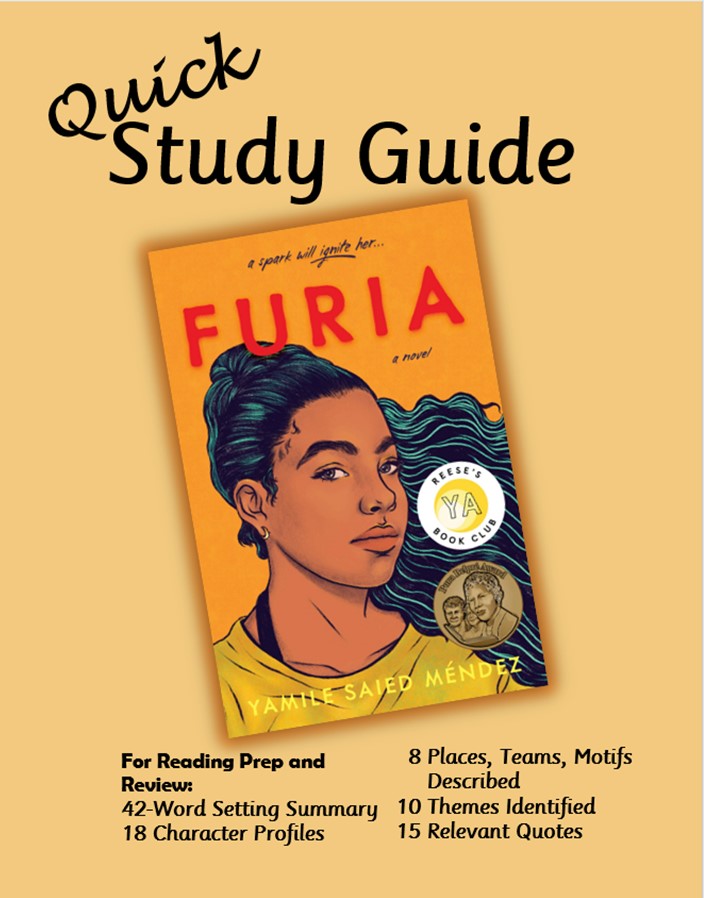
  • Furia by Y.S. Mendez is a novel about a teenage girl from Argentina who wants to play professional soccer.
  • But Camilla is growing too old to be thinking of soccer, according to her father who thinks adult soccer is for men only.
  • She should be thinking about boyfriends, he thinks, especially a rich local boy who has made it to a professinal soccer team.
  • But Camilla cannot give up her dream to play soccer as an adult, and why should she?
  • Soccer is a great sport for young adults to play because it strengthens muscles, teaches teamwork, and teaches how to accept defeat.

Notice that each of these three introductions uses the word “soccer” in the first sentence, alerting the reader that the essay will be about soccer.  Neither first sentence hints that the essay will be about why soccer is good for a kid or young adult.  That doesn’t come until the last sentence of the paragraph, the topic sentence.

All three introductions start out with general ideas:  the first one, that no one in the US played soccer years ago; the second one, that various people think a particular sport is better than soccer; and the third one, that a novel focuses on a girl who wants to play soccer.  Each first sentence idea is developed in the next two sentences.  In the fourth sentence, the focus shifts to an idea connecting the first three sentences to the main idea (thesis) sentence.

What I am suggesting is a pattern you can use to write introductions to persuasive essays.  You don’t need to start from scratch each time you write.  You can use the steps I describe above, fill in the blanks, and write an okay—maybe even great—essay introduction.

For more ideas on how to write, read my book How to Write a 5th Grade (or any other grade) Essay.  Or contact me for tutoring lessons.  I am now scheduling fall online classes.

5 ways to figure out if your source is any good

With so much information on the Internet, students need to learn how to distinguish good from bad sources for their research projects.  One way to do this is to apply the CRAAP test to source material to determine if the information is sound.

The CRAAP test?  What’s that?  It’s five criteria you can use to judge if your information is good or is crap.  Here are the five criteria:

Current: Is the information current or is it dated?  If it is out-of-date, does that matter?  If you are writing about the life of John F. Kennedy, books sixty years old written by people who knew him–primary sources–might be excellent sources.  Has the information been updated since it was published?  If you are writing about the SAT, including that the test will be offered online only starting in 2024 is important, timely information to include.

Relevant: Is the source directly related to your topic? If you are writing about the Trump White House, then perhaps testimony made to the January Sixth Committee of Congress by people who worked at the White House would be as pertinent as interviews with staff who did not testify.  What audience are you writing for? If you are writing a biography intended for elementary school age children, the facts you include might be different from facts you would include for an adult audience.

Authoritative: What makes the author of the source material you are using an authority on the subject?  Is the source a relative?  A scientist in the same field?  A collaborator?  Are you using that source’s primary information or secondary information?  Is the source qualified about the topic? What are his or her credentials?  Is the data published in a peered-reviewed  journal?

Accurate: Is the source fact or opinion?  What evidence collaborates the source material?  Have the facts been fact-tested by any reliable source?  If the information is old–say records of the Battle of Hastings in 1066 in Britain–does the author explain that the “facts” differ depending on whether the winning or losing side reported them?

Purpose: What purpose has the information been used for–to inform, persuade, entertain, advertise, editorialize,  provide testimony, or something else? Is opinion presented as fact?  Can you distinguish between fact and opinion?  Has the author been clear about his or her ability to understand the data?

When children are young, they pretty much accept what adults say as the truth.  But as they mature, children learn that not every source can be trusted.  That includes sources used for research.  Applying these criteria systematically helps students better analyze the truthfulness and usefulness of their sources.

One easy way to write a persuasive essay introduction

Suppose you are assigned to write a persuasive essay.  You don’t know how to begin.  Does a template for the introduction to a persuasive essay exist?  Is there  a way that works almost all the time?

Yes.

Five steps for a persuasive essay graphic

Let’s try a few examples.

  • Suppose a fifth grader wants to write a persuasive essay showing that soccer is a good sport for kids. She writes a thesis:  “Soccer is a great sport for kids to play because it strengthens muscles, teaches teamwork, and teaches how to accept defeat.”  Now she sets that aside for a moment.
  • Next, she writes a general sentence about soccer: “When my grandmother was a kid, none of her friends played soccer.”
  • She continues to write about soccer, heading toward her thesis idea: “Why?  Hardly any soccer teams for kids existed then.  There were baseball teams and basketball teams and football teams, but there were hardly any youth soccer teams.”
  • She writes a transition sentence from soccer in the past to soccer today: “Nowadays, almost every city or town in the US has soccer teams for kids.”
  • She goes back to the main idea sentence she set aside, and she moves it to this spot: “Soccer is a great sport for kids to play because it strengthens muscles, teaches teamwork, and teaches how to accept defeat.”

Here is her finished introduction:

When my grandmother was a kid, none of her friends played soccer.  Why?  Hardly any soccer teams for kids existed then.  There were baseball teams and basketball teams and football teams, but there were hardly any youth soccer teams.  Nowadays, almost every city or town in the US has soccer teams for kids.  Soccer is a great sport for kids to play because it strengthens muscles, teaches teamwork, and teaches how to accept defeat.

Here is another essay introduction for that same main idea:

  • My friend, Mario, says baseball is a better sport than soccer for kids.girl kicking soccer ball
  • My other friend, Julio, says football is better than soccer for kids.
  • My sister, Emma, who is tall, says basketball is better than soccer for kids.
  • I think they are all wrong.
  • Soccer is a great sport for kids to play because it strengthens muscles, teaches teamwork, and teaches how to accept defeat.

Here is a third possible introduction written at a high school level:

  • Furia by Y.S. Mendez is a novel about a teenage girl from Argentina who wants to play professional soccer.
  • But Camilla is growing too old to be thinking of soccer, according to her father who thinks adult soccer is for men only.
  • He thinks she should be thinking about boyfriends, especially about a rich local boy who plays professional soccer.
  • But Camilla cannot give up her dream to play soccer as an adult.  And why should she?
  • Soccer is a great sport for young adults to play because it strengthens muscles, teaches teamwork, and teaches how to accept defeat.

Notice that each of these three introductions uses the word “soccer” in the first sentence, alerting the reader that the essay will be about the topic of soccer.

All three introductions start out with general ideas:  the first one, that kids in the US didn’t play soccer years ago; the second one, that someone thinks a particular sport is better than soccer; and the third one, that a novel focuses on a girl who wants to play soccer.  Each first sentence idea is developed in the next two sentences.  In the fourth sentence, the focus shifts and links to the main idea (thesis) in the fifth sentence.

This is a pattern you can use to write almost any introduction to a persuasive essay.  You don’t need to start from scratch each time you write, wondering how to begin.  You can use the steps above, fill in the ideas, and write a satisfactory—maybe even great—essay introduction.

For more ideas on how to write, read my book How to Write a 5th Grade (or any other grade) Essay.  Or contact me for tutoring lessons.  I am now scheduling summer and fall classes.

Use a template to write an essay introduction

Starting essays—writing introductions—is one of the hardest writing challenges for many students.  They look at white space on their notebook paper or on their laptop and wonder, “How do I begin?”

What if they had a template that worked?  Here’s one I have developed for students who need to write an essay about some feature of a novel, film or play.

  • First sentence: name the novel, name the author and identify the location of story and when the story takes place.


  • Second, write a two-sentence summary of the story.


  • Third, write a transition sentence to connect the summary to the main idea.


  • Fourth, write the main idea (thesis).

Let’s try it out.  Suppose a fourth-grader is writing about what a silly little brother Fudge is in Tales of a Fourth Grade Nothing.  How would that introduction begin?

  • Tales of a Fourth Grade Nothing by Judy Blume takes place in New York City in modern times.


  • A big brother, Peter, is bothered by his little brother, Fudge.  Some people who don’t know Fudge think Fudge is cute.


  • But even Fudge’s mother and father get mad at him.


  • In the book, Fudge does some really dangerous things like fall off a rock, lose his shoe on a subway, and eat a turtle.

Now, suppose an eighth grader needs to write about a theme in To Kill a Mockingbird. How might that introduction begin?

  • To Kill a Mockingbird by Harper Lee takes place in Alabama during the 1930s.


  • Two children, Scout and her big brother, Jem, are fascinated by a neighbor, Beau, whom they have never seen.  They think he must be a monster because he never goes outside.


  • But a few times Beau does come out without Scout and Jem knowing it.


  • Beau comes outside to show friendship when he places trinkets in a hole in a tree, when he puts a blanket on Scout, and when he saves Jem’s life.

How about one more.  A high school student needs to write about sonnets in Romeo and Juliet.  How would that introduction go?

  • Romeo and Juliet is a five-act play by William Shakespeare which occurs in Verona, Italy, around the year 1600 or a little earlier.


  • In the play, two star-crossed lovers meet, fall in love at first sight, and marry.  They are forced to separate, and their efforts to reunite fail.


  • Shakespeare tells this love story using puns, words with double meanings, and figures of speech.


  • But some of the play’s most clever lines are in sonnet form, and an example of this is the prologue of the play.

Each of these examples is five lines long, the length many teachers require.  Each names the title and author and summarizes the plot.  The fourth line connects the summary to the main idea which is the last sentence of the introduction.  Yet each essay is different because the summaries, transition sentence and thesis are different.

This template follows a pattern that students can use over and over to begin an essay about a novel, film or play.  This template works in most situations where a novel, play, or fictional film is the starting point of an essay.

For more ideas on how to write, read my book How to Write a 5th Grade (or any other grade) Essay.  Or contact me for tutoring lessons.  I am now scheduling summer and fall classes.

15 tips for writing a good blog

That headline is one example of how to write a good blog.  Make your headline eye-catching and intriguing, so readers will check it out.  Starting with numbers attracts too.  Here are some more tips:

  • Use bullets when you list. Bullets help your readers’ eyes see your organization.  Not all blogs need bullets, but when you list, use them.  They add white space, making your writing more readable.
  • Add white space before and after paragraphs. White space makes writing look more readable.  The same information written in long paragraphs is less attractive than when it is written in short paragraphs.
  • Keep paragraphs short. Three or four sentences max.  Cut a longer paragraph into two or three.
  • Keep sentences short. If you use complex sentences (like this one), limit them to one dependent clause.  The more clauses, the harder to read.
  • Replace long words of Latin origin with one- or two-syllable words of Anglo-Saxon origin. Longer words are often abstract.  Shorter words are usually concrete and easier to understand.
  • Give each idea its own paragraph, even if that paragraph is short.
  • Use art. Photos, graphs, maps and cartoons attract.  They keep the reader engaged as they scroll down.
  • Stick to a format. You want to develop a recognizable style that you use in every blog.
  • Use subheads if you are writing paragraphs.
  • Use a sans serif typeface. Sans serif is quicker to read.
  • Use a big typeface—at least 12 point. It’s easier to read.
  • Avoid italics and ALL CAPS. People perceive italics as harder to read, so they don’t read them.  Words in capital letters seem to shout—not polite.
  • Use a plain light background. A graphic background cuts readability.
  • Keep your blogs short. Readers like to skim blogs.  Make yours skim-able.  Search engines pick up short blogs, too.