Category Archives: writing template

How to write a five-sentence essay introduction about a novel

Writing introductions to essays is hard for students.  Every single sentence in introductions is hard to write because students don’t know what belongs in those sentences.  Here are the kinds of first sentences I see from students writing an essay about a fictional story:

“I am writing about the book Gone with the Wind. The lady who wrote it was Margaret Mitchell.  The main idea is about a girl who lived during the Civil War.”

“The name of the book is Tales of a Fourth Grade Nothing. Judy Blume wrote it, but Peter tells the story.  He tells about his brother Fudge.  Fudge is 3 and a pain in the neck.”

“Odysseus was a Greek king. He fought in the Trojan War.  Then he went home.  Only it took ten years to get home.  This is what The Odyssey is all about.  Homer wrote it.”

Wouldn’t it be nice if there was a pattern students could followWell, there is.  Here is what I suggest to my students:

For the first sentence, identify the book and its author and one other fact, such as the year of publication or the setting.  Here are some good examples:

  • Gone with the Wind by Margaret Mitchell is set in Georgia during and after the Civil War.
  • In Tales of a Fourth Grade Nothing, author Judy Blume tells the story of an older brother, Peter, and his younger brother, Fudge.
  • The Greek poet, Homer, probably wrote The Odyssey about 2,700 years ago, but he wrote about things that happened 500 years before that.

For the second sentence, identify the setting (time and place).  Here are some examples:

  • Most of the novel takes place in Tara, a plantation near Atlanta, and in the city of Atlanta between 1861 and the early 1870s.
  • Peter and Fudge live in modern times in an apartment in New York City, near a park and subways.
  • After the Trojan War, a Greek king and his men sail in the Mediterranean Sea for many years, trying to get home.

For the third (and maybe fourth sentence) summarize the book.  Some examples are

  • The novel tells how one person, Scarlett O’Hara, survives the Civil War and the years after it while loving one man she can’t marry. Later, she realizes the man she married is the one she really loves.
  • Peter is embarrassed by the crazy things Fudge does, like pretending he is a bird, breaking off his two front teeth, and losing his shoe in the subway.
  • When the Greek king, Odysseus, finally arrives back in Greece, he needs to fight many Greek men who want to marry his wife.

Use the next sentence to transition from the previous sentences to the main idea sentence (the fifth sentence) of your essay.  For example,

  • Complicating the story is that the man Scarlett can’t marry loves someone else.
  • On the first page, Peter wins a turtle Fudge likes, and in the last chapter, Fudge finally gets the turtle. The turtle is an important character in the novel.
  • Since many years have passed since Odysseus left home, few recognize him. Of those closest to Odysseus, his wife and son do not recognize him, but his dog does.

Write your main idea or thesis in the final sentence of the essay.  Here are some examples:

  • Throughout Gone with the Wind, Scarlett’s chasing after the man she loves moves the plot forward.
  • Tales of a Fourth Grade Nothing begins with Peter winning a turtle, and it ends with a crisis involving the turtle.
  • At the story’s end, Odysseus slays his rivals and wins the affection of his loyal wife, returning to the situation before the Trojan War began.

Notice that in these introduction sentences:

  • The word “I” is not used.
  • The first sentence uses a pattern: The (name of book) by (name of author) is set in (someplace) or tells the story of (something).
  • The other sentences use a pattern, too, a pattern identifying information to include.
  • The last sentence is the main idea (thesis) sentence of the essay.

After students master this pattern, they can experiment with changes to it.  You might think that following a pattern lacks creativity.  Yes, it does.  But since the pattern contains all the important details, it’s a safe way to proceed.  For students learning to write essays, following a pattern that works is better than floundering with details that don’t work or with missing details.

When we start baking a cake, we use a recipe.  When we become better bakers, we can make changes to the recipe.  When we learn to write, we follow patterns.  Later, when we become proficient, we can make changes to those patterns.

How to write a five-sentence introduction to an informational or persuasive essay (not a narrative)

Here is a template for writing a five-sentence essay introduction:

First, Identify the topic.

Second, write the main idea / thesis sentence.

Third, follow the outline below for a five-sentence introduction.

  • First sentence if the topic is a piece of literature (novel, short story, poem, biography, film, TV show, or video game):  identify the work of art and its author or network.
  • First sentence if the topic is not a work of art:  identify the topic you are writing about.
  • Second and third sentence if the topic is a work of art:  Summarize the plot / theme / setting / character –whatever is important relating to the main idea of your essay.
  • Second and third sentence if the topic is not a work of art:  Provide background information relating to the main idea of your essay.
  • Fourth sentence:  Transition  to your main idea.
  • Fifth sentence:  Transfer your main idea sentence here.

Here is an example of an essay introduction about a novel, using the format just described:

Tales of a Fourth Grade Nothing by Judy Blume is a children’s chapter book about two brothers.  The older brother–Peter–is in fourth grade and is embarrassed by his little brother.  The little brother–Fudge–is a smart three-year-old who often gets in trouble.  On page after page, Fudge’s antics become more and more ridiculous.  Tales of a Fourth Grade Nothing is a funny story.

Here is an essay introduction about what I did over Thanksgiving break.

Where I live, schools close for a whole week for Thanksgiving break.  Counting the weekends before and after, the break is nine days of vacation.  Some people fly across the country to be with family and friends during this long school break.  However, not everyone travels far.  I enjoy Thanksgiving break at home where I watch a parade on TV, play with my friends, and eat lots of turkey.

Notice that in each of these two introductions, the first sentence introduces the topic (the name of the book; Thanksgiving break).  The next two sentences develop ideas named in the first sentence (they summarize the book’s contents; they elaborate on having a whole week off of school.  The fourth sentence connects the previous sentences to the ideas in the last sentence (Fudge’s antics become worse; not everyone travels on Thanksgiving break). The fifth sentence identifies what the rest of the essay will be about (how the novel is funny; how I had fun over Thanksgiving break).

Is it necessary to have a five-sentence introduction?  No.  But since many teachers require it, students would be smart to learn how to write one.

Use a template to write a persuasive essay introduction

Suppose a student wants to write a persuasive essay.  A million and one ways to begin such an essay exist, small comfort to a student looking for just one reliable way to write an introduction.  Does such a template exist?

Yes.  And using it, a student can write the introduction in five sentences, too, which many teachers require.

  • First, think about the topic and write a general sentence relating to that topic.
  • Second, write more specifically about the topic in two sentences, heading in the direction of your main idea (thesis) which you should already know from organizing your ideas.
  • Third, transition to your main idea (thesis) by connecting what you have just written to what you will write next.
  • Fourth, write your main idea.

Let’s try a few examples.

Suppose a fifth grader wants to persuade that soccer is a good sport for kids.  Here is one opening:

  • When my grandmother was a kid, none of her friends played soccer.
  • Why? Hardly any soccer leagues for kids existed then.  There were baseball leagues and basketball leagues and football leagues, but there were hardly any youth soccer leagues.
  • Nowadays, almost every city or town in the US has soccer teams for kids.
  • Soccer is a great sport for kids to play because it strengthens muscles, teaches teamwork, and teaches how to accept defeat.

For that same fifth grader, here is another essay introduction:

  • My friend, Mario, says baseball is a better sport than soccer for kids.
  • My other friend, Julio, says football is better than soccer for kids.
  • My sister, Emma, who is tall, says basketball is better than soccer for kids.
  • I think they are all wrong.
  • Soccer is a great sport for kids to play because it strengthens muscles, teaches teamwork, and teaches how to accept defeat.

Here is a third possible introduction written at a high school level:

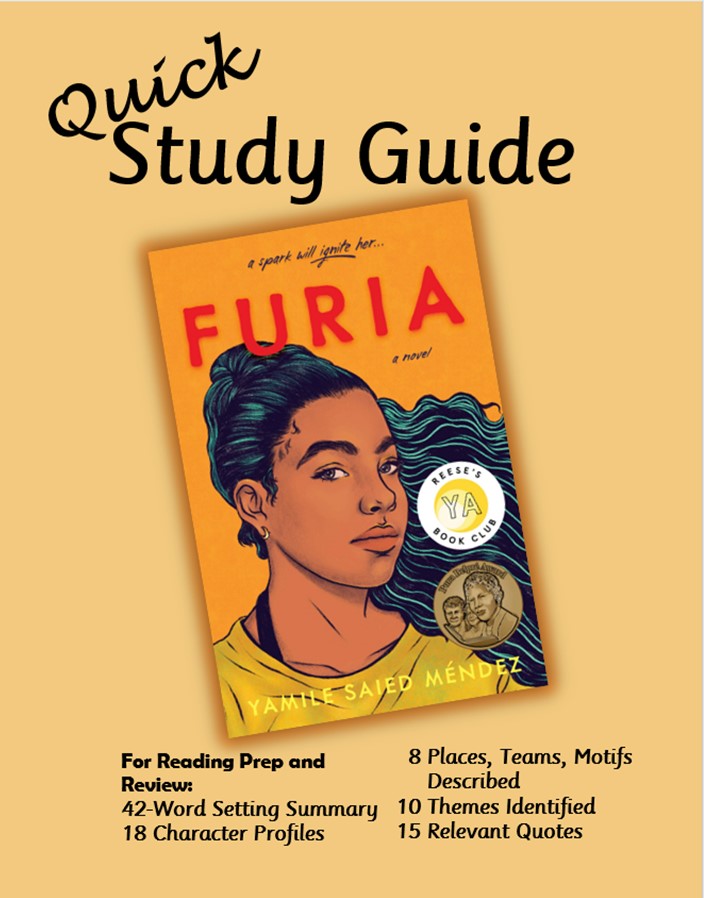
  • Furia by Y.S. Mendez is a novel about a teenage girl from Argentina who wants to play professional soccer.
  • But Camilla is growing too old to be thinking of soccer, according to her father who thinks adult soccer is for men only.
  • She should be thinking about boyfriends, he thinks, especially a rich local boy who has made it to a professinal soccer team.
  • But Camilla cannot give up her dream to play soccer as an adult, and why should she?
  • Soccer is a great sport for young adults to play because it strengthens muscles, teaches teamwork, and teaches how to accept defeat.

Notice that each of these three introductions uses the word “soccer” in the first sentence, alerting the reader that the essay will be about soccer.  Neither first sentence hints that the essay will be about why soccer is good for a kid or young adult.  That doesn’t come until the last sentence of the paragraph, the topic sentence.

All three introductions start out with general ideas:  the first one, that no one in the US played soccer years ago; the second one, that various people think a particular sport is better than soccer; and the third one, that a novel focuses on a girl who wants to play soccer.  Each first sentence idea is developed in the next two sentences.  In the fourth sentence, the focus shifts to an idea connecting the first three sentences to the main idea (thesis) sentence.

What I am suggesting is a pattern you can use to write introductions to persuasive essays.  You don’t need to start from scratch each time you write.  You can use the steps I describe above, fill in the blanks, and write an okay—maybe even great—essay introduction.

For more ideas on how to write, read my book How to Write a 5th Grade (or any other grade) Essay.  Or contact me for tutoring lessons.  I am now scheduling fall online classes.

One easy way to write a persuasive essay introduction

Suppose you are assigned to write a persuasive essay.  You don’t know how to begin.  Does a template for the introduction to a persuasive essay exist?  Is there  a way that works almost all the time?

Yes.

Five steps for a persuasive essay graphic

Let’s try a few examples.

  • Suppose a fifth grader wants to write a persuasive essay showing that soccer is a good sport for kids. She writes a thesis:  “Soccer is a great sport for kids to play because it strengthens muscles, teaches teamwork, and teaches how to accept defeat.”  Now she sets that aside for a moment.
  • Next, she writes a general sentence about soccer: “When my grandmother was a kid, none of her friends played soccer.”
  • She continues to write about soccer, heading toward her thesis idea: “Why?  Hardly any soccer teams for kids existed then.  There were baseball teams and basketball teams and football teams, but there were hardly any youth soccer teams.”
  • She writes a transition sentence from soccer in the past to soccer today: “Nowadays, almost every city or town in the US has soccer teams for kids.”
  • She goes back to the main idea sentence she set aside, and she moves it to this spot: “Soccer is a great sport for kids to play because it strengthens muscles, teaches teamwork, and teaches how to accept defeat.”

Here is her finished introduction:

When my grandmother was a kid, none of her friends played soccer.  Why?  Hardly any soccer teams for kids existed then.  There were baseball teams and basketball teams and football teams, but there were hardly any youth soccer teams.  Nowadays, almost every city or town in the US has soccer teams for kids.  Soccer is a great sport for kids to play because it strengthens muscles, teaches teamwork, and teaches how to accept defeat.

Here is another essay introduction for that same main idea:

  • My friend, Mario, says baseball is a better sport than soccer for kids.girl kicking soccer ball
  • My other friend, Julio, says football is better than soccer for kids.
  • My sister, Emma, who is tall, says basketball is better than soccer for kids.
  • I think they are all wrong.
  • Soccer is a great sport for kids to play because it strengthens muscles, teaches teamwork, and teaches how to accept defeat.

Here is a third possible introduction written at a high school level:

  • Furia by Y.S. Mendez is a novel about a teenage girl from Argentina who wants to play professional soccer.
  • But Camilla is growing too old to be thinking of soccer, according to her father who thinks adult soccer is for men only.
  • He thinks she should be thinking about boyfriends, especially about a rich local boy who plays professional soccer.
  • But Camilla cannot give up her dream to play soccer as an adult.  And why should she?
  • Soccer is a great sport for young adults to play because it strengthens muscles, teaches teamwork, and teaches how to accept defeat.

Notice that each of these three introductions uses the word “soccer” in the first sentence, alerting the reader that the essay will be about the topic of soccer.

All three introductions start out with general ideas:  the first one, that kids in the US didn’t play soccer years ago; the second one, that someone thinks a particular sport is better than soccer; and the third one, that a novel focuses on a girl who wants to play soccer.  Each first sentence idea is developed in the next two sentences.  In the fourth sentence, the focus shifts and links to the main idea (thesis) in the fifth sentence.

This is a pattern you can use to write almost any introduction to a persuasive essay.  You don’t need to start from scratch each time you write, wondering how to begin.  You can use the steps above, fill in the ideas, and write a satisfactory—maybe even great—essay introduction.

For more ideas on how to write, read my book How to Write a 5th Grade (or any other grade) Essay.  Or contact me for tutoring lessons.  I am now scheduling summer and fall classes.

Use a template to write an essay introduction

Starting essays—writing introductions—is one of the hardest writing challenges for many students.  They look at white space on their notebook paper or on their laptop and wonder, “How do I begin?”

What if they had a template that worked?  Here’s one I have developed for students who need to write an essay about some feature of a novel, film or play.

  • First sentence: name the novel, name the author and identify the location of story and when the story takes place.


  • Second, write a two-sentence summary of the story.


  • Third, write a transition sentence to connect the summary to the main idea.


  • Fourth, write the main idea (thesis).

Let’s try it out.  Suppose a fourth-grader is writing about what a silly little brother Fudge is in Tales of a Fourth Grade Nothing.  How would that introduction begin?

  • Tales of a Fourth Grade Nothing by Judy Blume takes place in New York City in modern times.


  • A big brother, Peter, is bothered by his little brother, Fudge.  Some people who don’t know Fudge think Fudge is cute.


  • But even Fudge’s mother and father get mad at him.


  • In the book, Fudge does some really dangerous things like fall off a rock, lose his shoe on a subway, and eat a turtle.

Now, suppose an eighth grader needs to write about a theme in To Kill a Mockingbird. How might that introduction begin?

  • To Kill a Mockingbird by Harper Lee takes place in Alabama during the 1930s.


  • Two children, Scout and her big brother, Jem, are fascinated by a neighbor, Beau, whom they have never seen.  They think he must be a monster because he never goes outside.


  • But a few times Beau does come out without Scout and Jem knowing it.


  • Beau comes outside to show friendship when he places trinkets in a hole in a tree, when he puts a blanket on Scout, and when he saves Jem’s life.

How about one more.  A high school student needs to write about sonnets in Romeo and Juliet.  How would that introduction go?

  • Romeo and Juliet is a five-act play by William Shakespeare which occurs in Verona, Italy, around the year 1600 or a little earlier.


  • In the play, two star-crossed lovers meet, fall in love at first sight, and marry.  They are forced to separate, and their efforts to reunite fail.


  • Shakespeare tells this love story using puns, words with double meanings, and figures of speech.


  • But some of the play’s most clever lines are in sonnet form, and an example of this is the prologue of the play.

Each of these examples is five lines long, the length many teachers require.  Each names the title and author and summarizes the plot.  The fourth line connects the summary to the main idea which is the last sentence of the introduction.  Yet each essay is different because the summaries, transition sentence and thesis are different.

This template follows a pattern that students can use over and over to begin an essay about a novel, film or play.  This template works in most situations where a novel, play, or fictional film is the starting point of an essay.

For more ideas on how to write, read my book How to Write a 5th Grade (or any other grade) Essay.  Or contact me for tutoring lessons.  I am now scheduling summer and fall classes.