Category Archives: writing rules

Can sentences start with “because”? My son’s teacher says no.

“Because” is a word that is often misused in writing.  “Because” is a connecting word, connecting an independent clause with a dependent clause in a sentence.  If you use it, you must connect two ideas.  For example,

child writing in sleeping bag

I went to bed because I was tired.

“I went to bed” is the independent clause.  “Because I was tired” is the dependent clause.  “Because” is the connecting word.

Teachers tell students that they cannot start a sentence with “because.”  Actually, they can, if they connect the “because” clause to an independent clause.  For example,

Because I was tired, I went to bed.   (This is a perfectly good sentence.)

The problem is that many kids forget to add the independent clause.  Let’s look at three problems and how to solve them.

1.  Suppose a reading question asks you to tell why the dinosaurs died. You write, “Because a meteor hit the earth.”  This is a good fact but bad grammar.  “Because a meteor hit the earth” is not a sentence.  It is part of a sentence.  You need to add an independent clause to make it a complete sentence.  If you write, “Because a meteor hit the earth, the dinosaurs died,” now you have a sentence.

2.  If you find yourself starting what you think are sentences with the word “because,” there is an easy way to fix those mistakes. Just cross out the word “Because” and put a capital letter on the next word.

Why did Harry Potter go to Hogwarts School?

Because he wanted to be a wizard.  (Cross out Because and capitalize He.)

3.  Cause and Because are not the same thing. In writing, you cannot use “cause” if you mean “because.”  Cause is a verb or a noun.  Because is a subordinate conjunction (a connecting word.)

I went home cause I felt sick.  Wrong.  I went home because I felt sick.  Correct.

If you are writing dialog, write the way people speak even if their grammar is wrong.  Write ’cause when the speaker says “cause” meaning because.  The apostrophe indicates some letters are missing.
How many words are too many words?

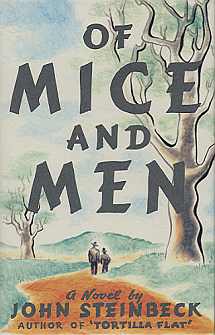
“Write concisely” always appears on rules for good writing.  And some writers follow that rule.of-mice-and-men-book-cover

  • John Steinbeck’s Of Mice and Men has 29,150 words. He later won the Nobel Prize for Literature.
  • Ernest Hemingway’s Old Man and the Sea, which won the Pulitzer Prize in 1953, has 26,601 words. He too won the Nobel Prize for Literature.
  • Agatha Christie, the best-selling writer of all time, wrote novels averaging between 40,000 and 60,000 words, with female murderers’ stories usually using fewer words than male murders’ stories.
  • F. Scott Fitzgerald’s The Great Gatsby, required reading in many American high schools, has 47,094 words.persuasion-book-cover
  • K. Rowling’s first Harry Potter novel has about 77,000 words but her fifth and longest one has about 250,000 words—more than three times as many as her first.
  • Jane Austen, the second most widely known English writer today (Shakespeare is first), wrote Persuasion, considered her best novel by many critics, with 87,978 words.

But other writers have ignored the advice to write concisely, and they have done well for themselves.

  • Charlotte Bronte’s Jane Eyre has 183,858 words.
  • Leo Tolstoy’s Anna Karenina has around 349,700 words English translations and his War and Peace has between 561,000 and 587,000 words, depending on the translation.
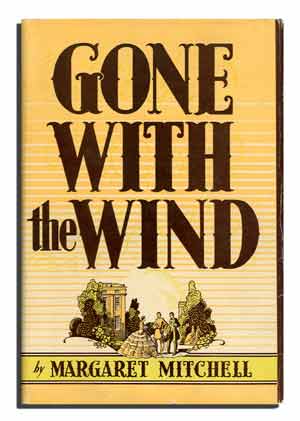
  • Margaret Mitchell’s Gone with the Wind has 418,053 words. It won the Pulitzer Prize in 1937.

gone-with-the-wind-book-coverIs there an optimal number of words in novels?  It turns out publishers think so.

  • 20,000 to 55,000 is best for middle grades novels.
  • 60,000 words is best for young adult fiction.
  • 80,000 words is best for most general adult fiction, mystery fiction, and literary fiction. (Memoirs, which are nonfiction, also top off at 80,000 words.)
  • 110,000 words is the ideal length for sci-fi fiction and fantasy fiction.

Why write sonnets? To inspire creativity

I often have wondered why poets lock themselves into the constraints of certain poetic forms, particulary sonnets.  They are so hard to write, yet the best poets have done so, from Shakespeare to Robert Frost.  Consider the difficulties imposed by the Shakespearean sonnet:

  • The sonnet must have 14 lines.
  • Those 14 lines must be divided into two or three parts: the first part is always 8 lines and the second part is either 6 lines or a combination of 4 lines plus a final couplet.
  • A sonnet must follow a rigorous rhyme pattern: a b a b, c d c d, e f e f, g g.
  • Each line of the sonnet must have ten beats.
  • For each of line, the second, fourth, sixth, eighth and tenth beat must be stressed (iambic pentameter).
  • In the first 8 lines the poet states a problem or a situation; in the second four lines the poet offers a solution or a different perspective; and in the final couplet, if there is one, the poet offers a surprise.

Phew!  Why would any writer box himself in to such a strict format?

It has to do with creativity.  Research has shown that real breakthroughs in creativity occur right after the poet / thinker is stumped and gives up.  It’s too hard!  I can’t do this!  I give up.  And then the poet sleeps on it or drinks on it or walks his dog and voila!  Out of nowhere (it seems) comes the solution, and not just any solution but the perfect solution.  This is that lightbulb moment depicted in cartoons.

Problem leads to frustration leads to giving up leads to subconscious making connections leads to eureka.

With a devilish form like the sonnet, the poet is forced to turn his brains inside and out, churning outrageous ideas before the answer sneaks up, seemingly out of the blue.  Without the difficulty of the sonnet form, the mastery of language, rhythm, rhyme and idea would not fuse into a gorgeous whole.

And that is why poets write sonnets.

Is it okay to break the rules?

Children ask me this all the time.

  • They read a story in which the writer starts a sentence with “because,” something they have been forbidden to do. “So why can’t I start a sentence that way?”

EPSON MFP image

  • They read a conversation in which someone uses the word “gonna.” “So why can’t I do that?”
  • Their teachers tell them every paragraph needs five sentences and every essay needs five paragraphs. But I show them editorials or columns from newspapers which don’t follow these rules.  “So why can’t I do thatt?”
  • They (used to) learn cursive, but they’d see an adult’s signature composed of part cursive, part printing, and part illegible writing. “So why can’t I do that?”

We adults break the rules of writing all the time.  Using bullets, as I did above, is technically breaking the rules of paragraphing, yet bullets add white space and show a pattern of thought.  Bulleted items are usually short and easy to read.  They invite reading the way denser paragraphs do not.  Why not break the paragraphing rules if more people will read what we write and the writing is clear?

With children I suggest the following line of thinking about “rules” of writing.

  • Will I get in trouble if I break the rule? Usually, this means, Will my teacher lower my grade if I break the rule?  If the answer is yes, then follow the rule unless you have a mighty good reason not to and are willing to accept a lower grade.
  • Is your writing easier to understand if you break the rule? If the answer is yes, then break the rule.  Clarity outranks any stylistic tradition.  But usually rules were invented to add clarity.
  • Are you experimenting? If so, follow rules which make sense and ignore rules which inhibit your imagination.

Some of you might say that my “line of thinking” above is really a set of rules.  Yes, they offer guidance the way rules do.  But no, they are not hard and fast, and they allow the writer to choose his own rules as long as he can live with the consequences, the way adults do.