
Yes. First, I would let the children know that they will be writing every day this summer. Give them time to get used to this idea. And tell them you will be writing too. Every assignment they do, you will do too. Your commitment shows them how important you think writing is.
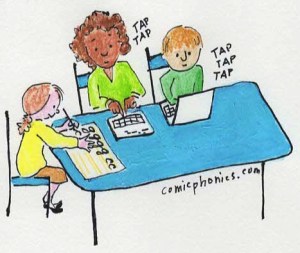
Set up a schedule for writing time and stick to it. Some kids think summer should be a completely unscheduled time. Dispel this myth. Let them know that at a certain hour every day they and you will write.
If the children have a computer or tablet available, let them use it. This will make the idea of writing daily more palatable. (But check to be sure they are writing and not surfing or gaming.) Research shows writers write better when they use electronic equipment, perhaps because of the ease of erasing, moving around phrases and looking up synonyms and spelling. If you have only one such device, stagger the writing times.
Since finding a topic to write about day after day will be a problem for your children, you decide on topics ahead of time. You know your children’s interests and experiences. You know what they have studied in school, what hobbies they enjoy, what trips they have taken. These are excellent topics for writing.
Insist the children create some kind of prewriting organizer for each writing assignment. Insist too that it be detailed. Let the children know you want to see the organizers before they begin their first drafts, and that you will show them yours. Monday’s writing assignment could be to develop such an organizer. Together discuss the problems and benefits of creating an organizer.
Tuesday’s assignment could be writing the first draft. Since knowing how to begin is often a problem, help your children. Make suggestions to one another. Let them help you too. Let them see you as a learner in the writing process. Prod the child to begin, even if the beginning isn’t great. It can be improved later. Allow errors and mediocrity at this point. It’s better for the writer to get into a “flow” state of mind and to continue than to stop and start to fix errors.
Wednesday’s assignment could be to write a conclusion and to begin to revise. If the child has trouble writing a conclusion, suggest possibilities. Then, read aloud your draft and self-correct as you go along letting the child hear how it is done. Ask each child to read aloud his or her draft, and let him fix the errors he hears. Suggest places that are skimpy or confusing. Insist that the children add more details, such as proper nouns, numbers, dates, sensory information, and for examples.
Thursday’s assignment could be to continue revising. Identify verbs and strengthen them. Identify sentence beginnings and vary them. Identify lengths of sentences and vary them. Older children could identify types of sentences used and vary them. Final drafts should be completed and printed by the end of Thursday’s writing time, or if revision takes a long time, have the children prepare their final drafts at the beginning of Friday’s writing time.
Friday’s assignment could be to evaluate each piece of writing. Use two columns marked “Did well” and “Needs improvement.” Start with the “Did well” column, listing things the child did well, like sticking to one idea, organizing, adding humor, writing dialog, writing clearly, using capital letters—anything which will give the child confidence. In the “Needs improvement” column, ask the child what he or she thinks needs improvement. Maybe limit comments to the two areas the child thinks he needs to improve the most, such as run-on sentences, using direct quotes, spelling it’s and its or remembering to use periods.
On Friday also you could agree on Monday’s topic. If the kids need to think about it or do research, they can do that over the weekend. Let the children suggest topics. The more they control the process, the more willing they will be to participate.
Lastly, hang up the finished final printed drafts on the refrigerator or someplace where they can be admired.
(If you need information on any of these parts of the process, scroll back through these blogs. Any blog might make a good mini-lesson.)
 Good writers make a good first impression. They rewrite their introductions and first pages many times because they know if those words don’t grab a reader, the reader will put down that piece of writing and move on. But you don’t have to be a professional writer to hook a reader in the first sentence or two. Read this sentence by a fifth grader:
 Good writers make their endings strong, too. Good writers know how to make a reader smile or nod with satisfaction at the end of a piece of writing.
 Good writers organize their articles and stories so that readers can follow along without getting lost or confused. Good writers use topic sentences that tell the reader what to expect. They use transition words like “first,” “next,” and “finally.” Or they use chronological order, including time words such as “in the morning,” and “later that same day.” Notice how this first grader began a fairy tale using transitions.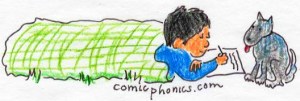
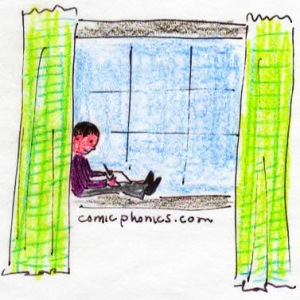 Good writers don’t just tell something, they show it. In informational essays, good writers give examples to show what they mean. In narratives, good writers show a character acting, such as his hand wiping away a tear, or his foot tapping, so that the reader can judge for herself if a character is sad or excited. Here is how a kindergartener showed a character.
 Good writers use sentences that are varied and interesting. They vary the verbs in sentences, begin sentences with different words and different parts of speech and write some long sentences and some short sentences. Notice how this sixth grader starts an essay with a 20-word sentence followed by a six-word sentence. He starts with a prepositional phrase but the next sentence begins with an adverb.
 Good writers write for the ear, not the eye. Good writers read their writing aloud and listen for ideas that are not clear. If characters are speaking, good writers make characters dialog sound different from one another. Since most people don’t talk in complete sentences, good writers have their characters speak naturally, even if that breaks rules of grammar. Notice how a second grader uses dialog to explain what a book is about.
 Good writers elaborate; they try to share a lot of information and detail. Good writers provide lots of detail—numbers, dates, seasons, days of the week, proper nouns, dialog, sensory information, and examples. Good writers put themselves in the shoes of the reader and provide the information that a reader needs even if the writer already understands it. See how that same second grader uses detail.
 Good writers get their facts right, even when they are writing fiction. In passages about science or social studies, good writers use the proper vocabulary. They check their facts online or by talking to experts. They go over their writing to be sure names are consistent and numbers are accurate. Read how a first grader uses scientific facts which she researched.
 Good writers should know when to quit. Good writing is concise writing. The writer needs to trust that the reader will understand the first time if the writing is clear enough, so repetition isn’t necessary. And that’s why I am going to stop now. –Mrs. K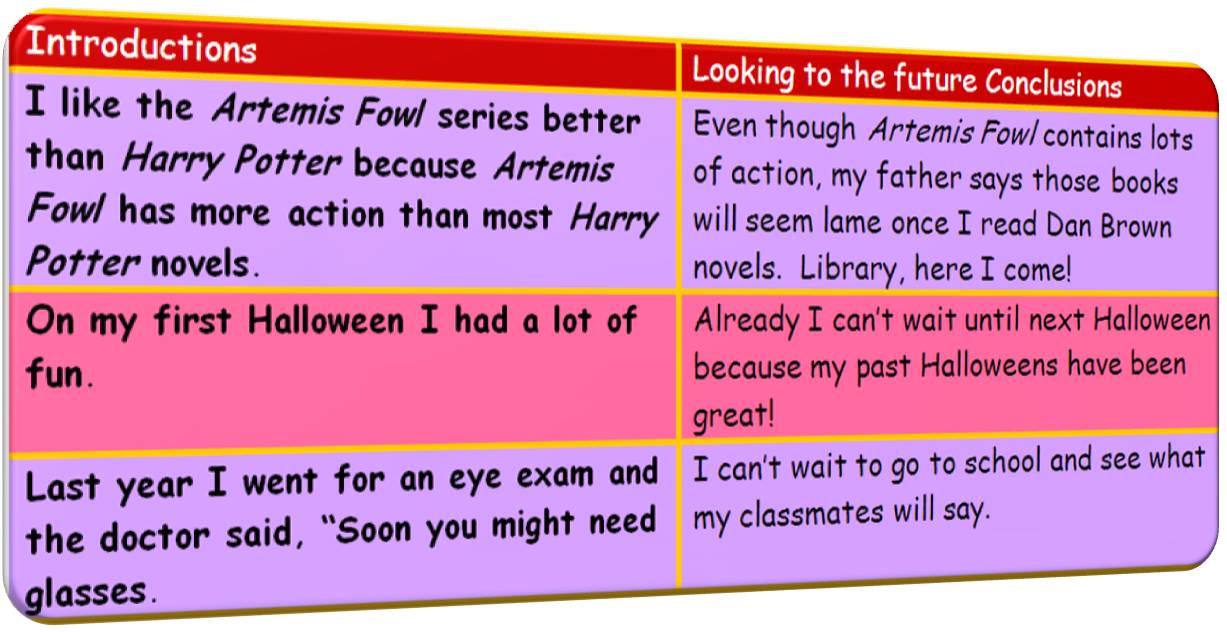

 English Writing Teacher