Category Archives: AI or artificial intelligence

Making peace with AI, one word at a time

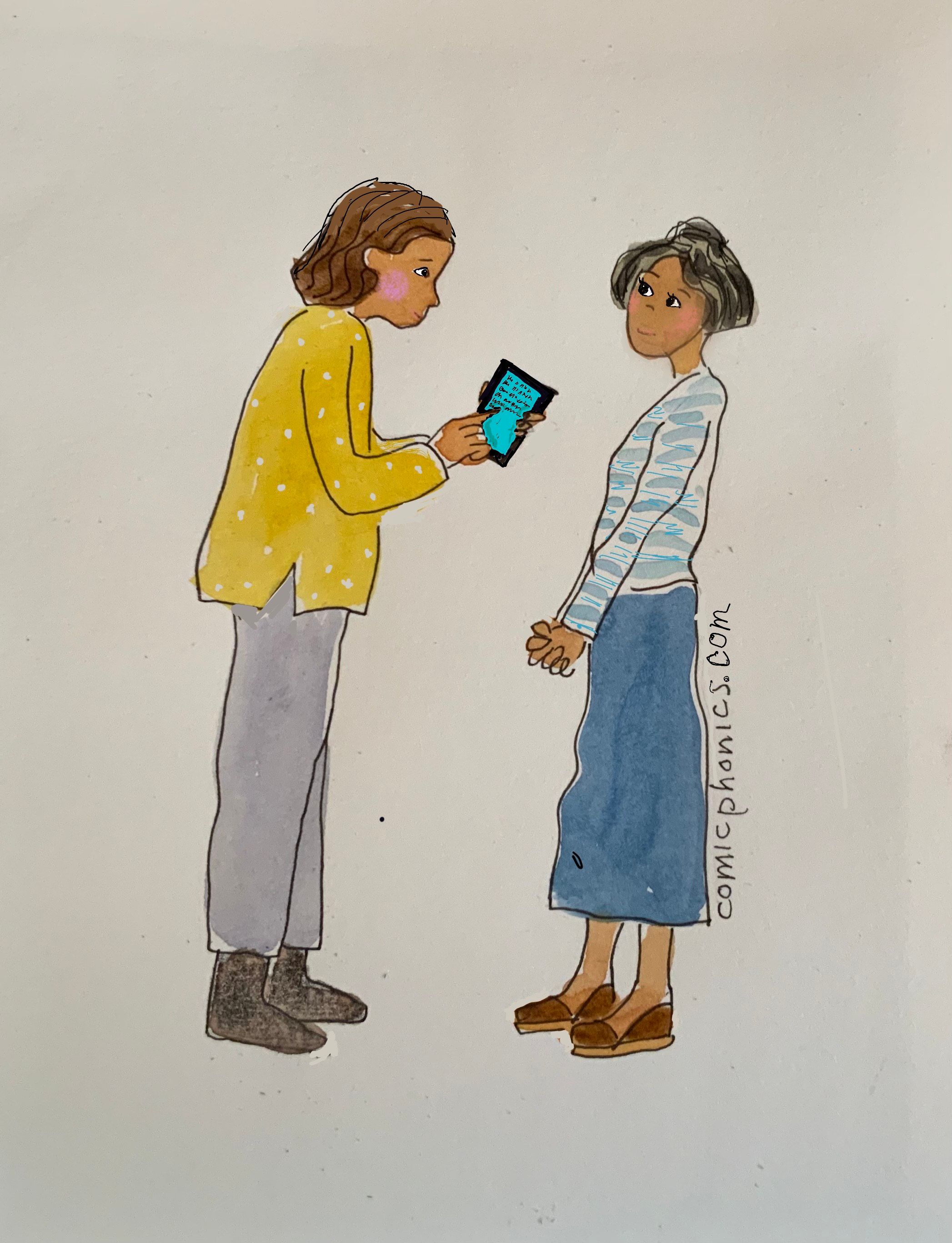
A student was writing about a vacation experience using an iPad.  As he lengthened words into phrases and phrases into sentences, corrections automatically appeared on his google document.  For example,

  • My student wrote, “We stoped at” but before he could write the next word, google’s AI changed “stoped” to “stopped.” My student did not need to think why his spelling was wrong or how to fix it.  AI subtly did that for him, allowing the student to focus on the content of what he was writing.
  • My student wrote, “but we couldn’t eventually see.” Google AI changed the word order to “but eventually we couldn’t see.” No explanation was given to my student for this change.  He probably didn’t notice it because he was finishing the sentence.

When I work in Microsoft Word, that software makes similar changes.  Right now, as I type the word “type,” over that word appears the correct spelling.  The software has guessed what word I want and has suggested how to spell it.  I don’t need to know how to spell.

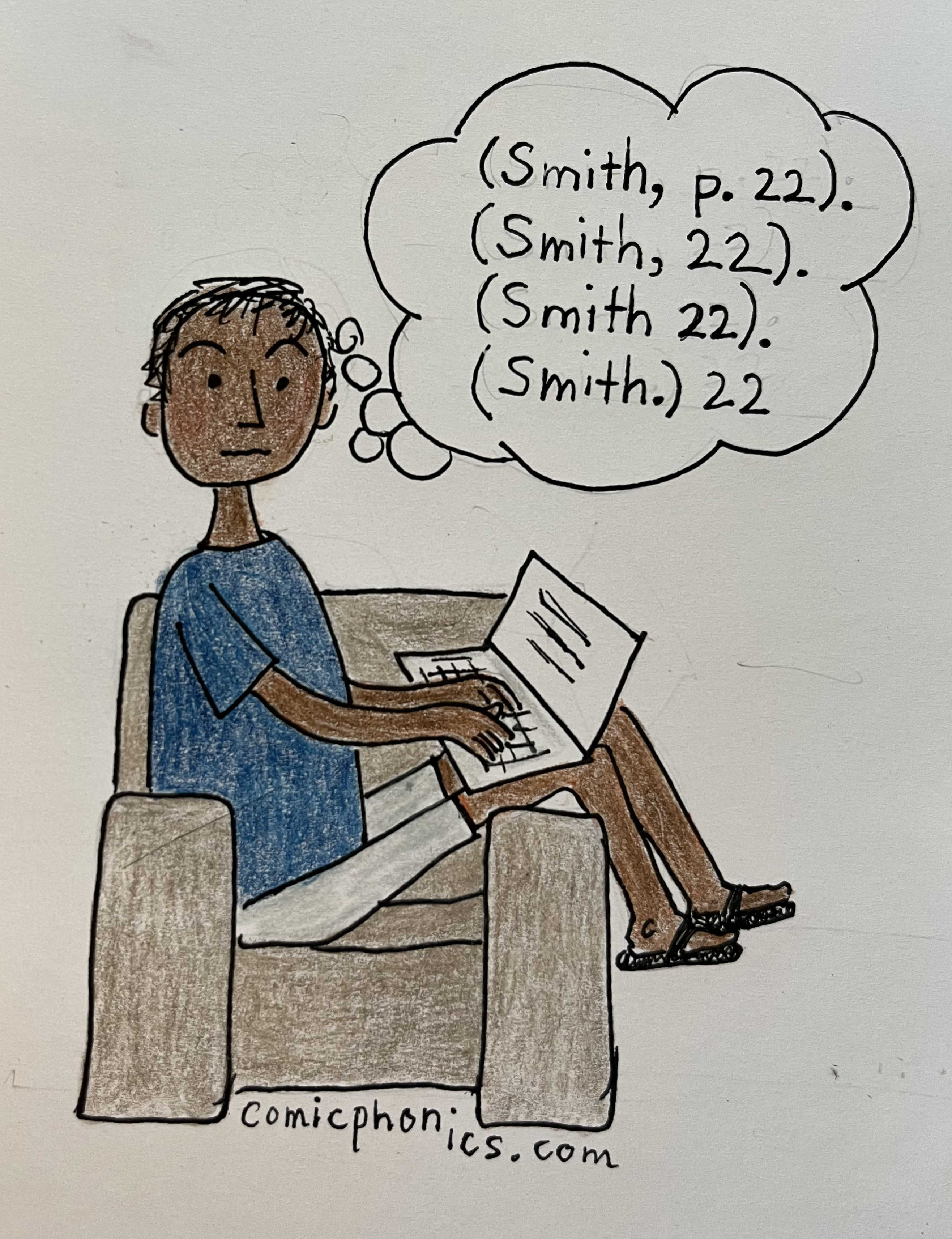
As a teacher [teacher, teaches, and teaching just appeared as I wrote the word “teacher”], I realize my students are not forced to spell correctly, or to understand proper word order, or to remember that the pronoun “I” needs to be capitalized.  As long as they compose on electronic equipment in its default mode, they need not learn the nitty gritty of writing.

What is a teacher to do?  Allow AI to do its magic?  Or interrupt a student’s flow to ask why AI made a particular change?

My decision is to allow AI to fix my students’ work.  My students will likely be writing on a computer or tablet or phone for years to come, and will avail themselves of these fixes outside of class.  So why not in class?  Kids used to take pencil to paper to write; now they take fingers to a keyboard.  I see this situation as similar to allowing math students to use calculators, or letting my phone remember phone numbers, or letting GPS direct me on vacation.

I have another student taking an AP course.  Soon she will need to take a test requiring her to write several paragraphs in longhand.  Without AI to correct her, her poor grammar skills will show.  Even if her thinking is flawless, if she cannot write a coherent sentence to show her thinking, her grade will disappoint.

Yet looking at my students’ futures, how often will they be required to write in longhand?  Is the teacher requiring longhand for a test being realistic?  Writing in longhand is becoming passé.

I suspect this blog will seem ridiculous to my grandchildren when they are my age.  Technology will have changed so much by then.  And the changed technology will change the expectations of teachers and students.  Better they learn to use technology than how to spell “stopped” correctly.  Their future depends on technology, not on correct spelling.

11 ways to discourage student use of AI in writing assignments

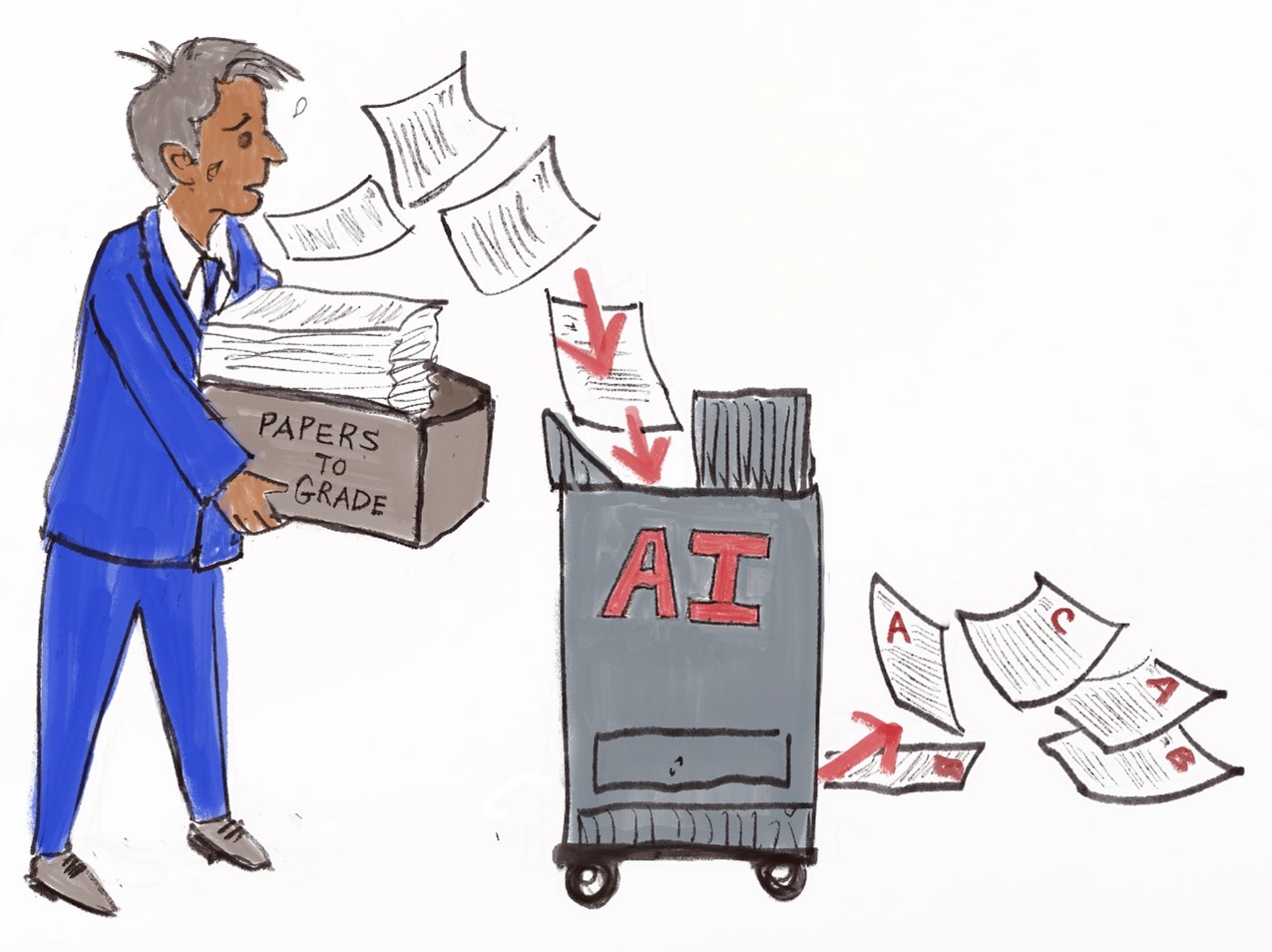
As teachers prepare to return to school, many wonder how to incorporate AI into their curriculum.  For teachers of writing, the opposite might be true:  how to encourage original thinking by students who might be tempted to use AI to do their assignments.  For those teachers, here are eleven suggestions:

At the beginning of the school year, ask students to handwrite in class a paragraph on what they studied in ELA last year, what they liked, what they didn’t, and why. Hold onto that writing.  If you suspect a student is using AI to write, compare the writing style of the early document to the later one.  If they are not similar, ask the student to redo the assignment.

Require that students go through all the steps of writing, including writing an organizer, writing a main idea sentence, writing a first draft, and revising. Grade each of these steps in the writing process, not just the finished product.  Once you have approved the organizer, require students to continue organizing their writing the way they originally planned it.

Require all but the final draft to be done in class in handwriting on notebook paper. Provide the paper, marked a particular way for each class section you teach to discourage first period students from sharing with third period students.  If possible, require different essay topics from different class sections.  Collect work done in class at the end of class, and check to be sure each student has submitted his or her work.

Require that specific information of your choice—information that AI is not likely to have in its huge data base—be included in the student writing.  That information could be from a student’s personal experience, such as comparing a novel’s character to a teacher in the school or writing a new beginning to Huck Finn as if the student is Huck.

Provide citations which students must use in their writing.

Don’t assign tasks easily done by AI such as summaries. Assign tasks that require critical thinking such as analyzing, synthesizing and evaluating.

Require students to reflect in writing about the writing assignment: what they liked about it and what they found hard.  This can be done at any stage of a writing assignment.  The information might suggest a mini-lesson to help students overcome a writing problem.

If students are writing about a book, quiz them on details in the book. Make them prove they have read the book before they write about it.

As you read student work, notice vocabulary that seems too advanced for a particular student. Ask the student what that word means.  Also, notice if that same word is used in more than one student’s writing.  That could be a sign of AI involvement.

Assign more short assignments and fewer long assignments so students spend more time writing.

Remind students that you will use Turnitin, GPTzero, and Copyleaks if you suspect a student used AI in an assignment.

Are autocorrect software features a help or a hindrance to learning?

When I work with student writers online, they make spelling mistakes, verb tense and number mistakes, and punctuation mistakes.  When they do, a squiggly underline alerts students that they have made an error.  What almost always happens next is that the student clicks on the error, notices a correction suggested by the software, and clicks on that suggestion, replacing the error with the suggested correction.  The student rarely tries to figure out what the error is, and rarely tries to figure out if the offered solution is correct.

AI to the rescue.

But is this a good idea? Using AI this way offers many benefits.

  • Students can correct errors immediately. No trying to figure out what is wrong and no trying to figure out how to correct it.
  • Student writers become more efficient, spending their time thinking about content rather than grammar or spelling.
  • The correction software is free, embedded in the Word or Google Doc software. No need to subscribe to Grammarly or Microsoft Editor.
  • Dyslexic students and others can work independently with confidence that their writing is error-free, or almost.

Using AI also offers drawbacks.

  • Students do not improve their spelling, use of apostrophes, or subject-verb agreement. There is no incentive to improve if the software can do it all.
  • Sometimes the software makes mistakes such as when the student writes slang, acronyms or abbreviations. It can’t detect homophones and might leave as uncorrected this sentence:  The bare walked in the backyard.
  • If the student’s spelling is way off, the software might not be able to tell what the student means and might not detect an error or know how to fix it.
  • Students can become over-reliant on autocorrect software. If they are tested by writing on notebook paper, their work is full of common mistakes.
  • Specialist words not commonly used in everyday writing might not be recognized by the autocorrect software.

The corrections can be turned off easily, but none of the students I work with do that.  They depend on the autocorrect feature—some because English is their second language and some because their teachers have not focused on spelling and grammar.

What’s a teacher to do?  Allow or not allow autocorrect?

I have decided to allow it for the reasons noted above.  Using it saves time and allows me to focus on composition rather than spelling and grammar.  If I see a student making the same error over and over, I will draw his or her attention to it, and we might have a lesson on it.

Many of my students’ parents disagree.  They want me to focus on spelling and grammar during the rough draft stage of writing.  I used to explain that doing this interrupts the flow of ideas.  Now I don’t need to explain because students make corrections with the click of a mouse long before their parents see their errors.

In their adult lives, students will be working on computers, tablets or other electronic devices with built-in autocorrections.  Using autocorrections will be as normal as using microwave ovens.  Schools should prepare students for the real world of tomorrow, not for the world of their grandparents.

Should students use AI in English classrooms?

Suppose you assign your high school students to write an essay on transgender athletes.  It’s a topic to which the regulatory bodies of various sports have responded differently (or not at all). It’s controversial, current and abounding in opinions—a good topic for an essay.

Should you allow your student to use AI to write this essay?  If so, at what point in the writing process?

The writing process begins with narrowing down the topic into a main idea or thesis.  A good way for a student to do this is to read widely on the topic until a position emerges in the student’s mind.  Then the student should narrow this position further, list three or four supporting ideas and identify details and examples to explain these supporting ideas.

This kind of thinking is what schools call critical thinking.  It involves understanding a topic by analyzing it, by evaluating various parts of the topic to see how they would support or undermine a position, and by synthesizing or bringing together ideas in a unique way.  Then students order the ideas, write sentences and paragraphs, and figure out what to put in the introduction and conclusion.  Last comes revising: polishing the writing by improving vocabulary and sentence structure, adding better information, deleting irrelevant information, and fixing grammar, spelling and punctuation problems.

But what if your student begins by asking AI for an essay thesis relating to transgender athletes.  In a nanosecond, a thesis appears.  Your student asks for three supporting ideas.  In another nanosecond, the supporting information appears.  Your student reads over AI’s suggestions and concurs.  Your student asks AI to write the essay in 350 to 400 words with a striking introduction, three body paragraphs and a humorous conclusion.  In another nanosecond, the essay appears.  Done.

Which way do you want students working–by thinking deeply about the topic or by asking AI to think for them?  Through which method do students learn?

If you want your students to do the work, one way to tell if they do and have learned from the process is to demand that the prewriting notes, organization graphic/chart/bullets, and the first drafts be turned in with the essay.  Another is to ask students to paraphrase their thesis and subtopic ideas.  If they can’t put their essay’s ideas in their own words, do they really understand what “they” wrote?  Another is to ask students what positions they declined to take and why.  If students have a full understanding of the topic, they will be able to explain why they took a certain position as well as why they didn’t take another.

For most high school students I have worked with—maybe all—using AI would not be in their self-interest.  Making mistakes and learning from them is a far better approach to learning.  Students, like athletes, need to have skin in the game.  If students have allowed AI to make the choices in their essays, students have no stake in the assignment.  It’s like having a robot run the 200 meter or swim the 400 IM.  For students to achieve, they have to do the work.

* * * *

Are you looking for a writing tutor for your student for the coming school year?  Contact me through this blog, and let’s discuss how I can help with online writing classes for grades 4 through 12, and for college admissions essays.


Is artificial intelligence–AI–learning how to write?

Yes, according to Ali Hale of Daily Writing Tips*.  Hale lists six ways AI is learning to write.

1.  Google Translate can not only translate words but phrases and sentences from one language to another.

2.  Microsoft Word is able to edit spelling errors, subject-verb agreement errors, singular-plural errors and capitalization errors. Grammerly can detect wordiness, ideas stated too vaguely and passive voice verbs.

3.  Plagiarism can be detected by using Turnitin.

4.  Online search engines can search for textual information, and they are in the process of searching for audio or visual information.  Computers are beginning to learn how to search by decoding sound.

5.  Computers can “write” breaking news stories. Heliograf, a web robot, reported on election results last November for the Washington Post.

6.  Using algorithms, computers can suggest future purchases—such as books—based on your past purchases or searches. Amazon uses this capability as do many retailers.

But can AI write, really write?  Is Gone with the Wind about to be replaced as the great American novel by an AI-authored novel?  Not anytime soon.  But since so much has happened in developing AI since the turn of the 21st century, can we even imagine who will author what Miss Scarlett will be reading by GWTW’s 100th anniversary in twenty years?

*For more information, go to Hale’s posting at (https://www.dailywritingtips.com/how-artificial-intelligence-is-changing-writing/).