Delete ‘very’

When I revise essays with my students, I suggest deleting the word “very.”

Why? they ask.

I tell them that “very” weakens writing, not strengthens it.

How can that possibly be? they wonder.  Isn’t “very” meant to intensify a word?

Yes, it is meant to strengthen an adjective.  But the consensus of writing experts is that “very” weakens ideas, not strengthens them.

So what is a writer to do?

  • Replace weak or mediocre adjectives with strong ones, according to writerswrite.co.va. Instead of writing “afraid,” write “terrified.”  Instead of “old,” write “ancient.”  Instead of “fast,” write “quick.”
  • According to prowritingadi.com, very has no “inherent” meaning.  “Very” contains not enough new information to be useful to the reader.  Instead write strong verbs and adjectives.

Lists of weak words and stronger synonyms are available online.  Just search for “How to replace ‘very’ and you will find many.

If you are a teacher, you can discourage students from using “very” by having a contest.  On a given written or speaking assignment, students who don’t use “very” could put their names in a bowl, and at the end of a week or a month or an assignment, you could draw a name and provide a small prize.

You could write a passage using weak verbs and adjectives and the word “very,” and see what alternatives small groups of students can come up with to replace the weak words.

Using “very” is a habit like overusing any word (just, like, then, and so, for example).  With practice, students will self-edit the word out of their writing.

Edgar Allan Poe’s four rules for writing

Many writers have left us rules for writing well.  Here are four of Edgar Allan Poe’s rules for writing his plot-driven narratives:

  • Plan every plot backward, with the ending in sight, before any sentences are written. (“Every plot. . .must be elaborated to its dénouement before anything be attempted with the pen.”)


  • Once you know the ending you want, backtrack and develop the incidents and tone that lead to that ending. (“Only with the dénouement constantly in view. . .we can give a plot its indispensable air of consequence, or causation, by making the incidents, and especially the tone at all points, tend to the development of the intention.”)


  • Consider the effect you wish to show. (“Of the innumerable effects, or impressions, of which the heart. . .is susceptible, what one shall I, on the present occasion, select?”)


  • Decide whether that effect can be achieved through ordinary incidents or through a particular tone. (“I consider whether it can be best wrought by incident or tone. . . . afterward looking [within] me. . .for such combinations of event, or tone, as shall best aid me in the construction of the effect.

What makes a ending good for a novel?

Jane Austen is one of my favorite novelists, but all six of her books have one flaw:  the endings disappoint.  She develops memorable characters; writes witty dialog; satirizes ladies, clergy and parents with aplomb; and refreshes her formula (girl gets boy) so that each plot unfolds beguilingly.  But when she reaches a book’s end, she seems incapable of writing a truly satisfying ending.  Is she out of ideas?  Tired?  Wanting to move on?

Some authors write books with wonderful endings, but they keep writing past that good ending so their actual ending isn’t so good.  Leo Tolstoy’s War and Peace’s perfect ending is when Pierre, now free to marry, encounters Natasha after the war.  He thinks, “Can it be that this hand, this face, these eyes, all this treasure of feminine loveliness that is stranger to me now, can it be that it will all be eternally mine, habitual, the same as I am for myself?  No, it’s impossible!”  Natasha, as if reading his mind, responds, “I’ll be waiting very much for you.”  This is the novel’s natural culmination, yet the book continues for another 100 pages.

Writing a satisfying ending is hard whether it be for a novel, TV series or film.  Is the cut to blackness as Tony Soprano sits in a restaurant with his family a good ending or a cop-out?  Is it a good ending when the mortally wounded gunslinger, Shane, rides into the darkness while little Joey yells, “Shane!  Come back, Shane”?  How about F. Scott Fitzgerald’s ending to The Great Gatsby:  “So we beat on, boats against the current, borne back ceaselessly into the past.”  Is that a great ending?

There is not one perfect ending that will work for every novel.  But good endings have recognizable characteristics:

  • Good endings are organic to the story. When a “god” or savior-type character arrives at the last minute, that is not a good ending because such a situation is not true to life.  A good ending must flow naturally from the plot.  To Kill a Mockingbird’s ending is a good one because Atticus puts Scout to bed the way he often does, and they have a gentle conversation, the way they often do, before Atticus moves on to Jem’s room where Atticus will watchall night over his unconscious son.  Huckleberry Finn’s ending is a bad one because  all the coincidences that come together to free Jim are unlikely.  The reader doesn’t believe the ending.  Lord of the Flies also offers an unsatisfactory ending.  Just as Ralph is about to be slaughtered by uncivilized boys, a naval officer appears and Ralph is saved.
  • Some good endings show that justice wins. Tony Soprano, a mafia boss who has ordered the murder of others, is himself murdered–or so many think.  In Silas Marner, Silas’s gold is restored, and the child whom he has rescued chooses to live with him rather than with the rich  birth father who earlier rejected her.  In most children’s stories, the bad guy loses and the good guy wins.
  • Many good endings show that justice loses. In Raymond Chandler’s first novel, The Big Sleep, the private detective is complicit in allowing a murderer to avoid arrest, a trial, and prison time.   In The Great Gatsby, Daisy Buchanan continues with her careless life despite killing her husband’s mistress.  In the film Chinatown a private eye  watches helplessly while a  woman protecting her daughter dies in gunfire and that woman’s rapist takes control of her daughter.   In Of Mice and Men one friend murders another to protect him from the cruelty he will likely face in a prison.
  • Some good endings restore harmony. At the end of Romeo and Juliet, the feud between the Capulets and Montagues ends.  Rochester and Jane Eyre are reunited without the impediment of Rochester’s demented wife in Jane Eyre.
  • Some good endings have unexpected twists.  Around the World in 80 Days ends with Philias Fogg short of winning his bet to circle the glove by one day—no wait, by one hour—no wait, by nine minutes.  He rushes to the whist club with seconds to spare.  This ending is organic because Fogg’s servant, Passepartout, is fastidious about the time, and doesn’t realize he has lost 24 hours by traveling east.

The test to a great ending is this:  Are you the reader satisfied?  You may want the story to continue because it is a great story, but since it doesn’t, are you content and even pleased with the ending?  If so, for you it is a great ending.

Use a template to write a persuasive essay introduction

Suppose a student wants to write a persuasive essay.  A million and one ways to begin such an essay exist, small comfort to a student looking for just one reliable way to write an introduction.  Does such a template exist?

Yes.  And using it, a student can write the introduction in five sentences, too, which many teachers require.

  • First, think about the topic and write a general sentence relating to that topic.
  • Second, write more specifically about the topic in two sentences, heading in the direction of your main idea (thesis) which you should already know from organizing your ideas.
  • Third, transition to your main idea (thesis) by connecting what you have just written to what you will write next.
  • Fourth, write your main idea.

Let’s try a few examples.

Suppose a fifth grader wants to persuade that soccer is a good sport for kids.  Here is one opening:

  • When my grandmother was a kid, none of her friends played soccer.
  • Why? Hardly any soccer leagues for kids existed then.  There were baseball leagues and basketball leagues and football leagues, but there were hardly any youth soccer leagues.
  • Nowadays, almost every city or town in the US has soccer teams for kids.
  • Soccer is a great sport for kids to play because it strengthens muscles, teaches teamwork, and teaches how to accept defeat.

For that same fifth grader, here is another essay introduction:

  • My friend, Mario, says baseball is a better sport than soccer for kids.
  • My other friend, Julio, says football is better than soccer for kids.
  • My sister, Emma, who is tall, says basketball is better than soccer for kids.
  • I think they are all wrong.
  • Soccer is a great sport for kids to play because it strengthens muscles, teaches teamwork, and teaches how to accept defeat.

Here is a third possible introduction written at a high school level:

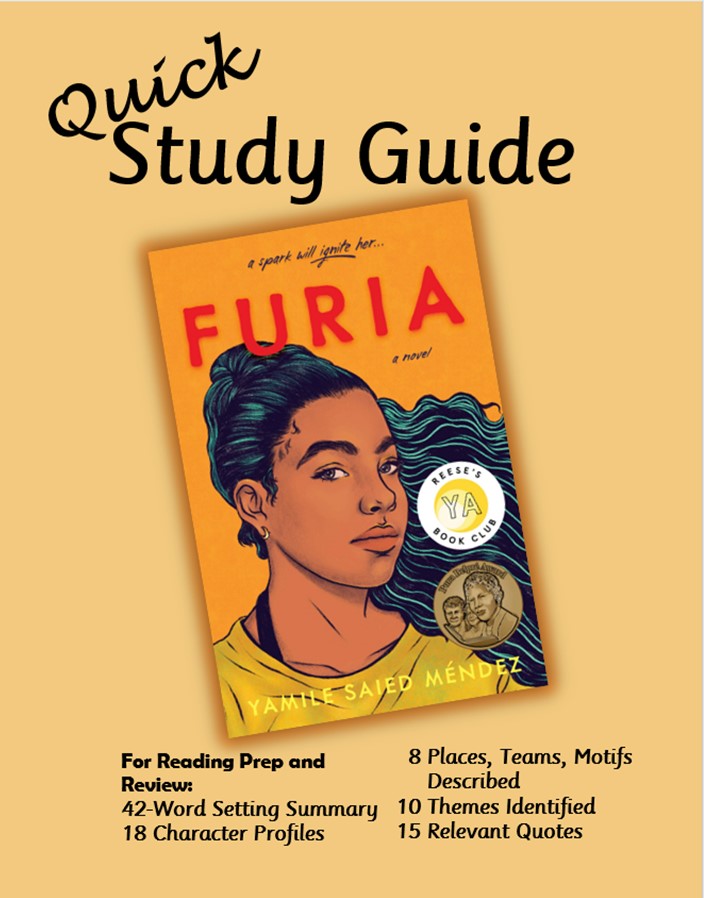
  • Furia by Y.S. Mendez is a novel about a teenage girl from Argentina who wants to play professional soccer.
  • But Camilla is growing too old to be thinking of soccer, according to her father who thinks adult soccer is for men only.
  • She should be thinking about boyfriends, he thinks, especially a rich local boy who has made it to a professinal soccer team.
  • But Camilla cannot give up her dream to play soccer as an adult, and why should she?
  • Soccer is a great sport for young adults to play because it strengthens muscles, teaches teamwork, and teaches how to accept defeat.

Notice that each of these three introductions uses the word “soccer” in the first sentence, alerting the reader that the essay will be about soccer.  Neither first sentence hints that the essay will be about why soccer is good for a kid or young adult.  That doesn’t come until the last sentence of the paragraph, the topic sentence.

All three introductions start out with general ideas:  the first one, that no one in the US played soccer years ago; the second one, that various people think a particular sport is better than soccer; and the third one, that a novel focuses on a girl who wants to play soccer.  Each first sentence idea is developed in the next two sentences.  In the fourth sentence, the focus shifts to an idea connecting the first three sentences to the main idea (thesis) sentence.

What I am suggesting is a pattern you can use to write introductions to persuasive essays.  You don’t need to start from scratch each time you write.  You can use the steps I describe above, fill in the blanks, and write an okay—maybe even great—essay introduction.

For more ideas on how to write, read my book How to Write a 5th Grade (or any other grade) Essay.  Or contact me for tutoring lessons.  I am now scheduling fall online classes.

5 ways to figure out if your source is any good

With so much information on the Internet, students need to learn how to distinguish good from bad sources for their research projects.  One way to do this is to apply the CRAAP test to source material to determine if the information is sound.

The CRAAP test?  What’s that?  It’s five criteria you can use to judge if your information is good or is crap.  Here are the five criteria:

Current: Is the information current or is it dated?  If it is out-of-date, does that matter?  If you are writing about the life of John F. Kennedy, books sixty years old written by people who knew him–primary sources–might be excellent sources.  Has the information been updated since it was published?  If you are writing about the SAT, including that the test will be offered online only starting in 2024 is important, timely information to include.

Relevant: Is the source directly related to your topic? If you are writing about the Trump White House, then perhaps testimony made to the January Sixth Committee of Congress by people who worked at the White House would be as pertinent as interviews with staff who did not testify.  What audience are you writing for? If you are writing a biography intended for elementary school age children, the facts you include might be different from facts you would include for an adult audience.

Authoritative: What makes the author of the source material you are using an authority on the subject?  Is the source a relative?  A scientist in the same field?  A collaborator?  Are you using that source’s primary information or secondary information?  Is the source qualified about the topic? What are his or her credentials?  Is the data published in a peered-reviewed  journal?

Accurate: Is the source fact or opinion?  What evidence collaborates the source material?  Have the facts been fact-tested by any reliable source?  If the information is old–say records of the Battle of Hastings in 1066 in Britain–does the author explain that the “facts” differ depending on whether the winning or losing side reported them?

Purpose: What purpose has the information been used for–to inform, persuade, entertain, advertise, editorialize,  provide testimony, or something else? Is opinion presented as fact?  Can you distinguish between fact and opinion?  Has the author been clear about his or her ability to understand the data?

When children are young, they pretty much accept what adults say as the truth.  But as they mature, children learn that not every source can be trusted.  That includes sources used for research.  Applying these criteria systematically helps students better analyze the truthfulness and usefulness of their sources.