Monthly Archives: June 2015

Why use compound sentences?

In English, we have three types of sentences: simple, compound and complex. Each is better used in particular situations.

A compound sentence is one which contains two or more independent clauses joined with either a coordinating conjunction or a semicolon.
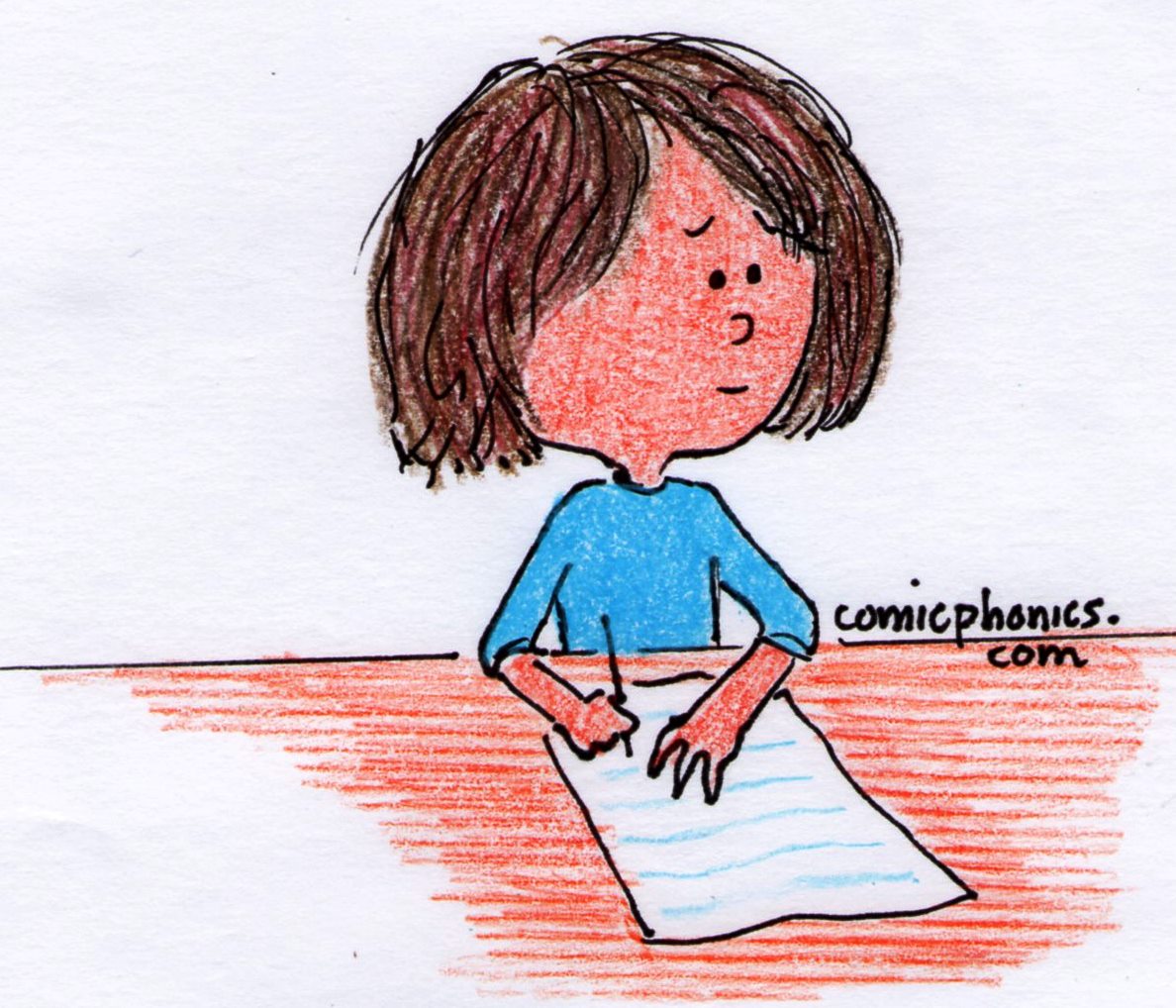
Child writingCoordinating conjunctions can be remembered by using the first letter of the words FAN BOYS: for, and, nor, but, or, yet, and so. In writing a compound sentence, the first clause ends with a comma, followed by the conjunction and the second clause. Many students become confused where the comma goes and put it immediately before or after the conjunction. Another problem most children have is limiting themselves to only three of those conjunctions: “and,” “but” and “so.”

Coordinating conjunctions express certain kinds of relationships.

  • “And” expresses similarity, addition or sequence.
  • “But,” ”or,” “nor” and “yet” express difference, contrast or an exception.
  • “So” and “for” express a cause and effect relationship.

Correlative conjunctions (words working in pairs) are another kind of conjunction showing equality of ideas. “Either. . .or,” “Neither. . .nor,” “Not only. . .but also,” “just as. . .so,” “if. . .then,” and “Both. . .and” express the same kind of relationships as coordinating conjunctions, but are more sophisticated expressions of equality.

Certain adverbs join ideas much like coordinating conjunctions. Since they are not conjunctions, they must be accompanied by a semicolon if the ideas are in two independent clauses in the same sentence. The adverb “however” is the most used, but others include “consequently,” “furthermore,” “moreover,” “nevertheless,” “similarly” and “therefore.” Usually, these adverbs come after the semicolon and are followed by a comma. Using these adverbs adds a feeling of formality to writing. If an informal tone is required, stick to the FAN BOYS conjunctions. If a formal or well educated tone is required, use some semicolons.

When should compound sentences be used?

  • Use compound sentences to join tiny, choppy or repetitive sentences into a more sophisticated sentence.
  • Use compound sentences to show equality of ideas or a pattern of equality.
  • Use compound sentences using correlative conjunctions to force the reader to note the relationship between the ideas expressed.
  • Use a semicolon instead of a conjunction to add sophistication and variety to writing.
  • Use compound sentences to add variety to the mix of sentences.

Little children start writing by using tiny, simple sentences. Then they “graduate” to using compound sentences. Many children eventually write almost every sentence as a compound sentence joined by the word “and.” It’s important to point out the overuse of the word “and” if that is a problem in a student’s writing.

Really good writers strive to write more complicated simple sentences and complex sentences than compound sentences because the former sentences sound more sophisticated and can show various kinds of unequal relationships. If students count the number of simple, compound and complex sentences they use in a given piece of writing, and if the number of compound sentences equals or exceeds either of the other kinds of sentences, that student should rewrite some of his compound sentences.

Even so, compound sentences are used by every good writer some of the time.

Why use simple sentences?

In English, we have three types of sentences: simple, compound and complex. Each trumps in particular situations.

A simple sentence is one containing one independent clause (one complete subject and one complete predicate). Almost an infinite variety of simple sentences can be formed, making them the bedrock of modern-day English.

Simple sentences can be just one word (Run!). They can be two or three words (The dog barked. He did?) They can have compound subjects (Jack and Jill went up a hill) or compound predicates (Marie plays softball and swims). They can start with prepositional phrases (On my bike I rode to Grandma’s), gerund phrases (Munching carrots is a healthy snack) or adjectives (Big snakes scare me). They can end with adverbs (I practice the piano daily), infinitive phrases (That’s a good place to fish) or verbs (Will you go?). They can be declarative (I see), interrogative (Would you buy me one too?) and exclamatory (I won the spelling bee!).

Why use simple sentences in your writing?

  • Simple sentences can express ideas clearly. ( “We the People of the United States, in Order to form a more perfect Union, establish Justice, insure domestic Tranquility, provide for the common defence, promote the general Welfare, and secure the Blessings of Liberty to ourselves and our Posterity, do ordain and establish this Constitution for the United States of America.”
  • Short, simple sentences can add punch after a long-winded sentence. (“Let every nation know, whether it wishes us well or ill, that we shall pay any price, bear any burden, meet any hardship, support any friend, oppose any foe, to assure the survival and the success of liberty. This much we pledge — and more.”)
  • Simple sentences can seem honest and to the point. (“Jesus wept.”)
  • Simple sentences can mimic uncomplicated and unadorned thought patterns. (I wasn’t sure what to do. It was so dark. The baby was sobbing. I needed help. So I phoned you.)
  • Simple sentences can be expanded by modifying subjects, verbs and objects with adjectives, adverbs, prepositional phrases, gerund phrases, infinitive phrases.
  • Simple sentences can seem more informal than complex sentences yet more sophisticated than certain types of compound sentences. (“All this will not be finished in the first one hundred days. Nor will it be finished in the first one thousand days; nor in the life of this Administration; nor even perhaps in our lifetime on this planet. But let us begin.”)

As little children learning to write, we start with simple sentences. Then teachers introduce compound and complex sentences, encouraging students to use those kinds. Yet some great writers have built their careers on writing simple sentences—Ernest Hemingway, for example.

(To show their versatility, I wrote every sentence in this blog as a simple sentence. Did you notice?)

Use expanded sentences to add informality to writing

An expanded sentence is one that begins as a simple, compound or complex sentence but then adds additional information, sometimes with phrases and sometimes with clauses, mimicking the way we speak. Here are some examples.three examples of expanded sentences

In the past, writing was more formal than spoken language, and to a degree it still is, even in the US. While we say, “It’s me,” in formal writing we are expected to write, “It is I.” Most of us say “who” when we mean “whom” and say “hafta go” when we would write “have to go.” But in the late 20th century, writing became more informal. One example is that today the word “you” is allowed in essays.

What is happening? Modern-day writing is following the lead of spoken language, becoming more like it. When we speak, we often start with a simple idea (Gershwin wrote many songs), but then we add to those words as we are thinking (Gershwin wrote many songs, such as Summertime, I’ve Got Rhythm and Swanee, becoming the best song writer of the 1920’s—although Cole Porter fans might disagree).

The effect of expanded sentences is to create informal writing. The sentences sound friendly, not academic. These sentences are often easier to understand than complex sentences of the past with many subordinate ideas. They have an easy-going, relaxed quality to them which puts us at ease.

One way to practice writing these kinds of sentences is to type them on your computer and one by one change the words, keeping the grammar and flow but changing the meaning.expanded sentence practice

A caution:  An expanded sentence is not a compound sentence with several independent thought sadded on. (I went to the store, and I bought a candy bar, and I ate the candy bar, and it was delicious.)  It can include a compound sentence, the but add-ons vary in type.

It’s spring. Update your writing with some bright, extended sentences.